
Quick answer: Light movement within 60–90 minutes after eating helps active muscles pull glucose out of the bloodstream, which softens the sluggishness, bloating, and sugar crashes that tend to follow a meal. The most effective low-impact options, walking, calf raises, seated knee extensions, marching in place, sit-to-stands, and stair stepping, take five to twenty minutes and require no equipment.
- Best window to move: 60–90 minutes after eating
- Best options: walking, calf raises, seated knee extensions, marching in place, sit-to-stands, stair stepping
- Time needed: 5–20 minutes
- Why it works: contracting muscle draws glucose from the blood with less reliance on insulin
- Who benefits: anyone dealing with post-meal fatigue, bloating, energy crashes, or long stretches of sitting after meals
Introduction
There’s a specific kind of tiredness that shows up about twenty minutes after lunch. Not the good kind. The stomach feels heavier than it should, the eyelids get heavy, and somehow a bowl of pasta turns into a craving for something sweet an hour later. Most people blame the food. Sometimes the food deserves it. But a lot of the time, the real problem is what happens, or doesn’t happen, right after the last bite.
Blood sugar climbs after every meal, and for most people it peaks somewhere between 30 and 90 minutes later, according to Cleveland Clinic. What happens during that window matters more than most people realize. A 2024 review covered by UCLA Health found that something as small as a five-minute walk during that 60- to 90-minute post-meal window produced a measurable, moderating effect on blood sugar, and the rise that did happen was more gradual, not the sharp spike-and-crash pattern that leaves people reaching for a nap or a candy bar. That’s the whole idea behind this list. None of these six moves are workouts in the traditional sense. There’s no sweating, no equipment, and no reason to change clothes. They’re just enough to keep the body from sitting still at exactly the moment it needs a little help.
Want to double check your form? Click here to watch the full exercise:
Why Movement After Eating Actually Matters
Here’s the short version: when carbohydrates get digested, glucose floods into the bloodstream looking for somewhere to go. Muscle tissue is one of the best places for it to land, but there are two different doors it can walk through. One door is opened by insulin. The other opens simply because a muscle is contracting, no insulin required. That second pathway is why gentle movement has such an outsized effect on how a person feels after eating; it gives glucose a second exit that doesn’t depend on the pancreas working overtime.
The Glucose-Timing Window
This is why timing gets mentioned so often in research on the topic. Blood sugar peaks 30 to 90 minutes after eating, so movement inside that window does the most good. Nobody needs to set a timer for the exact minute. Moving anywhere within roughly two hours of eating still helps, the point is simply not staying parked on the couch for the whole stretch.
Muscles Doing Insulin’s Job
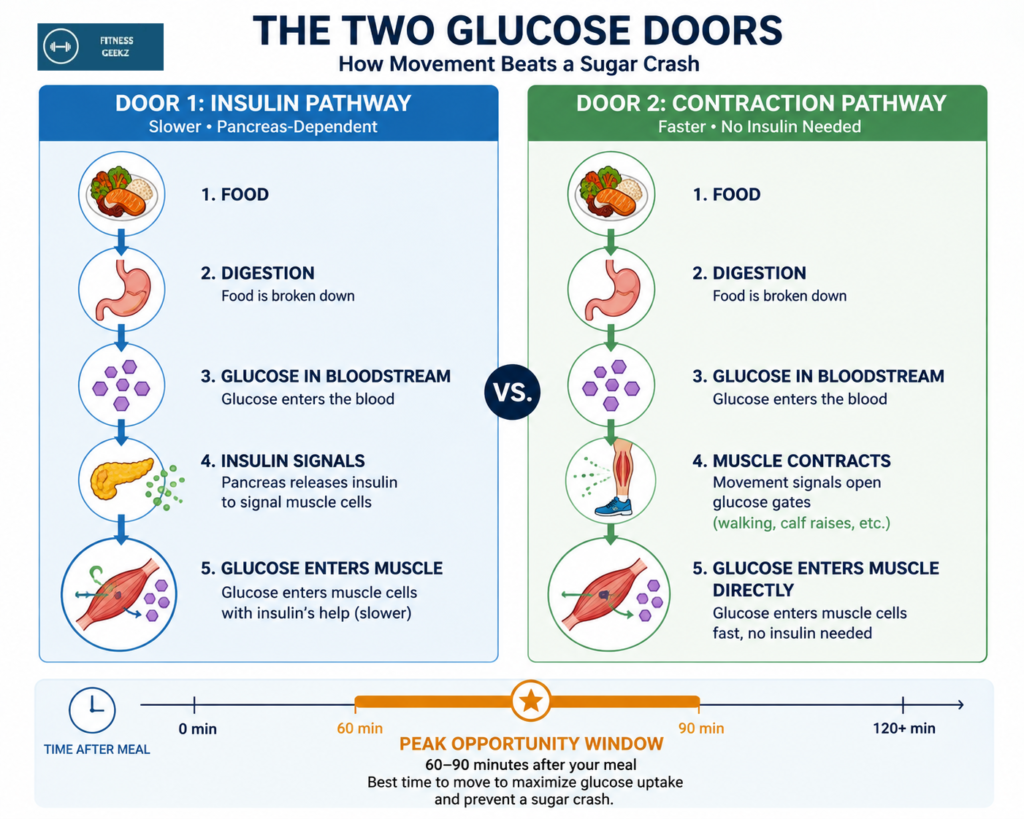
Muscle cells contain glucose transporters that sit just under the cell surface, waiting for a signal to open up and let glucose in. Contraction is one of those signals, and it works independently of insulin. That’s a meaningful distinction, because it means gentle, low-effort movement, not just hard training, can meaningfully assist blood sugar regulation. Readers who want to understand how muscle adaptation works over the long term, once the basics of movement are in place, can dig deeper into how progressive overload builds on this same muscular response over weeks and months.
Signs the Body Wants to Move
A few common after-meal symptoms are basically the body asking for a short walk instead of a longer nap:
- Heaviness or bloating in the stomach
- Sudden drowsiness, sometimes called a “food coma”
- Trouble focusing or a foggy-headed feeling
- Cravings for something sweet shortly after eating
- General fatigue that doesn’t match the amount of sleep the night before
None of these are cause for alarm on their own. They’re common, they’re usually temporary, and in most cases a few minutes of movement is a reasonable first response. Anyone dealing with these symptoms regularly and severely should still bring it up with a doctor, but for the average post-lunch slump, movement is a low-risk place to start.
6 Low-Impact Exercises to Do After Eating
Walking, calf raises, seated knee extensions, marching in place, sit-to-stands, and stair stepping cover nearly every situation, a desk at work, a living room after dinner, or five minutes in a kitchen. Nobody needs to do all six. Picking one or two and doing them consistently beats attempting the whole list once and never again.
1. Marching in Place
The easiest entry point on this list, and the one that requires the least amount of space or motivation. Marching engages the quads, hips, and core without putting any pressure on a full stomach.
How to do it:
- Stand tall with shoulders relaxed.
- Lift the knees to a comfortable height, alternating sides.
- Swing the arms naturally.
- Keep the core lightly engaged throughout.
Do 3–5 rounds of one minute, resting 30 seconds between rounds.
2. Calf Raises
The calves play a real role in pushing blood back up toward the heart, and activating them helps with the general heaviness that builds up after sitting down to eat.
How to do it:
- Stand with feet shoulder-width apart.
- Rise onto the toes.
- Hold for one second at the top.
- Lower slowly and with control.
Do 3–4 sets of 15–20 reps.
3. Seated Knee Extensions
For anyone who just finished eating and doesn’t feel like standing up yet, this one works from a chair. It targets the quadriceps, one of the largest muscle groups in the body, without putting any pressure on the stomach.
How to do it:
- Sit upright in a chair with both feet flat on the floor.
- Extend one leg fully in front.
- Hold for two seconds at the top.
- Lower slowly.
Do 3–4 sets of 12–15 reps per leg.
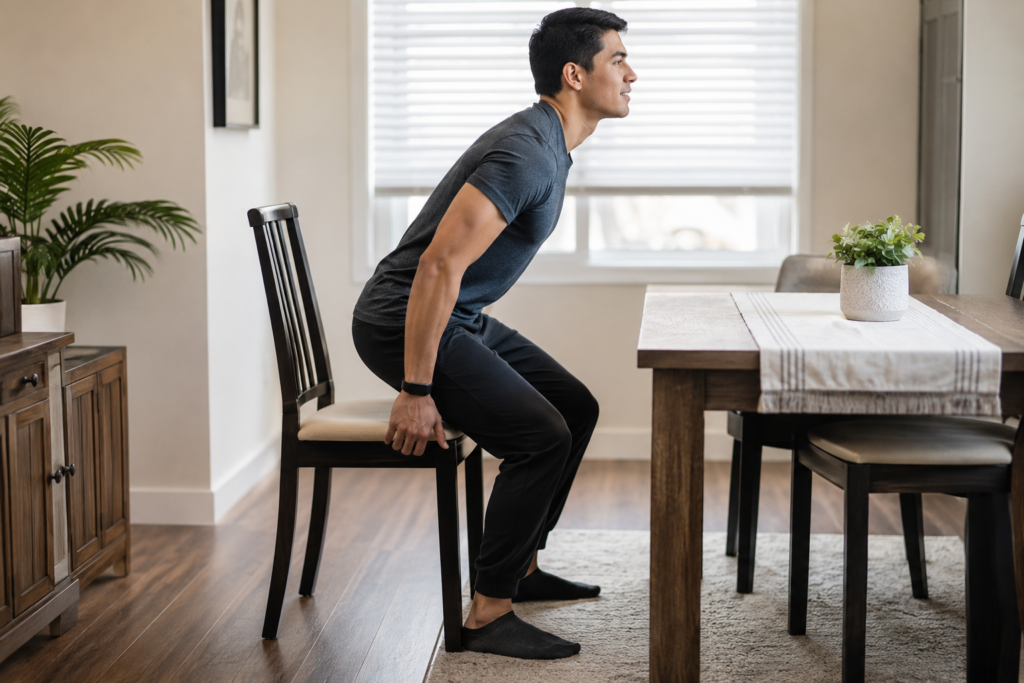
4. Sit-to-Stand (Chair Squats)
This is one of the most functional movements a person does all day, and it happens to be excellent for post-meal glucose use because it recruits the glutes, the largest muscle group in the body, along with the thighs and core.
How to do it:
- Sit toward the front of a sturdy chair, feet shoulder-width apart.
- Lean slightly forward from the hips.
- Stand up using leg strength, not momentum.
- Sit back down slowly and under control.
Do 3–4 sets of 10–12 reps. This same chair-based logic is behind a lot of isometric exercises for beginners, which are worth exploring for anyone who likes low-impact strength work that doesn’t require getting on the floor.
5. Light Walking
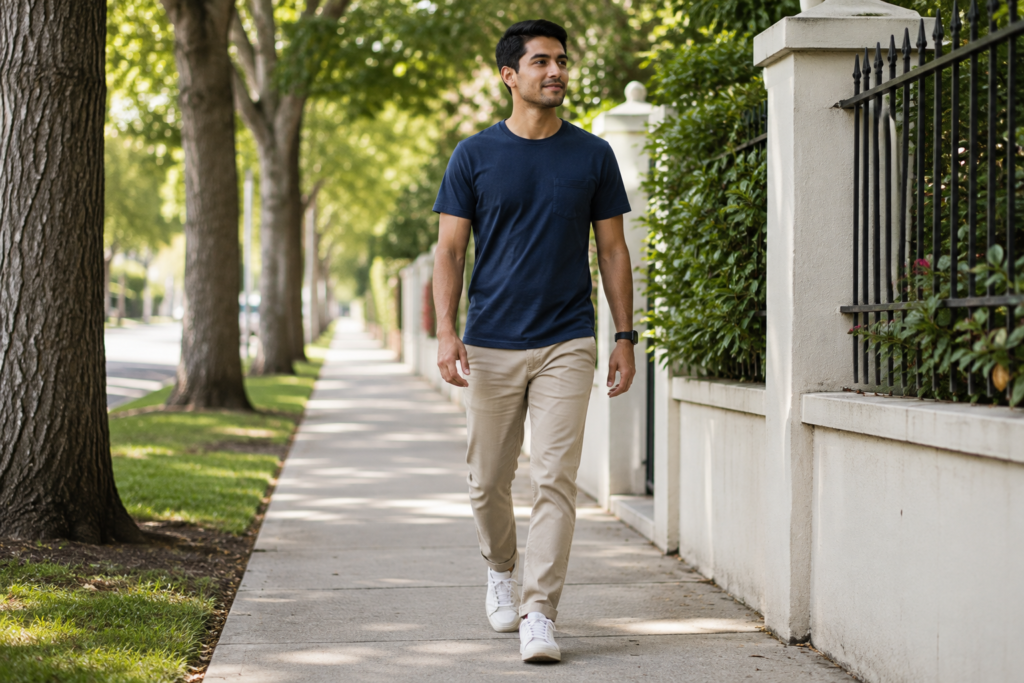
Out of everything on this list, walking has the most research behind it. A 2022 meta-analysis in Sports Medicine that pooled several studies on post-meal activity found that light walking reduced peak blood sugar noticeably compared with sitting, and that even short two- to five-minute walking breaks came close to matching the benefit of one longer walk.
How to do it:
- Walk upright with relaxed shoulders.
- Keep a pace where holding a conversation is still easy.
- Aim for 15–20 minutes.
Anyone who enjoys walking and wants to turn it into more of a full-body habit might like adding a loaded carry into the mix on non-meal days. The farmer’s walk is a great next step once basic walking feels too easy.
6. Stair Stepping
The most complete bodyweight move on this list. Going up and down a set of steps activates the glutes, quads, hamstrings, and calves all at once, which makes it one of the more efficient options for anyone short on time.
How to do it:
- Place the full foot on each step.
- Push through the heel going up.
- Control the descent, don’t just drop down.
- Go up and down 8–12 steps per round.
Do 3–4 rounds, resting 45 seconds between them.
Which Post-Meal Exercise Should You Choose?
| Exercise | Time Needed | Muscles Worked | Best For | Equipment |
| Marching in Place | 3–5 min | Quads, hips, core | Beginners, tight spaces | None |
| Calf Raises | 2–3 min | Calves | Improving circulation | None |
| Seated Knee Extensions | 3–4 min | Quadriceps | Right after eating, low energy | Chair |
| Sit-to-Stand | 3–4 min | Glutes, thighs, core | Functional strength | Chair |
| Light Walking | 15–20 min | Full lower body | Overall digestion, focus | None |
| Stair Stepping | 5–7 min | Glutes, quads, hamstrings, calves | Time-efficient, full activation | Stairs |
Building the Habit
Trying to do all six exercises after every single meal is a fast way to quit after three days. A better approach: pick one or two that fit naturally into the day, sit-to-stands while dinner finishes cooking, or a short walk after lunch, and stick with those before adding more. Consistency does more here than intensity ever will.
It’s also worth going easy immediately after a large meal. Vigorous exercise too soon after eating can cause cramping or reflux, which is exactly why every option on this list stays low-impact. And while movement carries a lot of the conversation, what’s on the plate matters too, meals with more fiber and protein tend to produce a gentler blood sugar response in the first place, which makes the after-meal walk do even less heavy lifting.
The Bottom Line
None of this requires a gym, a class, or even much motivation. It requires standing up. The 60- to 90-minute window after eating is when the body can use a little help most, and light, low-impact movement is enough to make a real difference in how the next few hours feel. Start small: pick one move from this list, try it after the next meal, and notice the difference by the time the plates are in the sink.
Looking to build on these habits with more structured training? Explore the Fitness Geekz to learn how today’s light movement can evolve into real strength gains over time.
Frequently Asked Questions
Ideally within 60–90 minutes, since that’s when blood sugar peaks, though moving anywhere within one to two hours after a meal still helps.
Yes. Gentle movement supports digestive motility and circulation, which can ease the feeling of fullness and bloating that follows a meal.
Yes. Walking activates large muscle groups that pull glucose out of the bloodstream, while sitting keeps blood sugar elevated for longer.
High-intensity or heavy-impact exercise, like running or heavy lifting, is best avoided shortly after a large meal since it can trigger cramping or reflux.
As little as five minutes of light activity can help, though 15–20 minutes of walking offers the most well-documented benefit.