
Quick Answer
Deep core exercises target hidden stabilizer muscles, the transverse abdominis, multifidus, diaphragm, and pelvic floor, that act as an internal corset for the spine. Unlike surface ab training, these exercises build functional stability, improve posture and balance, and reduce back pain through isometric control rather than movement.
- Primary deep core muscles: transverse abdominis, multifidus, pelvic floor, diaphragm, erector spinae, obliques
- Best deep core exercises: bird dog, dead bug, side plank, plank variations, hollow body hold
- Deep core vs. ab training: deep core builds stability through isometric holds; ab training builds definition through flexion and rotation
- Ideal frequency: 2 to 3 sessions per week for beginners, up to daily for advanced trainees
- Key benefit beyond strength: reduced back pain and improved posture through better spinal stabilization
Introduction
Lower back pain sidelines more people than almost any other physical complaint, and a good chunk of that comes down to a core that looks fine on the outside but does almost nothing on the inside. Somebody can grind out crunches for years, build a visible set of abs, and still throw their back out picking up a laundry basket. That disconnect is the whole reason deep core training exists.
Deep core training targets the stabilizer muscles beneath the visible abdominal wall, the transverse abdominis, multifidus, diaphragm, and pelvic floor, that support the spine, pelvis, and internal organs during everyday movement. These muscles don’t create the six-pack look. They do something arguably more important: they keep the spine from buckling under load, whether that load is a barbell, a toddler, or the twentieth mile of a long run.
This guide covers what the deep core actually is, why it deserves a spot in every training program regardless of goal, the best exercises for building it, and a full section on isometric holds that build serious stability without a single rep of movement.
Want to watch the proper setup and execution? Click here to watch the full exercise:
What Is the Deep Core? (Anatomy Breakdown)
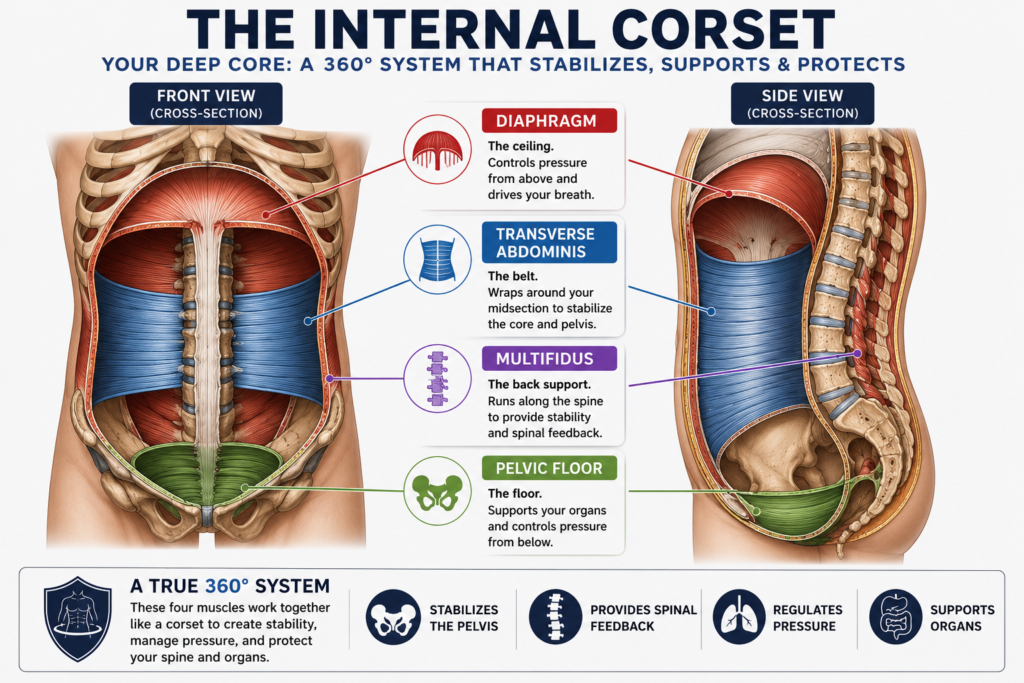
The deep core is the muscle group beneath the surface abs that stabilizes rather than moves the spine, functioning like an internal corset wrapped around the midsection.
- Transverse abdominis. This one wraps around the torso like a belt, and it’s the primary muscle responsible for stabilizing the pelvis before any other movement even starts.
- Multifidus. Small, deep muscles running along the spine, these provide constant postural feedback, essentially telling the body where the spine is in space and keeping it from overextending or rounding under load.
- Diaphragm and pelvic floor. The diaphragm regulates intra-abdominal pressure and coordinates with breathing mechanics, while the pelvic floor supports the organs above it and helps manage that same internal pressure system. Together, they’re the floor and ceiling of the internal corset.
- Erector spinae and obliques. These handle anti-rotation and anti-lateral-flexion control, resisting the twisting and side-bending forces that build up during running, lifting, or just carrying groceries unevenly.
Deep Core Training vs. Traditional Ab Exercises
Ab exercises train visible flexion and rotation for aesthetics, while deep core exercises train isometric stability for function, and that distinction changes everything about how each should be programmed.
Crunches, sit-ups, and twisting movements flex and rotate the spine repeatedly, which builds definition but does very little to protect the spine under real-world load. Deep core work, planks, bird dogs, dead bugs, isometric holds, trains the body to resist unwanted movement instead of creating it. Both approaches have a place in a well-rounded program. For a full breakdown of the visible-muscle side of that equation, this guide to the best abs workout routine covers the flexion-based training deep core work is designed to complement, not replace.
Why Deep Core Training Matters (Benefits Beyond Aesthetics)
Deep core training’s biggest payoff is spinal stability and a meaningful reduction in back pain, and everything else builds outward from there.
Better postural feedback from the multifidus translates into improved posture and balance, which matters even more for anyone spending hours a day sitting at a desk. A stronger internal corset means less excessive spinal movement under load, which is one of the more direct paths to chronic back pain. Runners and athletes benefit specifically from keeping the pelvis and torso aligned as fatigue builds late in a run or a race, a factor that becomes even more relevant during high-intensity efforts like sprint interval training for weight loss, where form tends to break down fastest under fatigue. The diaphragm and pelvic floor support intra-abdominal pressure regulation, which can aid digestion, and diaphragmatic breathing itself has a documented connection to the vagus nerve, helping lower cortisol and physical tension along the way.
Best Deep Core Exercises for Stability and Strength
The foundational movement patterns here are anti-extension, anti-rotation, and anti-lateral-flexion, in other words, resisting movement rather than producing it.
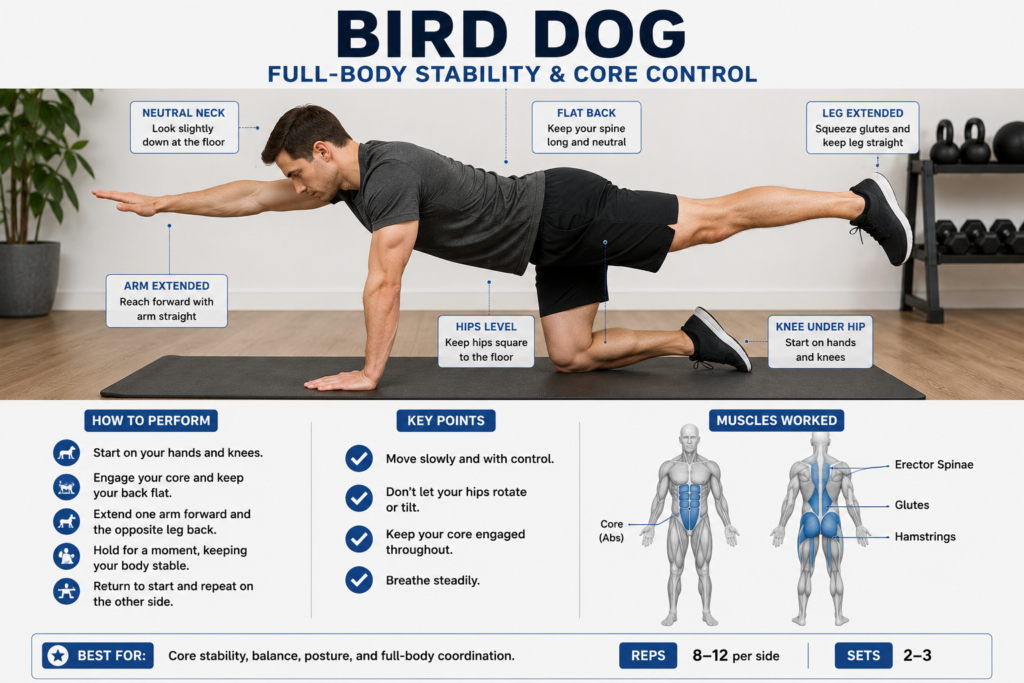
1. Bird Dog. Start on hands and knees, extend one arm forward and the opposite leg backward, keep the hips level, and hold the position without twisting. Simple to learn, brutally effective when done with control instead of speed.
2. Dead Bug (Knee-to-Elbow Variation). Lie faceup and extend the opposite arm and leg while pressing the lower back firmly into the floor to prevent arching. This single cue, keeping that lower back flat, does more for transverse abdominis engagement than almost any other adjustment.
3. Side Plank. Lift the body onto one elbow and foot, pulling the belly button inward to engage the obliques and resist lateral flexion. A strong, stable side plank tends to carry over directly into better control during single-leg and rotational movements elsewhere in a program.
4. Glute Bridge March. Targets the posterior chain and multifidus while resisting hip rotation, one leg at a time, making it especially useful for runners and lifters managing asymmetries between sides.
5. Forearm Plank Walk-Back. A lengthened-lever plank variation that increases demand on the transverse abdominis and multifidus simply by extending the distance between the base of support and the torso. Anyone dealing with joint sensitivity during standard plank holds might also want to check out these bodyweight exercises for knee pain and posture, which cover joint-friendly alternatives across several movement patterns.
Isometric Core Holds That Build Deep Stability
Most people assume building strength means lifting heavier or grinding through endless reps. But sometimes the real driver of a stronger, more stable body is simply holding still. These isometric holds require little to no equipment, sharpen deep core control, and can be done almost anywhere.
1. Bird Dog Hold. Extend the opposite arm and leg, keep the hips level, and hold for 20 to 40 seconds per side without twisting.
2. Reverse Plank. Sit with legs straight, press through the hands and heels, lift the hips into a straight line, and hold for 20 to 45 seconds.
3. Low Push-Up Hold. Lower to a 90-degree elbow bend and hold, keeping the core tight, building from 10 to 20 seconds and beyond.
4. Dead Hang. Hang from a pull-up bar to build grip and shoulder strength while decompressing the spine, starting at 20 seconds and working toward a full minute. The grip demand here overlaps directly with the strategies covered in this guide to building superhuman grip strength, which is worth pairing with this movement for anyone chasing longer hold times.
5. Reverse Tabletop. Lift the hips into a tabletop shape from a seated position, holding for 20 to 40 seconds to counter the tight hip flexors that come from long hours of sitting.
6. Superman Hold. Lie face down, lift the arms and legs simultaneously, and hold for 15 to 30 seconds to build lower back and glute endurance.
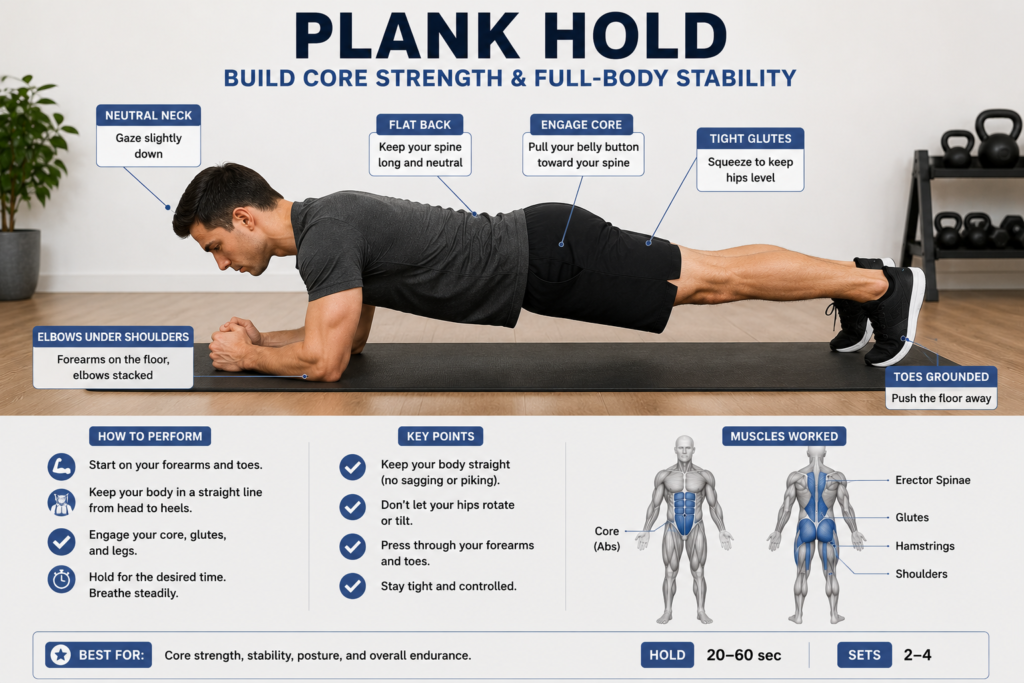
7. Traditional Plank. Hold a straight line from head to heels with the glutes engaged, building from 20 seconds toward a full minute.
8. Hollow Body Hold. Press the lower back into the floor, raise the arms and legs slightly, and hold from 15 seconds upward for advanced deep core control.
These eight holds prove that stillness, done with intent, can build as much functional strength as any weighted movement in the gym.
How to Program Deep Core Training Into a Routine
Beginners should start with 2 to 3 sessions per week, while advanced trainees can work this training daily without much risk of overuse.
Sequencing matters here. Deep core work is most effective either after compound lifts or as a short standalone circuit, since fatigue from heavy compound training can compromise the isometric control this style of training depends on. Volume matters too, not in the sense of chasing more sets for the sake of it, but in applying the same progressive principles covered in this guide to training volume for muscle growth to hold times and rep counts instead of load. One breathing cue ties the whole thing together: diaphragmatic, or “belly breathing,” which unlocks full activation during both the dynamic movements and the isometric holds alike.
Deep Core Exercises by Muscle Target, Type, and Difficulty
| Exercise | Primary Muscle(s) | Movement Type | Difficulty | Equipment |
| Bird Dog | Transverse abdominis, multifidus | Dynamic, anti-rotation | Beginner | None |
| Dead Bug (Knee to Elbow) | Transverse abdominis | Dynamic, anti-extension | Beginner | None |
| Side Plank | Obliques | Isometric, anti-lateral flexion | Intermediate | None |
| Glute Bridge March | Multifidus, glutes, obliques | Dynamic, anti-rotation | Beginner | None |
| Forearm Plank Walk Back | Transverse abdominis, multifidus | Isometric and dynamic hybrid | Intermediate | Mat |
| Reverse Plank | Glutes, hamstrings, upper back | Isometric | Intermediate | None |
| Dead Hang | Grip, shoulders, spine decompression | Isometric | Beginner | Pull-up bar |
| Hollow Body Hold | Transverse abdominis, hip flexors | Isometric | Advanced | None |
Common Mistakes That Undermine Deep Core Training
The most common error is holding the breath or bracing incorrectly instead of using true diaphragmatic engagement, which defeats the entire purpose of training the pressure system in the first place.
Beyond that, a few habits keep showing up:
- Letting the lower back arch during leg-lowering or plank-based movements
- Overtraining without adequate recovery, particularly beginners jumping straight into daily sessions
- Treating deep core work as identical to ab training and defaulting to high-rep flexion movements instead of isometric control
The Bottom Line
Real core strength lives beneath the surface, in the transverse abdominis, multifidus, diaphragm, and pelvic floor, not just the visible abs everyone trains for the mirror. Start with 2 to 3 sessions weekly, combine dynamic stability movements with isometric holds, and prioritize control over speed or rep count. The back pain relief, posture improvement, and athletic carryover tend to show up faster than most people expect.
Ready to build a stronger foundation from the inside out? Explore more training guides on Fitness Geekz for structured, science-backed programs that turn deep core training into real, lasting stability.
Frequently Asked Questions
Exercises that target the stabilizer muscles beneath the visible abs, the transverse abdominis, multifidus, diaphragm, and pelvic floor, to build spinal stability rather than aesthetic definition.
Ab workouts train spinal flexion and rotation for visible muscle definition, while deep core exercises train isometric stability to protect the spine and improve posture and balance.
Beginners should start with 2 to 3 sessions per week, while advanced trainees can incorporate a short circuit daily.
Yes. By strengthening the muscles that stabilize the spine and pelvis, deep core training reduces excessive spinal movement, a common contributor to lower back pain.
Yes. Isometric holds like planks, dead hangs, and hollow body holds build deep core control and endurance without requiring equipment or heavy loading.