

Quick Answer
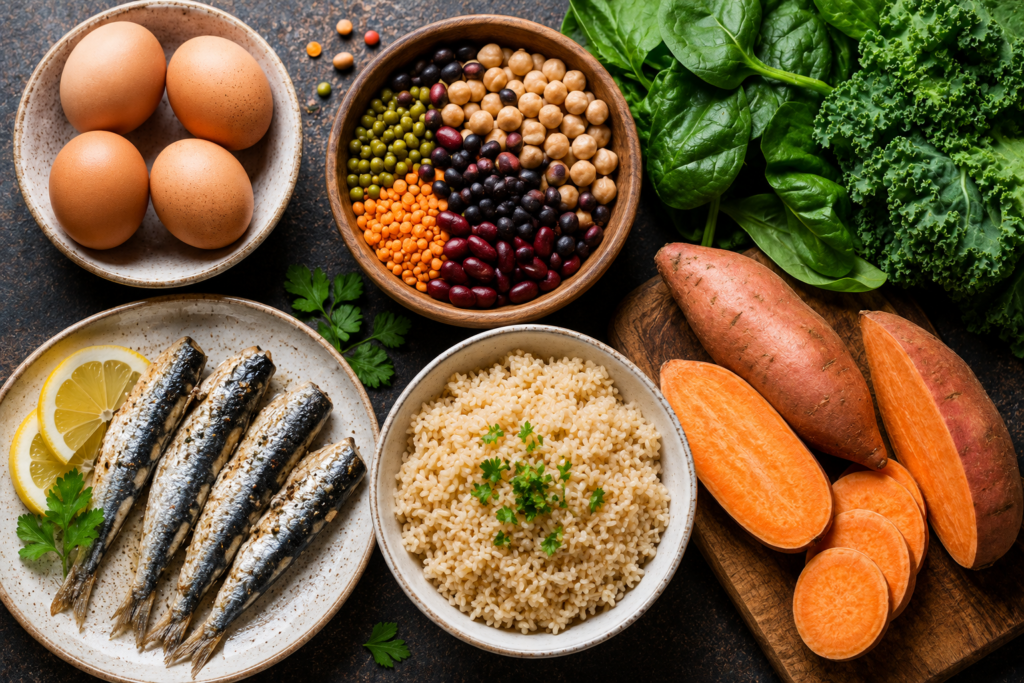
Nutrient-dense foods maximize vitamins, minerals, and quality macronutrients per calorie, fueling strength, muscle repair, and recovery more effectively than processed alternatives. Whole eggs, sardines, legumes, sweet potatoes, brown rice, and leafy greens form the foundation of a performance diet that doesn’t require expensive supplements to work.
- Top nutrient-dense strength foods: whole eggs, salmon or sardines, legumes, sweet potatoes, brown rice, leafy greens
- Daily protein target for strength athletes: 1.6 to 2.2 grams per kilogram of body weight
- Daily carbohydrate target for high-intensity training: 3 to 5 grams per kilogram of body weight
- Post-workout window: 20 to 30 grams of protein within 30 to 60 minutes of training
- Core principle: nutrient density, not food quantity or supplement spending, drives real performance gains
Introduction
Athletes need a lot more fuel than the average person realizes. Daily caloric needs for people in serious training regularly climb past 2,400 to 3,000 kcal for men and 2,200 to 2,700 kcal for women, and that number climbs even higher during heavy training blocks. That’s not a suggestion to eat more of everything. It’s a case for eating the right things, used with precision, instead of just piling more food onto a plate and hoping for the best.
This guide breaks down what nutrient density actually means, the macronutrient numbers that matter most, and a lean, no-frills list of foods that consistently outperform trendier, pricier alternatives. None of it requires a supplement cabinet or a complicated meal plan. Whether that fuel is going toward heavy lifting or something more explosive like plyometric training for speed and agility, the underlying nutritional demands stay largely the same: enough energy, the right building blocks, and consistency over time.
Nutrient-dense foods are those that deliver a high concentration of vitamins, minerals, and quality macronutrients relative to their calorie content, supporting muscle repair, sustained energy, and faster recovery without relying on excess volume or processed supplements.
Want to see how it all comes together? Click here to watch the full exercise:
What Makes a Food “Nutrient-Dense”?
Nutrient density comes down to one simple ratio: how many vitamins, minerals, and quality macronutrients a food delivers per calorie, not the size of the meal or the price tag attached to it.
Whole, minimally processed foods consistently outperform processed alternatives on this ratio, gram for gram, calorie for calorie. And this principle isn’t limited to protein. Carbohydrate sources, fat sources, every category has a spectrum running from nutrient-dense to nutrient-poor, which is exactly why two meals with identical calorie counts can fuel a workout in completely different ways.
The Building Blocks: Macronutrients Athletes Actually Need
Carbohydrates fuel intensity, protein repairs and builds muscle, and fat supports hormone function and long-duration energy, and getting the ratios roughly right matters more than obsessing over any single number.
- Carbohydrates provide 4 calories per gram and serve as the primary fuel source for higher-intensity training. Strength athletes benefit from roughly 3 to 5 grams per kilogram of body weight daily, or approximately 55 to 60 percent of total caloric intake, to keep glycogen stores properly topped off.
- Protein also comes in at 4 calories per gram, but its job is entirely different. Research supports 1.6 to 2.2 grams per kilogram of body weight daily for muscle repair and growth, with 20 to 30 grams specifically consumed post-training to maximize muscle protein synthesis. For a deeper look at what actually accelerates this process day to day, this breakdown of proven tips to build muscle faster naturally covers the training and recovery variables that work alongside these numbers.
- Fat is the most calorie-dense macronutrient at 9 calories per gram. It supports hormone production and recovery, and unsaturated sources, omega-3s especially, offer anti-inflammatory benefits that saturated fats simply don’t provide.
Top Nutrient-Dense Foods for Strength
Three functional categories cover almost everything a strength-focused diet needs.
- High-quality proteins. Whole eggs deliver a complete protein profile plus a nutrient-dense yolk that supports hormone balance, and they’re one of the most cost-efficient protein sources on the planet. Salmon and sardines pair high protein with omega-3 fatty acids that reduce inflammation and support muscle function, and sardines add a bonus most people overlook, edible bones packing a meaningful calcium boost. Legumes, beans, lentils, chickpeas, supply plant-based protein, iron, and complex carbohydrates in a single, inexpensive food.
- Complex carbohydrates. Sweet potatoes bring complex carbs plus vitamin A for sustained training energy and immune support. Brown rice offers steady energy, fiber, and minerals, digesting more slowly than its refined white counterpart. Oatmeal is a textbook slow-release carbohydrate, ideal for pre-training glycogen loading.
- Micronutrient and healthy fat sources. Leafy greens like spinach and kale supply antioxidants that help offset the oxidative stress exercise naturally creates. Beetroot supports blood flow and oxygen delivery, which matters directly for endurance performance. Nuts and seeds bring dense healthy fats, magnesium, and protein for cellular repair and lasting energy between meals.
The No-Frills Performance System: 5 Foods That Actually Do the Work
Elite performers operating under real physical stress, sleep-deprived, underfed, pushed well past normal limits, don’t lean on expensive supplements or complicated meal plans to keep going. They lean on a small handful of cheap, proven foods used with precision. This isn’t about eating more. It’s about eating the right things, structured around three functional layers: a foundation that builds muscle, fuel that powers performance, and a force multiplier that pushes capacity further.
1. The foundation: whole eggs and sardines. Whole eggs remain one of the most cost-efficient complete proteins available anywhere, and the yolk, often unfairly skipped by people chasing lean-and-mean optics, carries the healthy fats and micronutrients that support hormone function under physical stress. Sardines add a second, equally inexpensive layer to that foundation: dense in omega-3 fatty acids and calcium, thanks to those tiny edible bones, they support both muscle function and long-term joint and bone durability.

2. The fuel: white rice and black beans. Protein and fat provide the building blocks, but sustained training needs actual fuel to keep the engine running. White rice digests easily and replenishes glycogen without the digestive drag that heavier foods can cause, while black beans round out the amino acid profile rice is missing on its own. Combined, this pairing forms a complete protein source that rivals animal protein at a fraction of the cost, a strategy that echoes broader research on how whole, plant-based food combinations can build muscle faster than protein supplements ever manage to on their own.
3. The force multiplier: beef liver and peanut butter. Beef liver ranks among the most nutrient-dense foods that exist, concentrated in iron and B vitamins that support red blood cell production, which directly impacts how much oxygen reaches working muscles and, by extension, endurance capacity. Peanut butter serves as caloric insurance, dense, portable, and rich in healthy fats, making it far easier to hit the calorie totals that muscle growth actually requires without needing to eat six separate meals a day.
Nutrient Timing: When to Eat for Performance
Timing affects performance nearly as much as food selection does, and the body’s needs shift noticeably before, during, and after training.
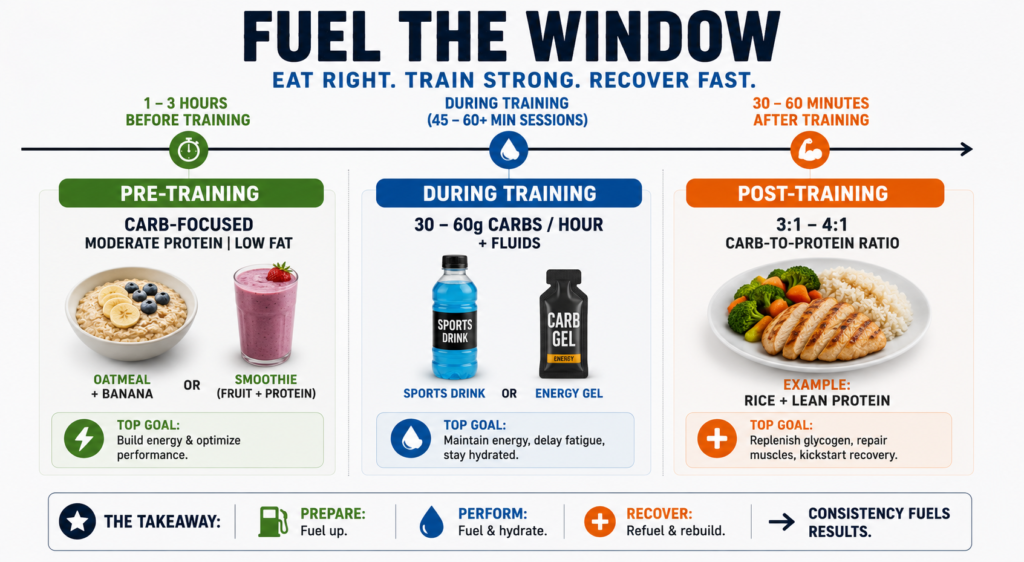
1. Pre-training (1 to 3 hours before). A carbohydrate-focused meal with moderate protein and low fat supports glycogen storage without causing digestive discomfort mid-session. Oatmeal with banana, a fruit smoothie, or yogurt with granola all fit the bill.
2. During training (sessions over 45 to 60 minutes). Fast-digesting carbohydrates, roughly 30 to 60 grams per hour, paired with fluids help maintain energy and stave off glycogen depletion during extended sessions. Shorter sessions generally don’t need any mid-workout fueling at all.
3. Post-training (within 30 to 60 minutes). A carbohydrate-to-protein ratio of roughly 3:1 or 4:1 supports both glycogen replenishment and muscle repair. Whole-food options, a protein smoothie with fruit, or a plate combining lean protein with rice and vegetables, get this done without leaning on processed bars or powders. This window matters just as much whether the training block that day was heavy lifting or the kind of structured programming found in a 90-day at-home muscle-building plan, since recovery nutrition doesn’t really change based on where the workout happened.
Nutrient-Dense Strength Foods by Key Nutrient, Primary Benefit, and Cost
| Food | Key Nutrients | Primary Benefit | Cost Tier |
| Whole Eggs | Complete protein, choline, healthy fats | Muscle repair, hormone support | Low |
| Sardines | Omega-3s, calcium, protein | Anti-inflammatory, bone/joint health | Low |
| White Rice + Black Beans | Complex carbs, complete plant protein | Sustained energy, muscle repair | Low |
| Beef Liver | Iron, B vitamins | Oxygen delivery, endurance capacity | Low |
| Peanut Butter | Healthy fats, calories | Caloric density for muscle growth | Low |
| Sweet Potatoes | Complex carbs, vitamin A | Sustained energy, immune support | Low |
| Salmon | Protein, omega-3s | Inflammation reduction, muscle function | Moderate |
| Leafy Greens | Antioxidants, vitamins | Oxidative stress reduction | Low |
| Nuts and Seeds | Healthy fats, magnesium | Cellular repair, sustained energy | Moderate |
Hydration Basics for Performance Nutrition
Hydration affects performance measurably, and a fluid loss of just 2 percent of body weight can noticeably impair athletic output, an easy number to overlook until it’s already happened.
A solid general guideline is roughly 2 cups of fluid before training, followed by 4 to 6 ounces every 15 minutes during exercise. After training, replace every pound of weight lost with approximately 16 ounces of fluid. Water, milk, and 100 percent fruit juice cover most everyday hydration needs, and sports drinks are best reserved for longer or higher-intensity sessions where electrolyte replacement genuinely matters.
Common Nutrition Mistakes That Undermine Performance
The single biggest mistake is leaning on ultra-processed bars and powders instead of whole foods, convenient, sure, but rarely as nutrient-dense as what they’re replacing.
A few other habits tend to quietly sabotage progress right alongside it:
- Skipping pre-training carbohydrates, which leads to early fatigue and reduced output before the session even ramps up
- Under-eating protein relative to training intensity, which slows down muscle repair and recovery regardless of how hard the workout was
- Testing new foods or supplements on competition day instead of trialing them during practice first, a rookie mistake that can derail an otherwise well-prepared performance
- Treating hydration as an afterthought instead of a planned part of the routine, right up until that 2 percent fluid loss starts showing up in performance numbers
The Bottom Line
Real performance nutrition doesn’t depend on trendy ingredients or expensive supplements. A small, consistent list of nutrient-dense foods, whole eggs, sardines, legumes, sweet potatoes, brown rice, and leafy greens, covers the macronutrient and micronutrient needs that fuel strength, repair muscle, and speed recovery. Build meals around these staples, time intake around training sessions, and stay consistent rather than chasing complexity that doesn’t actually move the needle.
Ready to fuel training the right way? Explore more nutrition and recovery guides on Fitness Geekz for practical, budget-friendly strategies that actually work.
Frequently Asked Questions
Whole eggs, sardines or salmon, legumes, sweet potatoes, brown rice, and leafy greens consistently rank among the most effective nutrient-dense foods for building and maintaining strength.
Research supports 1.6 to 2.2 grams of protein per kilogram of body weight daily, with 20 to 30 grams specifically consumed within 30 to 60 minutes after training.
No. A small group of affordable, nutrient-dense whole foods can meet most performance nutrition needs. Supplements like creatine or caffeine can offer additional benefits, but they aren’t required for a solid foundation.
A carbohydrate-focused meal with moderate protein works well 1 to 3 hours before training, while a meal combining carbohydrates and protein in roughly a 3:1 or 4:1 ratio within 30 to 60 minutes after training supports recovery.
A fluid loss of just 2 percent of body weight can measurably reduce athletic performance, making consistent hydration before, during, and after training essential.