


Quick Answer
Creatine after 40 supports lean muscle preservation, bone density, cognitive function, blood sugar control, and cardiovascular recovery, with research showing measurable strength gains, sharper memory, and reduced age related muscle loss when 3 to 5 grams daily is paired with consistent resistance training.
- Creatine helps counter sarcopenia, the natural muscle loss that accelerates after age 40.
- A standard daily dose of 3 to 5 grams of creatine monohydrate is backed by decades of safety research.
- Studies link creatine supplementation to improved memory, processing speed, and reduced brain fog in adults over 40.
- Creatine paired with resistance training may support bone mineral density and reduce fall risk.
- Long term studies show no kidney damage in healthy adults using recommended doses.

Introduction
There is a quiet shift that tends to happen somewhere around 40. Workouts that used to feel routine start needing an extra day to bounce back from. Stairs feel a little heavier than they should. And every once in a while, a word gets stuck on the tip of the tongue for half a second longer than it used to.
None of that is dramatic. It is not a health crisis. But it is real, and it happens for a reason. Adults lose roughly 3 to 8 percent of muscle mass per decade starting in their 30s, and that process, known as sarcopenia, accelerates noticeably after 40. Muscle does not just disappear quietly either. It takes strength, metabolism, bone support, and mobility down with it.
This is exactly where creatine monohydrate earns its reputation as one of the most extensively studied supplements in existence. Decades of research now cover far more than muscle and gym performance. Bone density. Brain function. Metabolic health. Recovery speed. This article breaks down the real science behind creatine after 40, ten measurable effects worth knowing before starting, a clear comparison table, dosing guidance, and the safety details that actually matter at this stage of life.
Want to see the proper form up close? Click here to watch the full exercise:
What Is Creatine and Why Does It Matter More After 40?
Creatine is a natural compound produced from amino acids and stored primarily in muscle and brain tissue, where it fuels ATP production, the energy source cells use during short bursts of activity like lifting, climbing stairs, or standing up quickly. Its importance increases after 40 as natural creatine stores and muscle mass both begin to decline together.
Why Muscle Loss Accelerates After 40
Sarcopenia is the progressive, age related loss of muscle mass and strength that begins accelerating around age 40 and continues at a rate of roughly 3 to 8 percent per decade without intervention. Left unaddressed, it contributes to slower metabolism, higher body fat, weaker bone supporting muscle tension, and increased fall risk. Pairing creatine with a structured resistance routine is one of the most effective ways to slow this down, and readers looking to rebuild foundational squat mechanics before adding load can start with the deep squat mobility guide.
10 Science-Backed Effects of Taking Creatine After 40
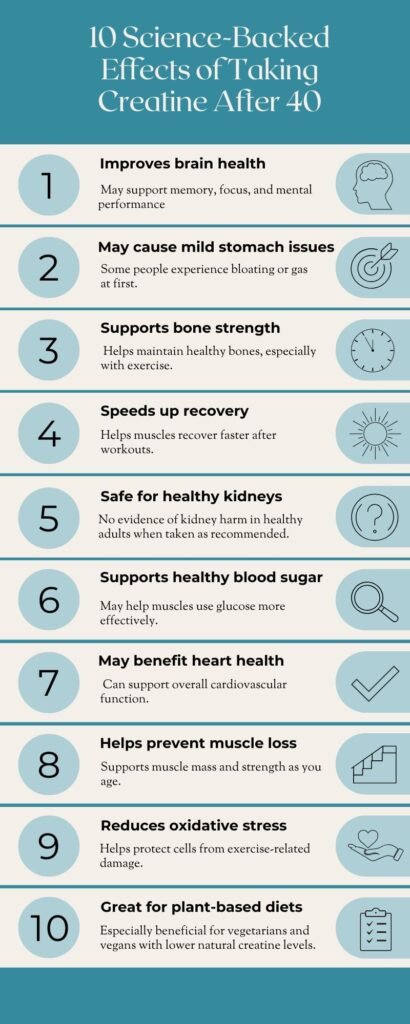
Regular creatine supplementation at the standard 5 gram daily dose produces a measurable range of effects in adults over 40, from improved cognitive performance and faster muscle recovery to better blood sugar regulation and stronger bones, with only mild, adaptation related digestive effects reported in a minority of users.
1. Improved Mental Health and Cognitive Function
Creatine does not stop at muscle. It supplies rapid energy to neural cells through the phosphocreatine system, the same system it uses in muscle tissue. Research shows regular supplementation improves working memory and fluid intelligence, and the effect tends to be more noticeable in adults over 40 who are starting to sense the early signs of cognitive change. Creatine also has neuroprotective properties, helping guard neurons against the oxidative damage that builds up over the years.
2. Possible Gastrointestinal Discomfort
Not every effect is a win, and this one deserves honest attention rather than being glossed over. Some people experience bloating, gas, mild cramps, or occasionally loose stools during the first few weeks of use. The good news is these symptoms typically fade as the body adjusts. Starting with a slightly lower dose or spreading intake across meals usually smooths out the adjustment period.
3. Increased Bone Density
This is one of the most underdiscussed benefits, and it deserves more attention after 40. Creatine supports and helps maintain bone mineral density, particularly when combined with resistance exercise. It ties muscle building directly to skeletal strength instead of treating the two as separate goals, which is exactly how the body actually works.
4. Better Muscle Recovery
Bouncing back after a workout gets noticeably harder past 40. Creatine increases phosphocreatine reserves inside muscle cells, which act as a rapid energy source during training and significantly speed up recovery afterward. That means more consistent training frequency without the soreness dragging on for days.
5. No Evidence of Kidney Harm in Healthy Adults
Contrary to a common misconception, creatine is considered safe for kidney function in healthy individuals. Long term studies show no evidence of kidney damage at recommended doses in people without pre-existing kidney conditions. Staying well hydrated during supplementation is still a smart, simple precaution.
6. Potential to Lower Blood Glucose
Creatine increases the expression of glucose transporters in muscle cells, improving the body’s ability to take up and use blood glucose efficiently. Some studies have recorded insulin sensitivity improvements of up to 23 percent in healthy individuals, which is a meaningful number for anyone paying closer attention to metabolic health after 40.
7. Improved Cardiovascular Health
Heart health becomes a growing priority after 40 as cardiovascular risk naturally rises. Research indicates creatine may help protect against ischemic damage caused by reduced blood flow and support recovery following cardiovascular events. This is an area of ongoing research, but the early signals are promising.
8. Prevents Age-Related Muscle Loss
This is the benefit that ties everything else together. Creatine’s ability to combat sarcopenia, the progressive loss of muscle mass and strength that begins accelerating after 40, is one of its most well documented effects, especially when paired with structured resistance training rather than used on its own.
9. Increased Resistance to Oxidative Stress
Oxidative stress is one of the main drivers behind cellular aging, and it becomes a bigger challenge after 40. Studies show creatine supplementation meaningfully reduces markers of oxidative damage following high intensity exercise, supporting long term cellular resilience rather than just short term performance.
10. Especially Beneficial for Vegetarian and Vegan Diets
Vegetarians and vegans typically carry 20 to 30 percent less creatine in muscle tissue than regular meat eaters, since dietary creatine comes primarily from animal sources. For anyone over 40 following a plant-based diet, supplementation offers a particularly noticeable benefit since baseline stores start lower to begin with. Anyone building a plant-forward approach to muscle maintenance might also find value in the foods that build muscle faster than protein supplements guide.
Does Creatine Actually Cause Hair Loss?
There is no conclusive scientific evidence establishing a direct link between creatine supplementation and hair loss, despite this being one of the most persistent myths surrounding the supplement.
How Much Creatine Should Adults Over 40 Take?
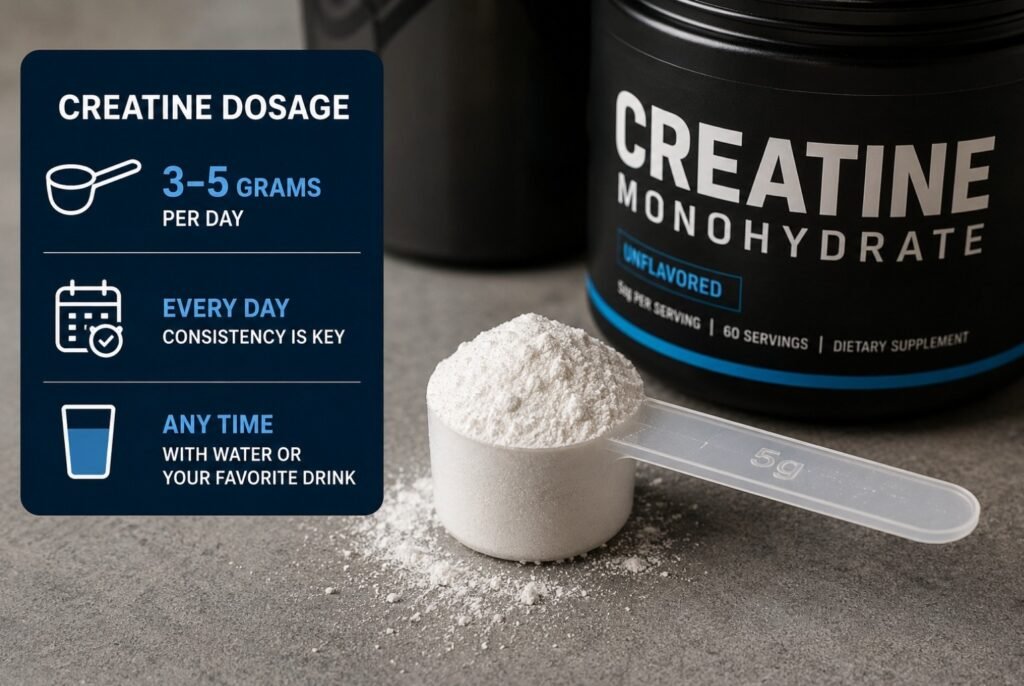
The standard, research backed maintenance dose for adults over 40 is 3 to 5 grams of creatine monohydrate daily, taken consistently, with no loading phase required. Staying well hydrated throughout supplementation is strongly recommended.
Choosing the Best Creatine Supplement
Creatine monohydrate remains the most researched, affordable, and effective form available. Third-party certification through USP or NSF verifies label accuracy and confirms testing for contaminants, an important detail given that supplements are not FDA regulated in the same way medications are.
Creatine After 40, Key Effects at a Glance
| Area of Impact | Primary Benefit | Supporting Mechanism | Best Paired With |
| Muscle Mass | Reduces sarcopenia and helps preserve lean muscle tissue | Increases protein synthesis and replenishes phosphocreatine stores | Resistance training 2 to 4 times per week |
| Cognitive Function | Supports memory, learning, and processing speed | Improves ATP buffering and energy availability in brain cells | Adequate sleep and regular mental stimulation |
| Bone Health | Helps maintain or improve bone mineral density | Greater mechanical loading through stronger muscles | Weight-bearing and resistance exercises |
| Blood Sugar Control | Improves insulin sensitivity and glucose regulation | Increases glucose transporter (GLUT4) expression and cellular glucose uptake | Balanced carbohydrate intake and regular exercise |
| Cardiovascular Health | Supports recovery and may reduce the risk of ischemic damage | Enhances cellular energy availability and energy metabolism | Regular aerobic exercise and heart-healthy habits |
| Recovery | Speeds recovery between training sessions and reduces fatigue | Restores phosphocreatine stores for faster ATP regeneration | Adequate protein intake, hydration, and quality sleep |
Who Should Talk to a Doctor Before Starting Creatine After 40
Most healthy adults over 40 can start creatine safely without medical clearance. Anyone with kidney disease, liver disease, a chronic medical condition, or symptoms like unexplained swelling or persistent digestive issues should speak with a healthcare provider before starting.
For readers who are still building baseline joint stability and want low impact strength work to pair with creatine’s recovery benefits, the isometric training guide and the bodyweight exercises for knee pain and posture guide are both worth exploring alongside a resistance program.
Conclusion
Creatine after 40 is not a performance gimmick reserved for athletes chasing personal records. It is one of the most well researched tools available for preserving muscle, protecting bone density, supporting brain function, and improving recovery during a decade when the body naturally starts working against those goals.
The path forward is simple. Start with 3 to 5 grams daily, pair it with consistent resistance training two to four times per week, stay hydrated, and give the body a few weeks to adjust before expecting results.
For a complete plan built around muscle preservation, mobility, and long term strength, explore the training and healthy aging guides available on Fitness Geekz, and start today rather than waiting until the next decade of muscle loss has already happened.
Frequently Asked Questions
Yes, decades of research confirm creatine monohydrate is safe for healthy adults over 40 at the standard 3 to 5 gram daily dose, with no evidence of kidney or liver damage in people without pre-existing conditions.
Yes, creatine directly helps combat sarcopenia, the age-related decline in muscle mass and strength, especially when combined with regular resistance training, making it one of the most effective supplements for muscle preservation after 40.
Research suggests creatine supplementation can improve working memory, processing speed, and mental clarity, with some studies showing the strongest cognitive benefits appearing in adults over 40 who are starting to notice early age related changes.
No, there is no conclusive scientific evidence linking creatine to hair loss, and long term studies show no kidney damage in healthy individuals using recommended doses.
The most effective approach is 3 to 5 grams of creatine monohydrate daily, taken consistently without a loading phase, paired with resistance training and adequate hydration for the best results.