
Quick Answer: Spine strength exercises build a resilient, pain-resistant back by training core stability, glute strength, and postural muscles together rather than isolating the lower back. Clinically supported movements like the bird-dog, side plank, and pelvic bridge are widely recommended by physical therapists and spine researchers.
- A resilient spine depends on core stability, glute strength, and postural muscle endurance working together
- The bird-dog, side plank, and curl-up make up widely referenced “Big Three” spine stability exercises
- Spine stability actually supports more flexibility and range of motion, not less
- 2–3 sessions per week is a commonly recommended frequency for spine-strengthening routines
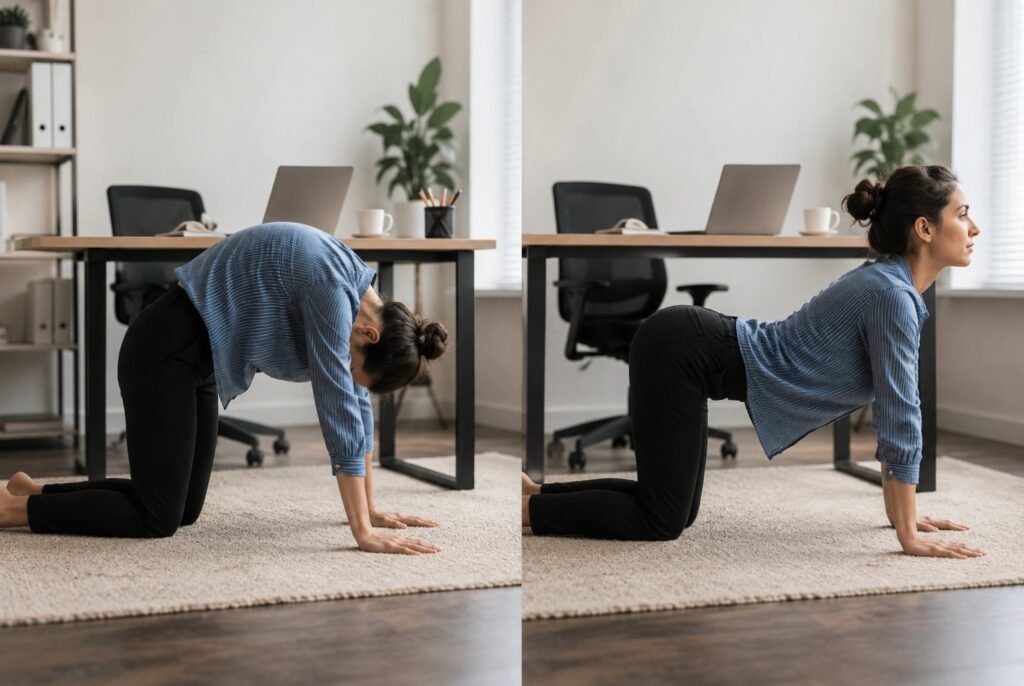
- Gentler daily movements like cat-cow stretches and pelvic tilts help counteract stiffness from prolonged sitting
Introduction
Most adults spend six to nine hours a day sitting between work, meals, and screen time, and that’s before factoring in the commute, dinner, or an evening on the couch. That much stillness takes a toll, and it’s a major reason so many people feel a familiar tightness the moment they finally stand up. The instinct is usually to stretch it out and move on. The better move is to actually strengthen the structure that’s been quietly compensating all day.
Here’s the part that surprises most people: a stable spine isn’t a stiff, overly cautious one. Physical therapists and spine researchers consistently point to the opposite, stability is what allows the back to move confidently through daily life without flinching at every twist or lift. This guide breaks down what actually builds a resilient spine, four clinically backed exercises to start with, a note on more advanced spinal mobility work like the Jefferson Curl, and how to turn all of it into a realistic weekly routine.
Curious what it looks like in action? Watch the full exercise here:
What Is Spine Strength and Why Does It Matter?
Spine strength refers to the ability of the muscles surrounding the spine, the abdominals, back extensors, glutes, and obliques, to stabilize the trunk during movement, reducing strain on the lower back and lowering the risk of injury. It isn’t about training one muscle in isolation; it’s about the entire trunk working in coordination.
Physical therapists sometimes describe this coordination like a symphony: every section of the core needs to play its part in rhythm, and if one section is off, the entire structure feels it. That’s a big part of why isolated ab work alone often falls short of actually protecting the back, a strong six-pack doesn’t mean much if the glutes and lower-back extensors aren’t pulling their weight too.
Does a Stronger Spine Mean a Stiffer Back?
No, a well-stabilized spine actually supports a fuller, more confident range of motion. Stability reduces the fear-driven guarding and bracing that often makes back pain worse in the first place, which is why people who avoid movement out of caution frequently end up stiffer and more pain-prone over time, not less.
The Best Spine Strength Exercises, Backed by Research
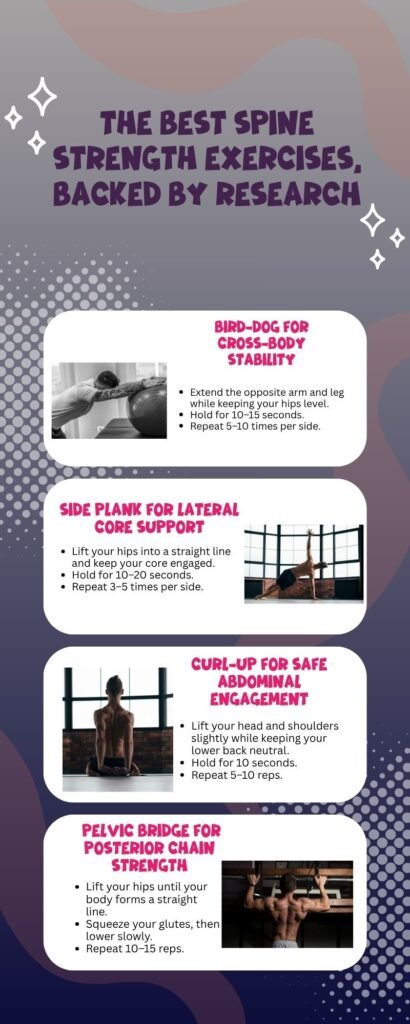
Three exercises show up consistently across physical therapy and spine biomechanics research: the bird-dog, the side plank, and the curl-up. Together, they form a well-rounded foundation for spine stability, and a fourth, the pelvic bridge, rounds things out by targeting the posterior chain.
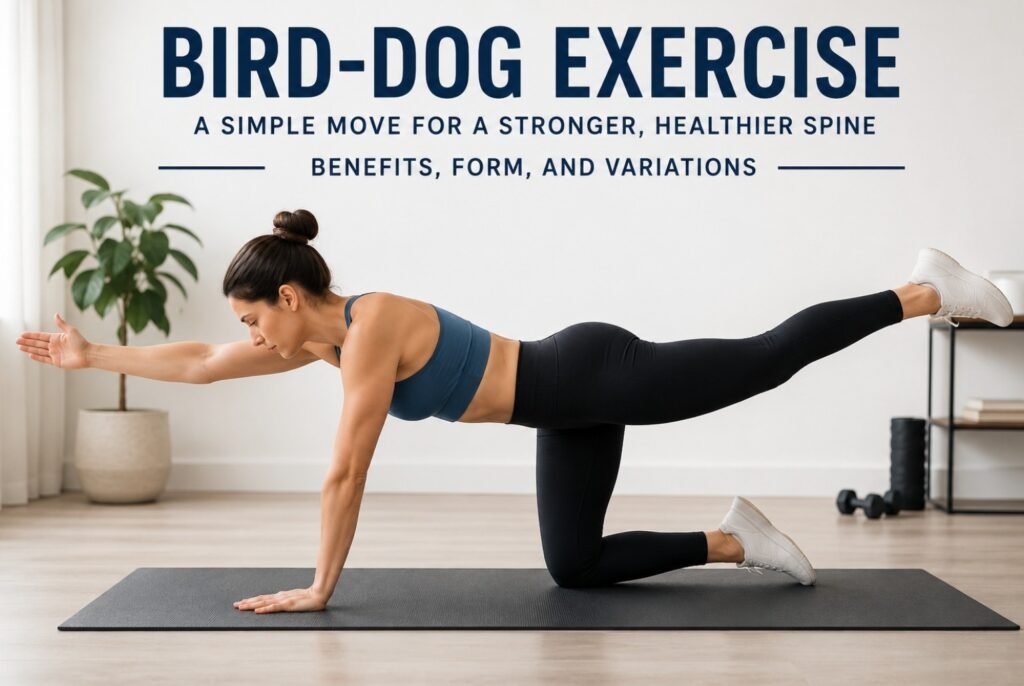
1. Bird-Dog for Cross-Body Stability
Start on hands and knees, then extend one arm forward and the opposite leg straight back simultaneously, keeping both parallel to the floor and the hips square rather than tilted to one side. Hold briefly, return to the start, and switch sides.
Different clinical sources recommend slightly different hold times and rep counts, some suggest holding for 10 seconds and repeating 5 times per side, others recommend up to 15 seconds for 5 to 10 reps. Both ranges are reasonable; what matters more is keeping the hips stable and the movement controlled rather than chasing a specific number. This kind of cross-body coordination pairs naturally with other functional stability work, and it’s worth pairing with a solid warm-up routine like the one outlined in this best morning workout routine guide, since spine work responds well to being trained consistently first thing in the day.
2. Side Plank for Lateral Core Support
Lie on the side with the forearm under the shoulder and the knees or legs stacked, then lift the hips into a straight line from head to knees. Hold, then lower with control before repeating on the other side.
This movement targets a part of the core that often gets skipped entirely: the obliques and quadratus lumborum, both of which play a major role in lower back support during everyday twisting and side-bending. Most guidance suggests holding for 10 to 20 seconds across 3 to 5 reps per side, which is enough time under tension to build real lateral stability without turning the exercise into an endurance grind.
3. Curl-Up for Safe Abdominal Engagement
Lie on the back with one leg extended straight and the other knee bent, hands placed under the lower back to preserve its natural arch. Exhale and lift the head, shoulders, and chest as a single unit, just enough to feel muscular tension, without bending the spine, tucking the chin, or tilting the head back. Hold for around 10 seconds, then lower slowly.
This version protects the spine from the repeated flexion stress that comes with a traditional sit-up, while still building genuine abdominal endurance. It’s a small technical difference that matters: the goal is bracing strength, not repeated bending under load.
4. Pelvic Bridge for Posterior Chain Strength
Lie on the back with the knees bent and feet flat, then lift the hips into a controlled bridge until the body forms a straight line from shoulders to knees. Hold, then roll back down slowly, ideally one vertebra at a time rather than dropping all at once.
This one targets the glutes and hamstrings directly, both essential for taking pressure off the lower back during everyday lifting and carrying. A stronger posterior chain also tends to improve posture over time, which connects naturally to upper-body work; anyone dealing with rounded shoulders or upper-back tightness alongside lower-back stiffness might find this comparison of inverted rows versus lat pulldowns for posture and upper back strength useful for closing that gap.
Spine Strength Exercises at a Glance
| Exercise | Primary Area Trained | Typical Hold / Repetitions | Best For |
| Bird Dog | Cross body stability, glutes, and back extensors | 10 to 15 second hold, 5 to 10 reps per side | Improving balance, spinal stability, and core coordination |
| Side Plank | Lateral core, including the obliques and quadratus lumborum | 10 to 20 second hold, 3 to 5 reps per side | Building rotational stability and lateral core strength |
| Curl Up | Abdominal muscles | 10 second hold, 5 reps per side | Developing safe abdominal strength while minimizing spinal stress |
| Pelvic Bridge | Glutes, hamstrings, and lower back | 5 to 15 second hold, 10 reps | Strengthening the posterior chain and improving hip stability |
| Cat Cow Stretch | Spinal mobility | 5 slow repetitions | Relieving daily stiffness and improving spinal movement |
What About Spinal Mobility Exercises Like the Jefferson Curl?
The Jefferson Curl is a loaded spinal flexion exercise that has gained popularity as a way to build strength and control through a fuller range of spinal motion, standing on a raised platform, holding a light weight, and slowly rolling down through the spine one vertebra at a time before reversing the movement.
Some coaches argue that the older research warning against spinal flexion under load was based on cadaver studies, which can’t reflect how a living, adapting spine actually responds to progressive loading over time. That’s a genuinely interesting argument, but it’s worth treating as one perspective in an ongoing conversation within the fitness and physical therapy world, not a settled fact. The Jefferson Curl also demands real tendon and connective tissue resilience to load safely, which is a slower adaptation than muscle strength, anyone curious about that side of training might find this guide to tendon strengthening exercises a useful next step before attempting more advanced spinal loading work.
The safer starting point for most people is building a solid stability foundation with the four exercises above first. The Jefferson Curl and similar advanced spinal mobility work are better viewed as an optional next step for those already comfortable with foundational core training, ideally introduced gradually and under professional guidance rather than as a first move.
Everyday Habits That Support Spine Health
Beyond structured exercise, a few everyday habits make a real difference: taking regular movement breaks during long stretches of sitting, staying mindful of posture, walking briskly when possible, and layering in gentle daily mobility work like cat-cow stretches or trunk rotations. None of these require equipment or much time, but consistency matters more than intensity here. Static holds like the side plank and pelvic bridge are technically isometric exercises, and understanding why that specific type of muscle contraction is so effective for joint-friendly strength is worth exploring further in this breakdown of the benefits of isometric exercises.
How to Program Spine Strength Exercises Into a Weekly Routine
Turning these exercises into a sustainable habit follows a simple structure:
- Warm up with 5–10 minutes of light movement, such as walking
- Perform the bird-dog, side plank, curl-up, and pelvic bridge for 2–3 sets each, moving slowly and with control
- Train this routine 2–3 times per week, progressing to daily maintenance once comfortable with the movements
- Stop immediately and consult a healthcare professional if any exercise causes pain, none of these movements should hurt when performed correctly
- Layer in gentler daily mobility work, like cat-cow stretches, on non-training days to counteract sitting-related stiffness
Moving Forward With a Stronger, More Resilient Spine
A resilient back isn’t built by avoiding movement out of fear, it’s built by training the core, glutes, and postural muscles to stabilize the spine so it can move through daily life with confidence rather than hesitation. The four exercises above give a well-rounded, low-risk starting point, and more advanced spinal mobility work can come later, once that foundation is solid.
The next step is simple: start with two to three sessions this week, keep the movements slow and controlled, and layer in daily mobility habits on the days in between. Explore more training and mobility resources on Fitness Geekz to build out a complete, sustainable routine around a stronger, more resilient back.
FAQs
The bird-dog, side plank, curl-up, and pelvic bridge are among the most consistently recommended spine-strengthening exercises, since they build core, glute, and postural muscle support around the spine without excessive strain.
Gentle, controlled exercises can often help build supportive strength, but anyone with persistent or serious back pain should consult a doctor or physical therapist before starting a new exercise routine.
The Jefferson Curl is an advanced loaded spinal flexion exercise used to build strength through a full range of spinal motion, but it requires a solid stability foundation and careful, gradual loading, making it better suited to those already comfortable with foundational core work.
Most guidance recommends 2 to 3 sessions per week to build strength, with many people eventually progressing to daily practice for long-term maintenance.
Yes, prolonged sitting is strongly linked to back and neck stiffness, and a combination of regular movement breaks, posture awareness, and targeted spine-strengthening exercises can help prevent and relieve this type of pain.