


Some of the strongest people in any gym, men and women who can deadlift 400 pounds and squat twice their bodyweight, still get injured picking up a pencil or stepping off a curb. The problem is not weak muscles. The problem is weak tendons, and most training programmes never address them.
Think of muscles as towers and tendons as the cables on a suspension bridge. The towers can be as tall and powerful as engineering allows, but if the cables fail, the entire structure collapses. Muscle strength without tendon resilience is exactly that. A powerful system built on a foundation nobody bothered to maintain.
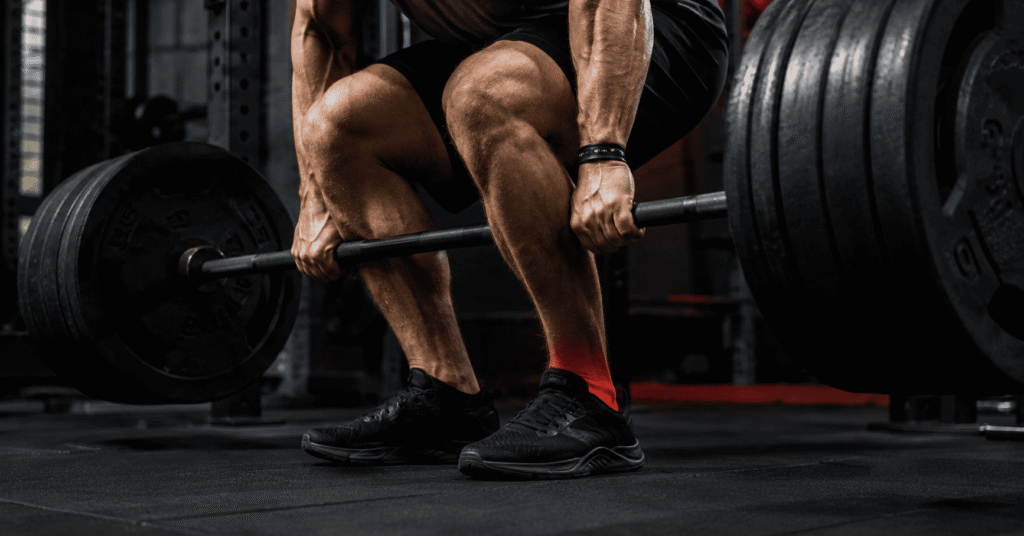
Here is the statistic that changes the conversation: tendons age up to 3 times faster than muscles. After the age of 40 they become the genuine weak link in the chain, not the muscles that years of training have built up. One sudden movement, a sprint, a stumble, or a reach overhead, and the result is a torn Achilles, a blown knee, or a shredded rotator cuff that takes months to recover from.
The reason strong muscles still get injured is that tendons adapt 3 to 4 times more slowly than muscle tissue, creating a dangerous mismatch where muscles can generate far more force than the connecting tendons can safely transmit. Targeted tendon strengthening exercises close that gap. This article explains exactly how.
Unlock your full potential, one rep, one perfect form at a time. Watch the full exercise demo here:
The Reason Strong People Still Get Hurt
Most people assume that if the muscles are strong, the whole system is strong. That assumption is biologically incorrect and it is responsible for a significant proportion of the injuries that sideline strong, fit, active people at exactly the wrong moments.
Muscles show measurable strength gains within 2 to 4 weeks of consistent training. Tendons require 8 to 12 weeks for initial structural improvements and up to a full year for complete remodelling. This biological gap is the most overlooked variable in fitness and the primary driver of most training-related injuries in people who consider themselves strong and well-conditioned.
Early strength gains from training are primarily neural, meaning the brain learns to recruit and coordinate existing muscle fibres more efficiently. The tendon’s physical thickness, stiffness, and structural integrity take months of specific loading to catch up. During that window the muscle can produce more force than the tendon can safely handle. That is not a rare edge case. That is the normal state of most people who train consistently without specifically targeting their tendons.
The Hidden Problem Inside Every Tendon
Tendons are not structurally uniform throughout their length. They contain stronger and weaker sections distributed at different points. Research from Dr. Keith Baar at UC Davis explains this clearly. When a muscle is loaded quickly through a range of motion, the strongest sections of the tendon absorb the training stimulus while the weaker sections remain entirely unloaded and unadapted. The stronger sections are literally shielding the weaker ones from the stress that would make them resilient. This is called stress shielding, and it explains one of the most baffling injury patterns in sport.
Aaron Rodgers, an NFL quarterback reportedly had elite lower-body strength, yet still suffered a complete Achilles tendon rupture during explosive play. Research on Achilles injuries shows that maximal strength and tendon resilience are not always the same thing. Tendons can accumulate degenerative changes over years of high-load training, and rapid explosive force is one of the most common mechanisms behind rupture. In many athletes, the injury occurs not because the body is weak overall, but because a vulnerable tissue reaches its mechanical limit under peak demand.
Why Conventional Training Leaves Tendons Vulnerable
Dynamic repetitive training, meaning sets and reps through a range of motion, develops the stronger sections of a tendon while the weaker sections continue to be shielded from any meaningful stimulus. Sustained isometric holds change this pattern entirely. When a hold is maintained long enough, the stronger sections fatigue under sustained load and the mechanical stress shifts to the weaker sections, forcing them to adapt and strengthen for the first time. This is the specific mechanism that makes joint stability exercises using isometric tension not optional extras in a training programme but the missing component that makes everything else sustainable.
The Science of Tendon Adaptation
Three specific training stimuli drive tendon adaptation, and understanding how each works makes it far easier to apply them intelligently.
- Isometric loading increases tendon stiffness and induces what exercise scientists call stress relaxation, which allows the tendon to bear heavy loads without excessive lengthening or micro-tearing. It is the most joint-friendly and most accessible tendon training method available, and it is where every serious approach to injury prevention should begin.
- Heavy slow resistance training promotes collagen synthesis and increases tendon diameter. The critical variable is the slow eccentric lowering phase of 3 to 5 seconds, which gives the tendon time to adapt to the load rather than being overwhelmed by the speed of the movement. Rushing the lowering phase is one of the most common mistakes in conventional strength training, and it is the one that most consistently prevents tendons from developing the structural resilience they need.
- Plyometric training develops the stretch-shortening cycle, which is the tendon’s ability to store elastic energy during rapid lengthening and release it explosively during contraction. This quality is essential for athletic performance but must be introduced at low volume and progressed very gradually because the tendon’s capacity for elastic loading develops significantly more slowly than the muscle’s.
The Nutrition Side of Tendon Health That Most People Miss
Tendons are composed primarily of Type I collagen, and collagen synthesis requires specific nutritional inputs that general protein intake alone does not fully cover. Adequate total protein provides the amino acids for structural repair. Vitamin C directly supports the collagen formation process by acting as a cofactor in collagen cross-linking. Consuming protein alongside Vitamin C in the period surrounding training has been shown to enhance the tendon’s collagen synthesis response to mechanical loading. This is one of the simplest and most underused nutritional strategies available for anyone serious about athletic longevity training.
5 Tendon Strengthening Exercises That Injury-Proof the Body
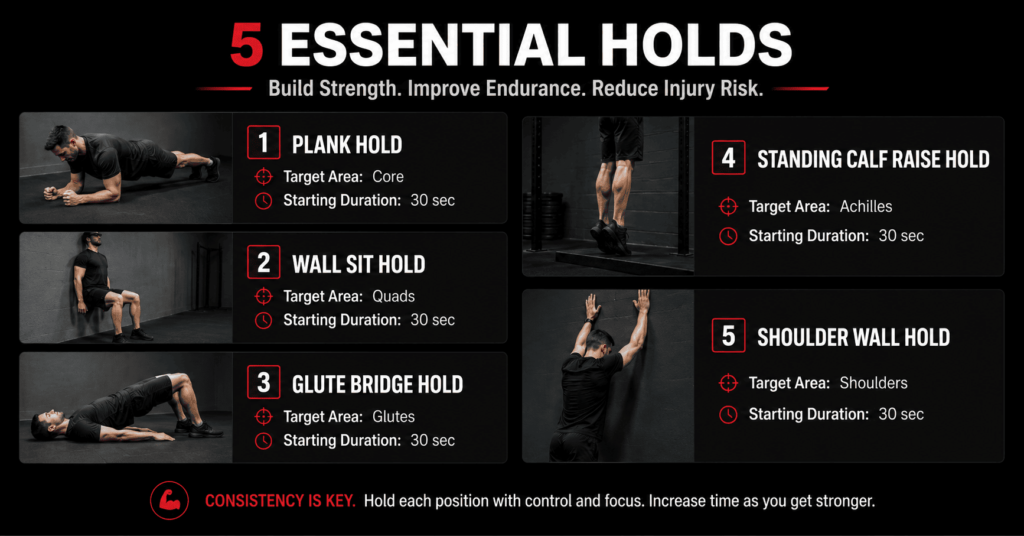
These five holds target the tendons most vulnerable to injury in active people. The full routine takes 10 minutes and requires no equipment beyond a pull-up bar.
Hold 1: Standing Calf Raise Hold for Achilles Resilience
The Achilles is the strongest tendon in the human body and also one of the most commonly ruptured. Sudden Achilles ruptures almost always occur at weak unshielded sections that dynamic calf training never specifically loaded.
Stand on the edge of a step, rise onto the toes, then slowly lower into a deep stretch position and hold the bottom rather than the top. Holding at the stretched bottom position specifically targets the sections of the Achilles that conventional calf raises, which are typically held at the top of the movement, consistently fail to reach. That simple change in where the hold is maintained makes the difference between an exercise that feels familiar and one that actually targets the tendon sections most at risk.
Start with 30 seconds and build progressively toward 2 minutes.
Hold 2: Spanish Squat Hold for Patellar Tendon and Knee Health
Most chronic knee pain, particularly the kind that makes climbing stairs or standing from a chair genuinely uncomfortable, is not a joint problem. It is a patellar tendon problem caused by years of loading the knee without specifically addressing the tendon running across it.
Lean back against a wall and place a resistance band or folded towel behind both knees. Lower until the thighs are parallel to the floor and hold. The band or towel behind the knees changes the joint mechanics and specifically increases the loading stimulus on the patellar tendon rather than primarily loading the quadriceps.
Start with 30 seconds and build toward 90 seconds. Within a few weeks stairs stop hurting, knees feel more stable under load, and standing up from a chair becomes progressively easier.
Hold 3: Deep Push Up Hold for Elbow, Wrist, and Shoulder Tendons
Elbow and wrist pain in active people almost always originates in tendons that have never been specifically loaded in a stretched position. Tennis elbow, golfer’s elbow, and chronic wrist discomfort are typically symptoms of the same underlying problem. The tendons at the end range of elbow and wrist extension have been chronically stress shielded throughout years of training.
Lower into the bottom of a push up with the chest 1 to 2 inches above the floor and elbows close to the body at roughly 45 degrees. Hold with full body tension throughout. This position loads the wrist extensors, elbow flexor tendons, and anterior shoulder tendons simultaneously, addressing three of the most commonly injured upper body tendon sites in a single hold.
Start with 20 seconds and build toward 60 seconds.
Hold 4: Wall External Rotation Hold for Rotator Cuff Tendons
The rotator cuff is four muscles and their associated tendons working together to stabilize the shoulder during every overhead, pressing, and pulling movement performed in training and daily life. Most shoulder injuries originate in weak or undertrained rotator cuff tendons rather than the larger superficial muscles of the shoulder that conventional pressing work develops.
Stand beside a solid wall with the elbow bent at 90 degrees at shoulder height. Press the back of the hand against the wall and hold maximum isometric tension without any movement occurring. The rotator cuff tendons respond exceptionally well to this specific stimulus because the joint position remains controlled and stable throughout, allowing progressive loading without the instability risk that weighted rotational exercises carry when the shoulder is already compromised.
Hold for 30 to 60 seconds per side.
Hold 5: Active Dead Hang for Grip, Spine, and Upper Body Tendon Health
Grip strength is one of the strongest predictors of all-cause mortality in the research literature. Every 11-pound drop in grip strength is associated with a 16 percent higher risk of early death. Beyond longevity, the tendons of the forearm, wrist, and hand are among the most chronically undertrained structures in people who primarily train with machines or fixed-path equipment.
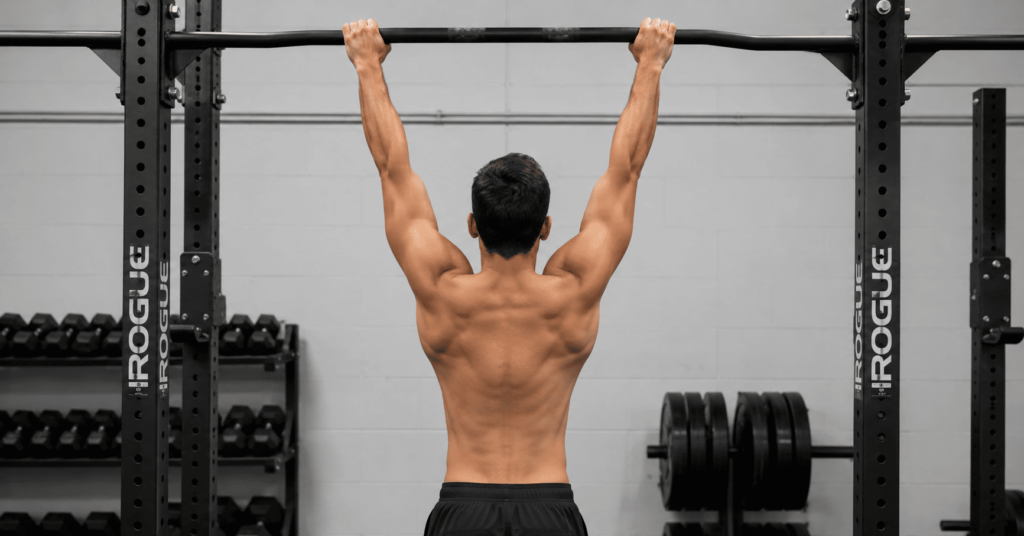
Hang from a pull-up bar and pull the shoulder blades down and back slightly while engaging the lats throughout. This is an active hang, not a passive one. The body should feel tense and controlled rather than simply dangling. A passive hang decompresses the spine but does relatively little for tendon adaptation. An active hang loads the forearm tendons, the shoulder capsule tendons, and the lat tendons simultaneously while still providing spinal decompression from daily compressive forces.
Start with 15 seconds and build toward 60 seconds.
The Complete 10 Minute Tendon Routine
- Perform all 5 tendon holds in sequence with short rests between each movement.
- The full routine takes around 10 minutes to complete.
- Practice the routine 3 times per week on non-consecutive days.
- Allow 48–72 hours between sessions for proper tendon collagen remodelling.
- Recovery days are essential because tendon adaptation happens during rest.
- Avoid training the routine daily or increasing hold times too quickly.
- Start with the lower end of the recommended hold durations.
- Increase hold time gradually by about 5 seconds each week as control improves.
- Only progress when you can maintain proper form without breakdown.
- The routine can also be used as a warm-up before strength or conditioning workouts.
- Isometric holds improve muscle fibre activation and neural drive.
- Better activation leads to improved joint stability and movement quality during training.
- Strong tendons support pain-free movement, balance, joint stability, and long-term mobility.
Conclusion
The most dangerous training mistake is not overtraining. It is building impressive muscle strength while systematically ignoring the tendons that connect that strength to the skeleton. Every rep of every set adds to the force a muscle can generate. Without a parallel investment in tendon resilience, that growing force is eventually transmitted through a structure that was never conditioned to handle it. That is not bad luck. That is predictable physics.
Five holds. Ten minutes. Three times per week. That is the entire investment required to close the gap between muscle strength and tendon resilience that causes most of the injuries that sideline strong, fit, active people at exactly the wrong moments.
The bridge does not collapse because the towers are weak. It collapses because the cables were never maintained. Train the cables.
For more science-informed training guides built around long-term joint health and athletic longevity, explore the full resource library at Fitness Geekz.
Frequently Asked Questions
Muscles adapt much faster than tendons. Muscle strength can improve within weeks, while tendons may need months for meaningful structural adaptation. Over time, this creates a mismatch where powerful muscles place more force on connective tissue that has not fully strengthened yet, increasing injury risk during sudden high-force movements.
Some of the most effective tendon strengthening exercises are isometric holds, because they load connective tissue safely and consistently. Key movements include standing calf raise holds, Spanish squat holds, deep push up holds, wall external rotation holds, and active dead hangs. Performed consistently three times weekly, they help improve tendon resilience and joint stability over time.
Most people notice early improvements in tendon stiffness and joint stability within 6 to 8 weeks of consistent training. Larger structural adaptations such as increased collagen density and tendon thickness typically require 3 to 6 months of progressive loading and recovery.
They can significantly reduce the risk. Joint stability exercises strengthen the weak sections of tendons and improve the connective tissue quality that helps absorb force safely. While no training method removes injury risk completely, long-term tendon conditioning meaningfully improves resilience against major overuse and rupture injuries.
Traditional strength training focuses mainly on muscle growth and performance. Athletic longevity training prioritises tendon health, connective tissue resilience, joint stability, movement quality, and recovery capacity so the body can continue performing well over years rather than breaking down from repetitive stress and preventable injuries.