

Quick answer:
The most useful exercises for people who sit all day target the areas prolonged sitting affects most directly tight hip flexors, weakened glutes, and a rounded upper back. A 10-minute routine covering a hip flexor stretch, glute bridge, wall angel, sit-to-stand squat, hip hinge, and chest stretch addresses all three areas without any equipment.
- Prolonged sitting shortens the hip flexors and deactivates the glutes, which together contribute to lower back discomfort.
- Ten minutes is enough time to meaningfully counteract a full day at a desk; it doesn’t require a gym or equipment.
- Breaking sitting time into shorter interruptions matters as much as the total minutes of movement.
- “Movement snacks” of 1 to 2 minutes between meetings add up meaningfully across a workday.
- Consistency across the week matters more than doing the full routine perfectly once.
Why Sitting All Day Takes a Toll
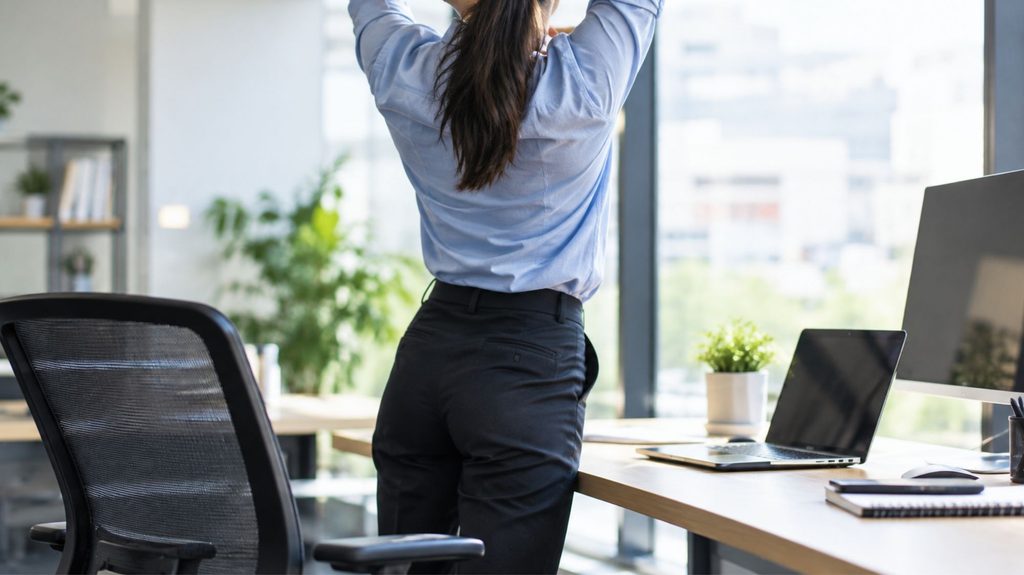
A desk job doesn’t feel physically demanding at the moment, which is part of why its effects sneak up gradually rather than announcing themselves. Why is sitting all day bad for you? Prolonged sitting places the hip flexors in a shortened position for hours at a stretch, which contributes to tightness, while the glutes stay switched off long enough to weaken from disuse. The World Health Organization’s 2020 guidelines on physical activity and sedentary behaviour note that adults should limit time spent sedentary and that replacing it with movement of any intensity including light activity provides real health benefits.
This isn’t about alarm bells over a single long day at a desk. It’s a cumulative pattern worth interrupting regularly, and the interruption itself doesn’t need to be complicated or long.
The 10-Minute Routine
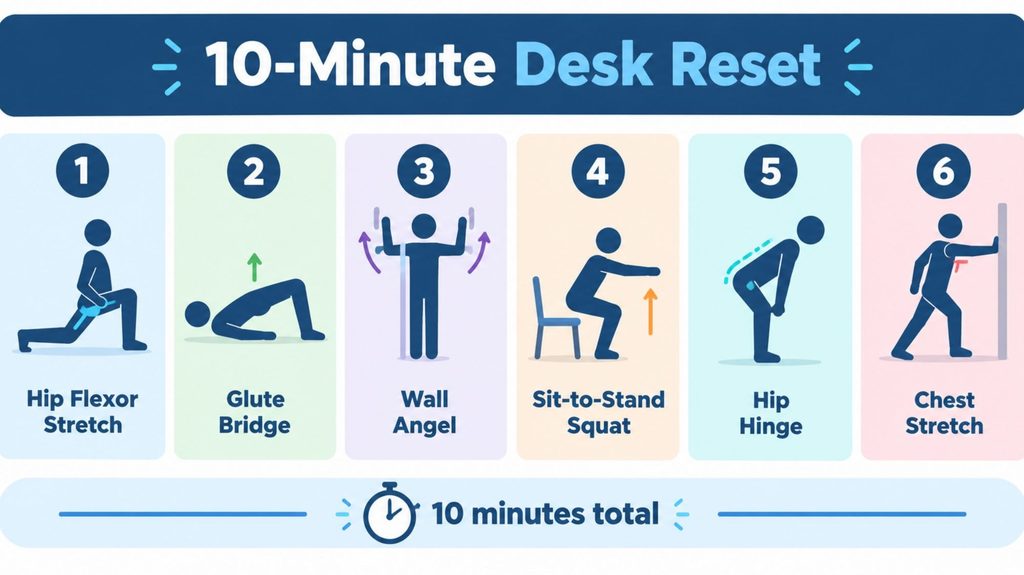
What is the best 10-minute routine for someone who sits all day? A routine that spends focused time on the hips, glutes, and upper back, the three areas most consistently affected by prolonged sitting using simple bodyweight moves that need no equipment.
| Move | Time | Target Area | Cue |
| Half-kneeling hip flexor stretch | 2:00 (both sides) | Hips | Tuck the pelvis under slightly to feel the stretch at the front of the hip, not the lower back |
| Glute bridge | 2:00 | Glutes | Squeeze the glutes at the top rather than arching through the lower back |
| Wall angel | 1:30 | Upper back and shoulders | Keep the lower back flat against the wall throughout the movement |
| Sit-to-stand squats | 1:30 | Legs and glutes | Push through the heels to stand rather than rocking forward onto the toes |
| Standing hip hinge (bodyweight) | 1:30 | Hips and lower back | Push the hips back first, keeping the spine neutral rather than rounding forward |
| Doorway chest stretch | 1:30 | Chest and upper back | Step through gently until a stretch is felt across the chest, not the shoulder joint |
Ten minutes covers all six moves with a little room to breathe between them. This isn’t a substitute for regular exercise, it’s a targeted reset for the specific tightness and weakness patterns that come from sitting for extended stretches, which is a distinct problem from general fitness.
Related reading: for readers wondering how little structured exercise is actually needed to see results, Fitness Geekz’s guide to the minimum effective dose covers that question directly.
Movement Snacks Between Meetings
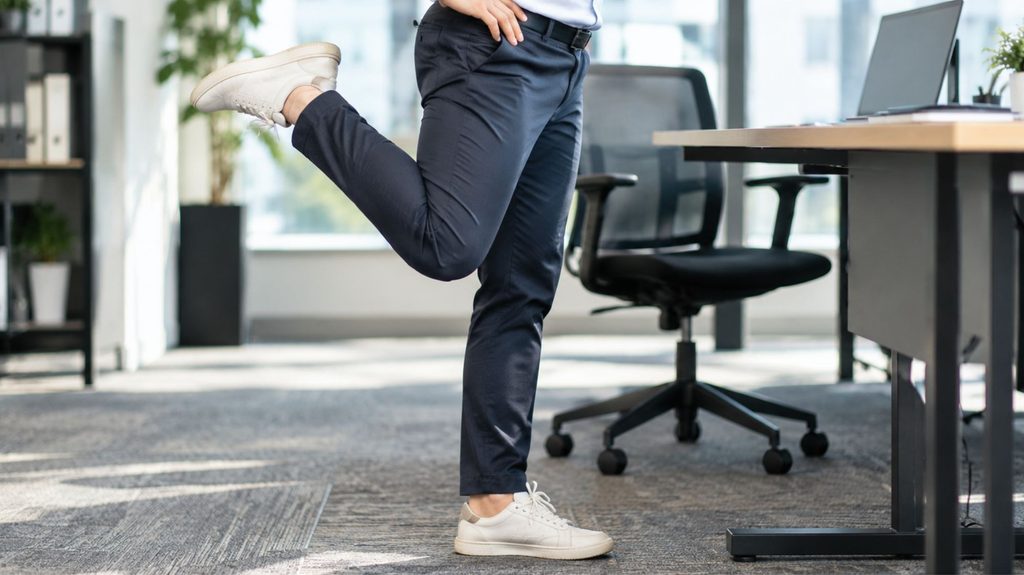
Do short movement breaks during the day actually help? Yes research on brief, intermittent bursts of activity supports this directly. A 2022 study published in Nature Medicine tracking over 25,000 adults found that just a few short bouts of vigorous activity per day as brief as one to two minutes each was associated with meaningfully lower risk of cardiovascular and all-cause mortality compared to none at all. The point isn’t that a two-minute burst replaces a real workout; it’s that movement broken into small, frequent pieces throughout the day has a measurable effect of its own, separate from whatever structured exercise someone does.
For a workday specifically, this means the 10-minute routine above doesn’t have to happen all at once. Shorter 1 to 2 minute versions slotted between meetings a set of sit-to-stand squats before a call, a wall angel while waiting for a page to load accumulate across the day and directly interrupt the long, unbroken sitting stretches that cause the most tightness. A few practical options:
- One minute of sit-to-stand squats before stepping into a meeting
- A single set of wall angels while a coffee brews or a document loads
- A 30-second hip flexor stretch on each side after a long call
Printable One-Page Routine
For readers who’d rather have this taped next to a monitor than re-reading this article every day, a one-page printable version of the full 6-move routine complete with timings and cues is available as a free download. Print it, keep it at the desk, and run through it once daily or split into movement snacks as needed.
Common Mistakes With Desk-Break Exercises
- Rushing through the stretches. A hip flexor stretch held for 20 seconds does far less than one held for the full 2 minutes per side tissue needs sustained time under tension to actually lengthen.
- Skipping the glute bridge because it “doesn’t feel like much.” This is one of the more important moves precisely because the glutes are the muscle group most deactivated by sitting; a lack of intensity doesn’t mean a lack of effect.
- Only stretching, never strengthening. Tight hip flexors paired with weak glutes is a two-sided problem stretching addresses only one side of it, which is why the routine above includes strengthening moves like the bridge and sit-to-stand squat alongside the stretches.
- Treating the routine as a one-time fix. A single 10-minute session won’t undo months of sitting patterns; the benefit comes from doing it consistently, ideally daily.
- Waiting for a “long enough” break to move at all. A 60-second movement snack between calls is worth doing even when a full 10-minute block isn’t available.
If any move causes sharp or shooting pain as opposed to normal stretching discomfort it should be stopped immediately, and anyone with persistent back or joint pain should speak with a clinician before continuing.
Conclusion
Sitting all day doesn’t require a dramatic fitness overhaul to counteract it requires a short, targeted routine done consistently, plus a habit of breaking up long sedentary stretches with brief movement snacks. The 10-minute routine above covers the three areas that matter most, and the printable version makes it easy to keep in reach at the desk.
For more on building sustainable movement habits, Fitness Geekz’s beginner guides for women and men cover where to go next once the basics are in place.
Frequently Asked Questions
A hip flexor stretch, glute bridge, wall angel, sit-to-stand squat, standing hip hinge, and chest stretch together address the tightness and weakness patterns most associated with prolonged sitting, without needing any equipment.
Daily is ideal, though breaking the routine into shorter movement snacks throughout the day rather than one long session is a practical way to fit it in consistently.
They can meaningfully improve the tightness and weakness that contribute to poor posture, but posture is also shaped by workstation setup and daily habits, so stretches work best paired with those other adjustments.
Ten focused minutes targeting the hips, glutes, and upper back is enough to counteract much of the tightness from a sitting-heavy day, though it works alongside not as a replacement for regular physical activity through the week.
The same core moves apply at any age: hip flexor stretch, glute bridge, wall angel, sit-to-stand squat, hip hinge, and chest stretch, though anyone with existing joint or back conditions should confirm the movements are appropriate with a clinician first.