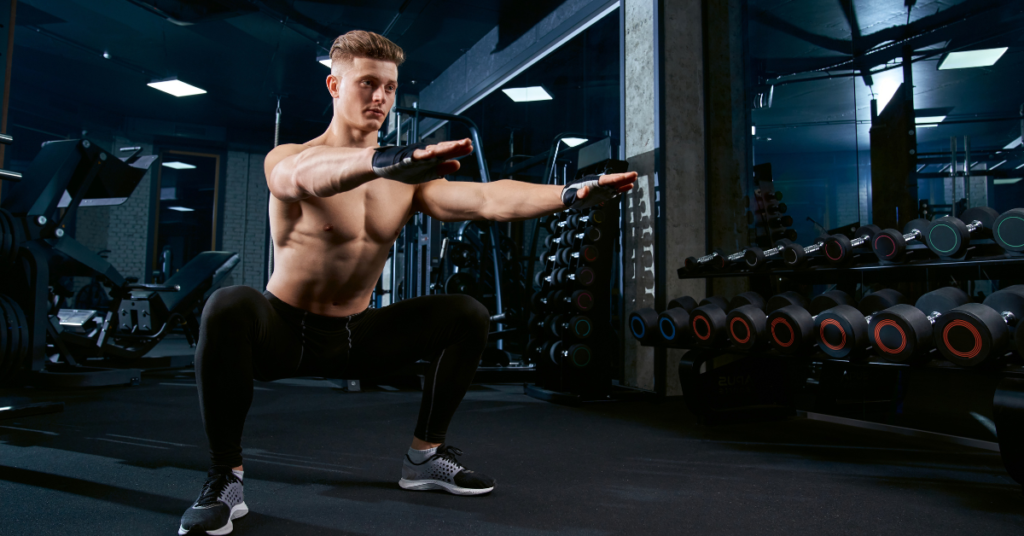
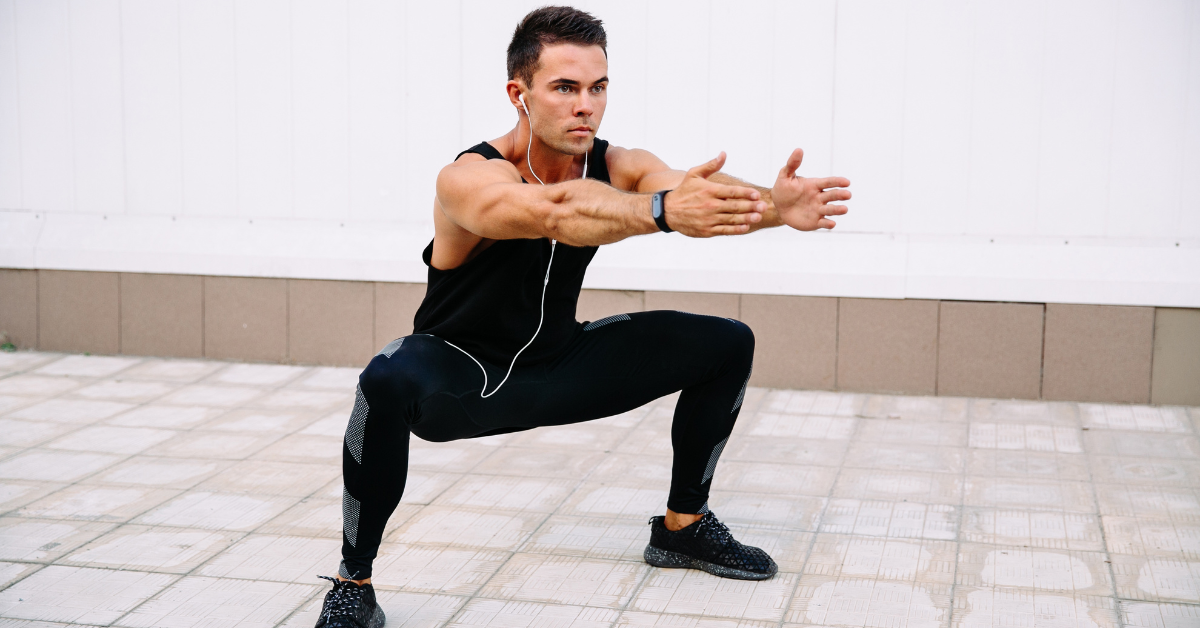

Quick Answer: Doing squats every day delivers 6 key benefits: stronger, more defined glutes (especially with deep, below-parallel reps), full-body strength and athletic power, injury prevention through joint and connective tissue strengthening, greater core activation than planks (per a 2018 study), fat burn (~223 calories/30 min, per Harvard), and added benefits like spinal decompression, improved gut health, and better blood sugar control. Strong quadriceps are even linked to longer lifespan. Starting with 25 squats morning and night builds the habit, with noticeable strength and mobility gains within 3–6 weeks.

Most people think squats are a leg exercise. That single misunderstanding is exactly why so many people are leaving the most transformative movement in fitness sitting untouched in their routine.
Here is what science actually says. A 2018 study found that back squats activate the core muscles that support the spine more effectively than planks, which most people consider the gold standard for core training. Harvard Medical School data shows a 155-pound person burns approximately 223 calories during just 30 minutes of vigorous squat-based training. Research published in the Journal of Strength and Conditioning Research confirms that deep full-range squats improve vertical jump performance more than any partial range of motion alternative. And a growing body of evidence linked to research highlighted by the American Heart Association connects strong quadriceps directly to extended lifespan.
Squats are not just a lower body exercise. They are one of the most powerful compound movements available, building glutes, strengthening the core, protecting the joints, improving posture, accelerating fat burn, and enhancing athletic performance simultaneously. Doing them every day, even in modest volume, produces a compounding physical transformation that no other single movement can match.
This is not a list of generic squat tips. This is a breakdown of what actually happens, physiologically and functionally, when squats every day become a consistent practice. Six benefits. One movement. No equipment required.
Want faster results? Check out the full video and follow along:
Why Squats Are the Most Underrated Full Body Movement
The squat is not a gym invention. It is a primal human movement that ancestors used daily as a natural resting position. In many cultures worldwide it remains a default posture for rest, work, and daily function. Western societies replaced it with chairs and in doing so created a cascade of postural, muscular, and digestive problems that regular squatting directly reverses.
As a compound lower body exercise, squats simultaneously target the gluteus maximus, quadriceps, hamstrings, adductors, hip flexors, calves, and the full core complex including the rectus abdominis, obliques, transverse abdominis, and erector spinae. Back and overhead squat variations additionally engage the shoulders, upper back, and arms. No other single movement loads this many muscle groups through this large range of motion without any equipment.
The progressive overload advantage makes squats uniquely scalable. They serve a complete beginner performing air squats in their living room and an elite athlete loading a barbell with hundreds of pounds with equal effectiveness. That range is what makes the daily squat challenge one of the most sustainable and results-producing fitness habits available at any level.
6 Surprising Benefits of Doing Squats Every Day
Benefit 1: Strong, Sculpted Glutes That Actually Show
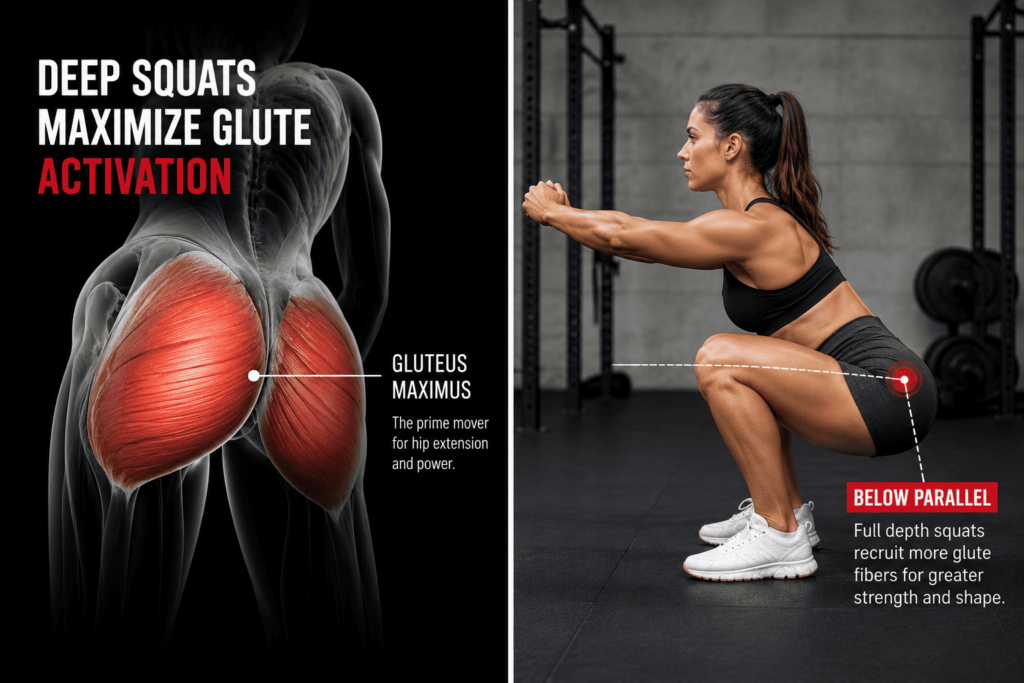
The gluteus maximus is the largest muscle in the human body. Squats are its primary training stimulus, and daily squatting produces progressive glute development that transforms body aesthetics more visibly than almost any other lower body exercise available.
As squat depth increases, glute activation increases proportionally. Research consistently shows that squatting below parallel, with the hips descending below the knee line, produces measurably greater gluteus maximus engagement than partial depth squats. This means depth is not a technique preference. It is the primary variable controlling how much glute development the exercise actually delivers. Building the hip mobility to squat this deep consistently is its own practice, and the Asian squat is one of the most effective ways to develop it.
When rising from the bottom of a squat, consciously squeeze the glutes at the top of every rep to maximise activation. Avoid thrusting the hips forward or hyperextending at the top, as this shifts load off the glutes and compromises spinal position in a way that accumulates into discomfort over repeated sessions.
For enhanced glute targeting across the week, rotate through sumo squats with a wider stance and toes turned outward, jump squats for explosive posterior chain activation, and goblet squats for the deep hip hinge mechanics that maximise glute stretch under load. The lower the depth, the greater the activation.
Benefit 2: Full Body Strength and Athletic Power
Every time a person sits down and stands up from a chair they are performing a modified squat. The stronger that pattern becomes, the easier every sit-to-stand movement in daily life feels. This is the direct functional transfer of squatting strength into real-world movement and it is one of the most underappreciated aspects of building a daily squat practice.
For athletes the transfer goes considerably further. Squats increase force production and rate of force development across the lower body, which directly improves sprint speed, jumping height, and change of direction ability. The 2016 study found that jump squat training performed three times per week over eight weeks simultaneously improved sprint time and explosive strength, two of the most valued athletic performance qualities in any sport.
The progression pathway for squat workout benefits follows a logical sequence. Bodyweight squats build the foundational movement pattern. Front squats shift emphasis to the quads and core stability. Back squats develop maximum posterior chain strength. Squat thrusters combine the squat with an overhead press for total body conditioning in a single continuous movement.
Benefit 3: Injury Prevention Through Joint Stability
This benefit surprises most people and it genuinely should not. Many of the most common movement injuries, including knee pain, hip dysfunction, and ankle instability, originate not from overuse but from muscle imbalances and joint weakness that allow compensatory movement patterns to develop quietly over years of inactivity or imbalanced training.
Squats address this problem at its root. When performed correctly through a full range of motion they strengthen the tendons, ligaments, and connective tissue surrounding the knees, hips, and ankles simultaneously. According to the American Council on Exercise, this connective tissue strengthening is one of the primary mechanisms through which regular squatting reduces long-term injury risk. Physical therapists and strength coaches use the squat as a diagnostic movement specifically because how a person squats reveals their imbalances, mobility restrictions, and compensatory patterns more clearly than almost any other assessment tool available.
Core strength plays a direct and measurable role in this protection. A strong core maintains spinal alignment and distributes load correctly across the hips and knees during every single squat rep. The 2018 study confirming greater core activation from back squats than from planks makes this connection scientifically concrete and practically significant.
Benefit 4: Core Strength and Posture Transformation
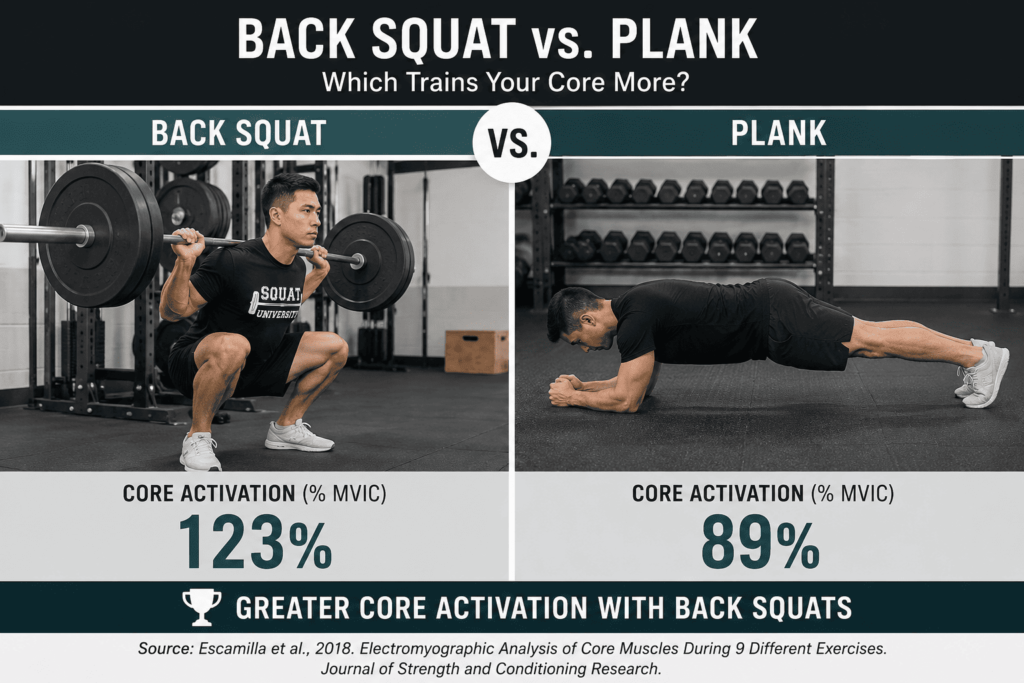
Here is the benefit that genuinely changes how most people think about squats. Doing squats every day is not just a lower body practice. It is one of the most powerful core training protocols available and the research supporting this should fundamentally shift how the movement is programmed in any fitness routine.
The 2018 study comparing core muscle activation during planks versus back squats found that back squats produced greater activation of the muscles that support the spine. Researchers specifically recommended squats for both reducing injury risk and boosting athletic performance through their core development effect, not planks. For anyone who has been performing endless planks in the hope of building meaningful core strength, that finding is worth sitting with.
The postural benefit follows directly from the core strength development. Prolonged sitting creates anterior pelvic tilt, rounded shoulders, and forward head posture through the cumulative effect of weakened glutes and chronically tight hip flexors. Daily squatting reverses this pattern by strengthening the posterior chain and core simultaneously, gradually restoring the neutral spinal alignment that correct posture requires.
Breathing mechanics amplify this effect. Inhaling deeply on the descent and exhaling forcefully on the ascent creates intra-abdominal pressure that further activates the deep core stabilisers during every rep, turning proper breathing into an active training tool rather than a passive background process.
Benefit 5: Fat Burn and Genuine Body Composition Change
Squats burn more calories per unit of time than most exercises because they involve more total muscle mass working simultaneously under a greater range of motion than any comparable movement. The Harvard Medical School figure of 223 calories burned per 30 minutes of vigorous squatting is meaningful because it positions squat-based training as a genuine calorie-burning tool rather than a purely strength-focused practice.
The more significant metabolic benefit is the resting metabolic rate increase that comes from the muscle mass squats build progressively over time. More total muscle tissue means more calories burned at rest every hour of every day, compounding the fat-loss benefit well beyond the actual training sessions themselves.
Body transformation with squats accelerates meaningfully when combined with complementary movements. Pairing squats with lunges develops unilateral lower body strength and corrects the side-to-side imbalances that bilateral squatting alone cannot address. Adding deadlifts trains the hip hinge pattern that squats do not fully cover. Including rows ensures balanced upper body pulling to match the lower body pushing volume. This combination creates the hormonal and metabolic environment that drives the most significant and visible body composition changes available from a home-based training programme.
Benefit 6: The Health Benefits Nobody Talks About
This is where the benefits of squats reveal their true depth and where daily squatting becomes genuinely remarkable rather than simply effective.
Spinal decompression happens every single session. Prolonged sitting creates constant compressive stress on the intervertebral discs. Descending into a deep squat allows gravity to gently decompress the spine by lengthening the back, functioning as a natural spinal traction tool that requires no equipment and delivers immediate relief from the compression that hours of chair-sitting creates.
Gut health improves through a purely mechanical benefit. In a deep squat the colon and intestines align in a way that naturally facilitates waste elimination, reducing bloating, improving digestive transit, and supporting overall gut health in a way that no supplement or dietary intervention can fully replicate.
Blood sugar management receives a meaningful benefit from squatting because the glutes and quadriceps are the largest muscles in the body. Their activation during squatting demands a significant increase in blood flow and glucose uptake, helping lower blood sugar levels and providing protective metabolic benefits that extend well beyond the training session itself.
Longevity is perhaps the most compelling long-term benefit. Research highlighted by the American Heart Association links strong quadriceps specifically to extended lifespan. Squatting is the most direct and accessible way to build quad strength available to anyone, anywhere, making consistent daily squatting a genuine investment in physical independence and quality of life decades into the future.
Daily Squat Challenge Benefits at a Glance
| Benefit | Primary Mechanism | Timeframe to Notice | Evidence Source |
| Stronger Glutes | Progressive posterior chain loading | 4 to 6 weeks | EMG activation research |
| Full-Body Strength | Compound multi-joint loading | 3 to 4 weeks | Journal of Strength and Conditioning Research |
| Injury Prevention | Connective tissue strengthening | 6 to 8 weeks | American Council on Exercise (ACE) |
| Core Strength and Posture | Greater spinal activation than traditional planks | 4 to 6 weeks | 2018 comparative study |
| Fat Loss and Improved Body Composition | High calorie expenditure combined with increased resting metabolism | 8 to 12 weeks | Harvard Medical School |
| Spinal Decompression and Gut Health | Positional mechanical benefits and reduced spinal compression | Immediate benefits after each session | Clinical and anatomical evidence |
Squat Modifications That Keep Progress Coming
- Reduce the range of motion if needed. People with tight muscles, previous injuries, or mobility restrictions should start with a comfortable squat depth and gradually work deeper as mobility improves.
- Change the squat variation. Different squat styles shift the training stimulus and emphasize different muscle groups:
- Front Squat: Greater quadriceps and core involvement
- Back Squat: Increased glute and posterior chain loading
- Zercher Squat: Higher core and upper-body stability demands
- Combine squats with other movements. This increases both conditioning and muscular demand:
- Squat to Lunge: Improves unilateral strength and balance
- Squat to Jump: Develops explosive power
- Squat to Calf Raise: Increases lower-leg involvement
- Add pauses. Holding the bottom position for 2 to 3 seconds increases time under tension and muscle activation without changing the weight. This pause technique is a core principle of isometric training, which covers how static holds at specific joint angles build strength in ways dynamic movement alone cannot.
- Manipulate tempo. Slowing the descent to 3 to 5 seconds increases eccentric loading, making even bodyweight squats significantly more challenging and effective for muscle growth.
- Progress before adding load. Increasing depth, slowing tempo, extending pauses, or choosing a more demanding variation can provide a new training stimulus before additional weight becomes necessary.
How to Start a Daily Squat Routine That Actually Sticks
1. Start Small if You’re a Beginner
Perform 25 bodyweight squats in the morning and 25 in the evening. This simple approach accumulates 50 daily reps without requiring a dedicated workout session and helps build movement proficiency, joint resilience, and consistency.
2. Progress to Structured Daily Training
After establishing the habit, gradually increase volume or move into a more structured squat routine. Most beginners notice improvements in strength, mobility, and movement quality within 4 to 6 weeks.
3. Use Variation if You’re an Intermediate Trainee
Dedicate 10 to 15 minutes per day to squatting while rotating variations throughout the week, such as:
- Goblet Squats
- Jump Squats
- Pause Squats
- Sumo Squats
This provides progressive overload without the repetitive stress of performing the same squat every day.
4. Balance Heavy and Light Squat Days
A sustainable long-term approach is to perform heavier loaded squats once or twice per week and use bodyweight, mobility-focused, or lighter squat sessions on the remaining days.
5. Avoid Daily Maximal Loading
Squatting every day does not mean lifting heavy every day. Varying intensity helps reduce fatigue and lowers the risk of overuse injuries while supporting continuous progress.
6. Prioritize Protein Intake
Consume approximately 1.6 to 2.2 grams of protein per kilogram of bodyweight daily to support muscle repair and growth from frequent squat training.
7. Make Recovery a Priority
Aim for 7 to 9 hours of quality sleep each night. Recovery is where the body adapts to training and develops strength, muscle, and resilience.
8. Focus on Consistency Over Perfection
The most effective daily squat routine is the one that can be maintained for months, not days. Consistent effort, proper recovery, and gradual progression produce the best long-term results.
Conclusion
Doing squats every day is not just about building bigger legs or a more sculpted backside. It is about building a body that moves better, burns more calories at rest, holds itself upright with genuine structural strength, protects its own joints from the inside out, digests more efficiently, and outlasts the sedentary lifestyle that modern life relentlessly pushes toward.
Six benefits. One movement. No equipment required. The compounding effect of consistent daily squatting over 90 days produces the kind of physical transformation that most people associate with complicated programmes, expensive memberships, and hours of weekly training.
The question is not whether squats every day work. The research answers that clearly. The question is whether the commitment to start and sustain the practice is there.
Start today with 25 in the morning and 25 at night. Build from there. The body will do the rest.
Ready to take it further? If you found this guide helpful, share it with a friend, family member, or training partner who could benefit from adding daily squats to their routine. For more science-informed fitness guides, practical workout strategies, and evidence-based training advice, explore the Fitness Geekz resource library and stay connected for future content.
Frequently Asked Questions
Yes, with appropriate programming. Daily squatting becomes problematic only when heavy loaded squats are performed at high intensity every day without sufficient recovery. A sustainable approach alternates heavier squat sessions once or twice per week with lighter bodyweight or mobility-focused sessions. Anyone with existing knee, hip, or lower back issues should start conservatively and seek professional guidance before beginning a daily squat routine.
For beginners, daily squats build lower-body strength, improve movement quality, increase hip and ankle mobility, strengthen the core, and support greater calorie expenditure through increased muscle mass. Starting with 25 bodyweight squats in the morning and 25 in the evening is a simple, accessible approach that can produce noticeable improvements within four to six weeks.
Most people notice improvements in strength, mobility, and movement quality within three to four weeks. Visible changes in glute development and lower-body definition often appear within six to eight weeks. More significant body composition and posture improvements typically require eight to twelve weeks of consistent practice.
Yes. The gluteus maximus is the largest muscle in the body, and squats are one of its most effective compound training exercises. Deep squats generally produce greater glute activation, while variations such as sumo squats, goblet squats, and jump squats provide additional stimulus for more complete glute development over time.
Yes, through two primary mechanisms. Squats strengthen the core and spinal-supporting muscles that help maintain posture, while the deep squat position can reduce spinal compression caused by prolonged sitting. Combined with improved hip mobility and hip flexor flexibility, daily squatting can contribute to better posture and reduced lower back discomfort over time.