
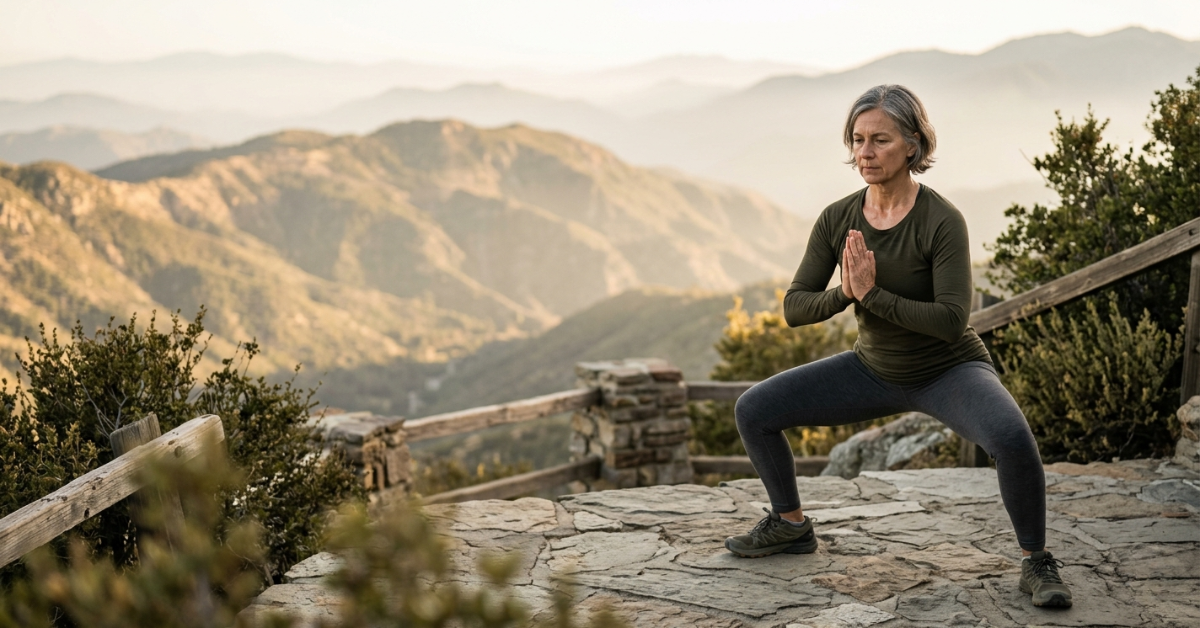

Most people assume that stiff joints, shrinking muscles, and a gradual loss of independence are just part of getting older. But that assumption skips over the actual cause.
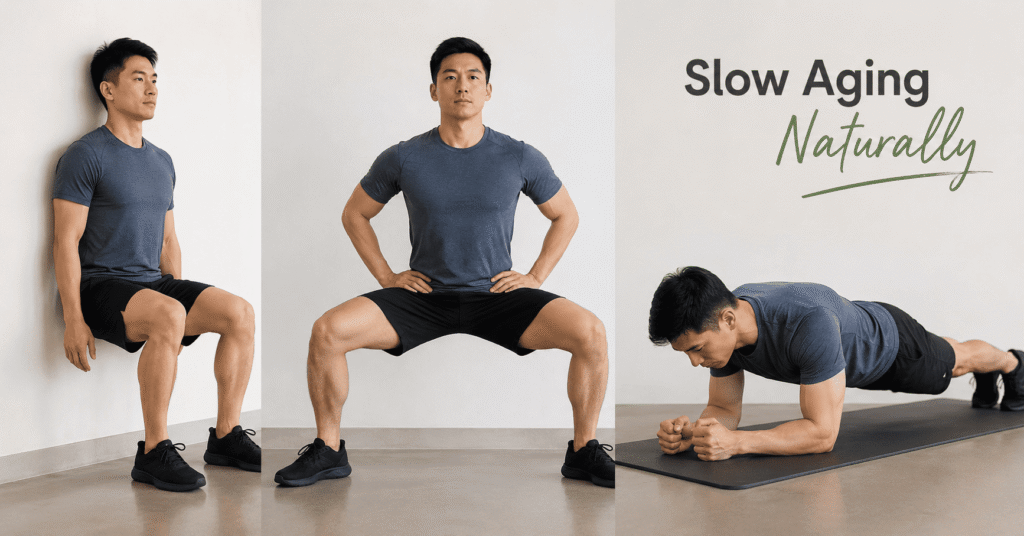
Research tells a more useful story. Studies consistently link poor lower body strength to functional decline, reduced mobility, and a significantly higher risk of falls. Isometric training, specifically wall sits, has been shown to lower resting blood pressure more effectively than traditional aerobic exercise. And peer-reviewed evidence confirms that static holds stimulate mitochondrial modifications in skeletal muscle that directly oppose cellular aging.
The three exercises in this guide target the root cause of most age-related physical decline. Not the symptoms. The root cause. And they require no equipment, no gym membership, and zero joint impact.
Every great physique is built one perfect rep at a time. Watch the full exercise demo here:
What Actually Causes Physical Aging in the Body
It is not just time passing
Sarcopenia, the gradual loss of muscle mass that begins in the mid-thirties, accelerates dramatically with inactivity. Most people never realise it is happening until they notice that climbing stairs feels harder than it used to or that getting up from the floor requires more effort than it once did.
But the deeper issue is neurological. Years of sitting and low-demand daily movement progressively silence the deep stabiliser muscles surrounding the spine, hips, and shoulders. The result is not just physical weakness. It is a deteriorating communication system between the brain and the body, a breakdown in the coordinated signals that control movement quality, balance, and the reflexes that catch you before a stumble becomes a fall.
Why most exercise does not fix this
High-impact and repetitive training adds load to joints that are already compromised without ever rebuilding the deep stabiliser activation that sedentary life has switched off. Anti aging exercises need to work at both levels simultaneously: the muscular and the neurological. That is exactly what static holds do.
Extended isometric holds of 30 seconds to 2 minutes stimulate organised collagen fibre deposits in tendons, strengthening the structural braking system that protects joints during movement. Short holds of 5 to 10 seconds train maximal force output. Long holds recalibrate the nervous system. The distinction matters enormously, and most training programmes never touch the long end of that spectrum.
The Three Anti Aging Exercises and Why They Work
1. Wall sit: survival strength for the lower body
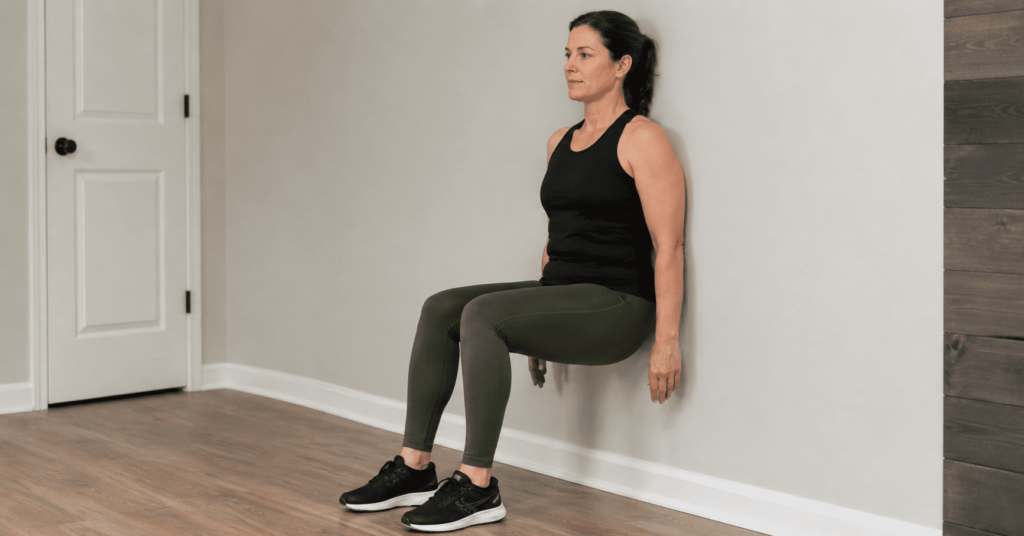
Lower body strength is not about aesthetics after 40. It is about the ability to support your own bodyweight with confidence, get out of a chair without assistance, climb stairs without gripping the handrail, and recover from a stumble before it becomes a fall.
Wall sits build exactly that. And the cardiovascular benefit is significant: research shows that three wall sit sessions per week produce meaningful reductions in both systolic and diastolic blood pressure, outperforming aerobic exercise as a blood pressure intervention.
- Beginner version: Place your back flat against a wall, step your feet slightly forward, and bend your knees just enough to feel your muscles engage. Aim to accumulate 1 to 3 minutes of total hold time per day, broken into shorter efforts if needed.
- Intermediate version: Slide lower until your thighs approach parallel to the floor. Keep your torso upright and your core gently braced. Build toward 5 to 10 minutes accumulated throughout the day.
- Advanced version: Settle into a deeper position, experiment with different foot distances, and maintain steady controlled breathing. Target 15 to 30 minutes of accumulated daily hold time.
One important note for anyone with knee arthritis: stay above the point where discomfort begins. The depth is not what delivers the benefit. The sustained tension is.
2. Horse stance: deep structural stability from the ground up
There is a reason this position appears in martial arts traditions across multiple cultures. It works. The horse stance builds the hip strength, joint integrity, and lower body endurance that prolonged sitting systematically dismantles, and research supports its role in improving balance and coordination in older adults.
Physical therapists use progressive versions of this hold specifically because it strengthens the muscles surrounding the knee and hip joints without requiring movement through those joints.
- Beginner version: Stand wider than shoulder-width, bend the knees slightly, and hold briefly throughout the day. If balance is a concern, hold a sturdy chair or surface for support.
- Intermediate version: Lower the hips further while keeping the chest upright and weight distributed evenly through both feet. Build toward 3 to 5 minutes of total daily hold time.
- Advanced version: Descend lower while staying within a comfortable range. Add gentle side-to-side weight shifts or small pulses to increase the demand. Aim for around 10 minutes daily.
For seniors or anyone returning to exercise after a long break, the safest entry point is seated: straddle a chair facing the backrest, push the knees out into hip external rotation, and hold. From there, progress to facing forward on the chair, then freestanding with support, building toward 30 to 60 second holds before moving to the next level.
3. Plank: the spinal corset that protects everything above the hips
Core strength for longevity has nothing to do with visible abs. It is about the deep muscular corset surrounding the lumbar spine, the layer of stabilisers that prolonged sitting quietly deactivates over years and decades.
Research consistently shows that core training reduces lower back pain, improves postural alignment, and enhances proprioception, which is the body’s ability to sense its own position in space and one of the most important factors in fall prevention as we age.
- Beginner version: Start on your forearms and toes. Keep your ribs down, your neck relaxed, and your body forming a straight line from head to heels. Hold for 15 to 30 seconds and build gradually over time.
- Advanced version: Introduce side planks, extended planks, or dynamic plank variations as the basic hold becomes controlled and sustainable.
The non-negotiable form cue: if the lower back sags or the hips rise, the hold has broken down. Reset and start again. Pushing through poor mechanics trains the wrong pattern and defeats the entire purpose.
How to Build a Longevity Fitness Routine Around These Three Holds
- The daily five-minute protocol
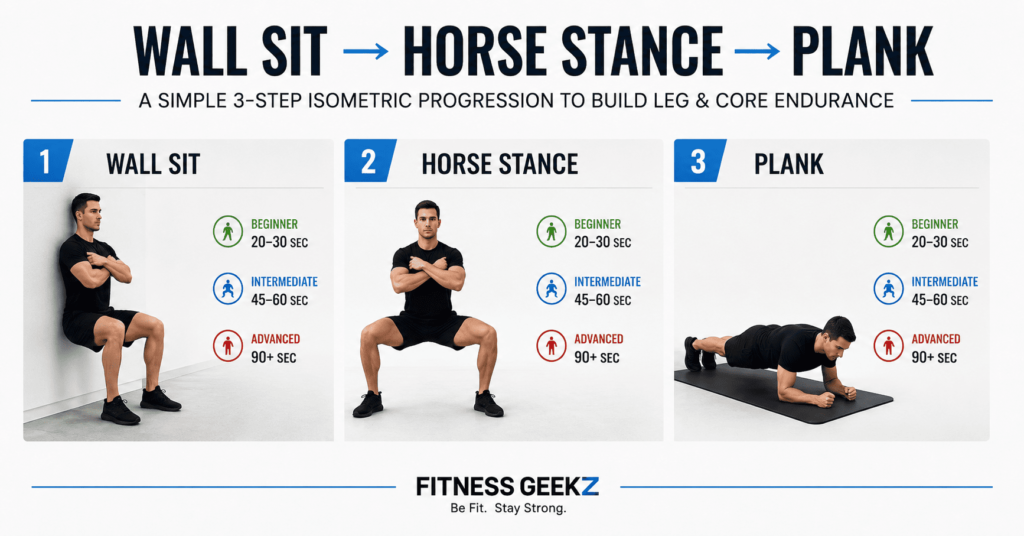
Perform all three holds in sequence with a brief rest between each movement. Wall sit first, then horse stance, then plank. The entire circuit takes 5 to 10 minutes, requires no equipment, and can be slotted into any part of the day without preparation.
Use it as a morning baseline. Use it as a warm-up before any other training. Use it during the working day to break up long stretches of sitting. The consistency matters far more than the timing. - How to progress without adding load
Progress in this system is built through duration, not load. Add 5 seconds per week to each hold as the position becomes controlled and sustainable. The target for intermediate practitioners is 2-minute holds for planks and wall sits. Practice 5 to 6 days per week. This frequency is specifically chosen to support tendon collagen remodelling, which responds to consistent daily mechanical stimulus rather than the three-day frequency that muscle training follows. - Recovery and nutrition
Because isometric training produces minimal muscle damage compared to eccentric-heavy conventional training, the recovery demand is low. Most people can practise this circuit daily without the soreness or fatigue that disrupts consistency in other programmes.
For tendon adaptation, consume 20 to 40 grams of quality protein around your training sessions, paired with vitamin C, which directly supports collagen synthesis. Consistency over weeks and months is what drives the structural change. No single session or supplement replaces the cumulative effect of daily practice.
Who Benefits Most From This Approach
Adults over 50 managing joint discomfort or returning to exercise after time away can begin immediately. The holds are fully scalable, produce zero joint impact, and can be modified to meet any starting point.
Desk workers benefit particularly from the plank and horse stance, which directly counter the spinal stabiliser deactivation and hip tightness that prolonged sitting creates day after day.
Athletes and active people can use this circuit as a daily neural activation sequence before conventional training, improving muscle fiber recruitment and movement quality across every subsequent exercise in the session.
Anyone managing knee, hip, or lower back discomfort should begin with the beginner regressions and consult a physiotherapist before advancing. These holds are widely used in rehabilitation settings precisely because they build strength around painful joints without aggravating them.
Conclusion
Ageing alone does not cause the stiffness, weakness, and loss of confidence in movement that most people attribute to getting older. Inactivity does. Prolonged sitting does. The progressive disconnection between the brain and the deep stabilising muscles of the body does.
Wall sits, planks, and the horse stance address those root causes directly. They rebuild lower body strength, deep spinal control, and the hip stability that sedentary life quietly dismantles, and they do it without a single high-impact movement or a single piece of equipment.
Most people notice meaningful improvement in joint comfort, stability, and movement confidence within two to four weeks of consistent daily practice. Start with five minutes. Build from there. Your future self will be noticeably stronger for it.
Rebuild strength, stability, and pain-free movement naturally with more practical training guides at Fitness Geekz.
Frequently Asked Questions
To a meaningful extent, yes. Wall sits and other isometric holds help counter muscle loss, joint instability, poor balance, and declining movement quality, which are some of the biggest contributors to physical decline with age. They improve strength, stability, and functional independence rather than simply building muscle size.
Beginners should aim for 1 to 3 minutes total per day using shorter sets if needed. Over time, building toward 5 to 10 minutes of accumulated hold time improves lower body endurance, joint resilience, and cardiovascular conditioning with minimal impact on recovery.
For most people, yes, especially when modified properly. Staying at a comfortable depth and using chair-supported variations allows older adults and beginners to strengthen the hips, thighs, and stabiliser muscles safely without excessive joint stress.
Planks strengthen the deep core and spinal stabilisers that prolonged sitting gradually weakens. Better core control improves posture, reduces lower back strain, enhances balance, and supports safer, more confident movement during everyday activities.
Traditional gym training mainly targets movement-based muscle strength and hypertrophy. Isometric training focuses more on stabiliser activation, tendon resilience, joint control, posture, and neural coordination, which are essential qualities for maintaining pain-free movement and long-term physical function as the body ages.