
Quick Answer: Staying strong after 50 requires 4 exercise categories: strength training (squats, push-ups, glute bridges) to fight sarcopenia and bone loss, cardiovascular endurance (150 min/week, Zone 2) for heart and brain health, balance training to prevent falls, the leading cause of injury death over 65, and mobility work to maintain joint range of motion. Research shows resistance training lowers all-cause mortality, and active midlife adults have 40% lower dementia risk. A simple 5-minute daily routine (10 squats, 10 push-ups, 30-second plank) is enough to start.
Before listing a single exercise, one question is worth asking honestly. What are you actually training for?
Not in the gym sense. In the life sense. Walking through a theme park with grandchildren without stopping. Hiking a national park at 75. Getting off the floor without help at 80.
The answer changes everything about how to approach exercise after 50.
Here is what the research says. Muscle mass declines by up to 8 percent per decade from age 30. A 2024 study in the International Journal of Epidemiology found that any resistance training lowered all-cause, cardiovascular, and cancer mortality in people averaging age 70. Research in JAMA Network Open in 2025 found that active people in midlife had more than 40 percent lower dementia risk than inactive ones.
Exercise physiologist Peter Ronai of Sacred Heart University puts it plainly. Walking alone does not address muscle loss, bone density loss, or power. One type of activity will never be enough.
The good news is the solution is simpler than most people expect, and the body’s capacity to respond to training does not disappear with age.
This article covers the four exercise categories science identifies for staying strong after 50, the movements that deliver the greatest return in each, and a five-minute no-equipment routine to start today.
Curious to learn more? Catch the full video and uncover all the details:
Why the Body Changes After 50 and What That Means for Training
Sarcopenia is the progressive loss of muscle mass and strength that becomes a biological default from the early 50s onward. Without deliberate resistance training to counteract it, this process accelerates steadily and eventually affects the ability to perform basic daily tasks and maintain physical independence.
Osteoporosis, the gradual loss of bone density with age, increases fracture risk significantly, particularly in the hips, wrists, and spine. Resistance training and weight-bearing exercise are among the most effective interventions available for slowing this process and maintaining the structural integrity of the skeleton.
Cardiovascular efficiency, joint mobility, neurological coordination, and balance all decline simultaneously with inactivity making every one of these processes faster. The compounding effect of these parallel declines is what eventually erodes independence and quality of life for most people in later years.
The research case for acting now is genuinely compelling. A 2025 study in Archives of Gerontology and Geriatrics found resistance training lowered blood pressure in adults over 60. The 2024 International Journal of Epidemiology study found any amount of weight training lowered all-cause mortality in people averaging 70 years of age. One concierge medicine physician framing the evidence on longevity states plainly that exercise may have a greater impact on lifespan than any other lifestyle factor including nutrition and sleep.
The earlier a comprehensive movement practice is established, the greater the compound benefit over time. Starting at 50 produces dramatically better outcomes at 70, 80, and 90 than waiting until 65, because muscle mass, bone density, and neurological coordination are all significantly easier to maintain than to rebuild once lost.
The 4 Essential Exercise Categories for Healthy Aging
The foundation of healthy aging includes movements that elevate the heart rate, build strength, challenge balance, and maintain joint mobility. Each category addresses a different aspect of age-related decline that the others cannot fully compensate for on its own.
Category 1: Strength and Resistance Training
Strength training is the primary tool for counteracting sarcopenia and maintaining the muscle mass that underpins every other physical capacity. The research on its benefits for older adults is unambiguous. Reduced mortality, improved metabolic health, better blood pressure, preserved functional independence, and stronger bones all follow from consistent progressive resistance training.
Muscles must be pushed to the point of fatigue to stimulate growth and metabolic adaptation. This does not require heavy barbell loading. Bodyweight movements performed through a full range of motion with controlled tempo deliver the same hypertrophic stimulus for most people over 50 and carry significantly lower injury risk than heavy external loading when starting out.
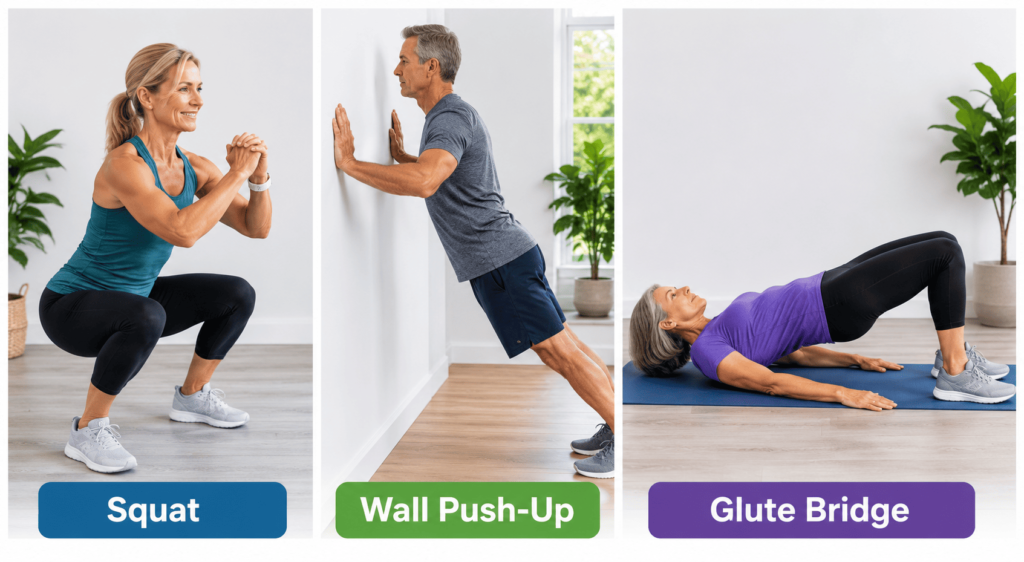
Three foundational strength movements for this stage of life:
Squats or Sit-to-Stands are the holy grail of longevity exercises. Stand with feet shoulder-width apart and toes slightly outward. Lower as if sitting back into a chair, keeping the chest up and the knees tracking in line with the toes. Pause briefly at the bottom, then push through the heels to return to the starting position. This movement directly replicates sitting and standing from chairs, toilets, and car seats, meaning its functional transfer into daily life is immediate and measurable. It simultaneously strengthens the glutes, quads, and core while stimulating bone density through compressive loading. Aim for 3 sets of 10 reps.
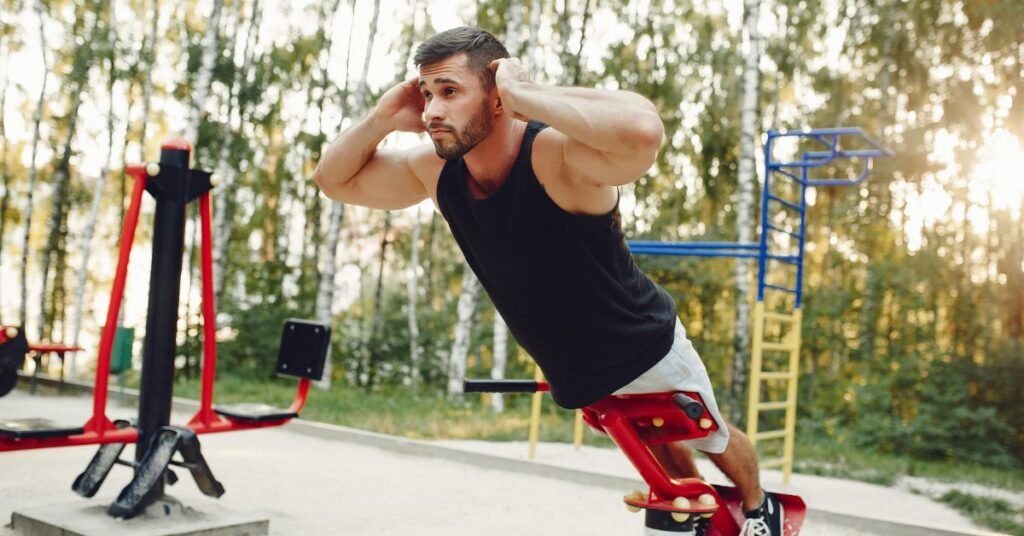
Push-Ups or Wall Push-Ups are essential for maintaining upper body strength, bone density in the arms and wrists, and the catching reflex that prevents serious injury during a fall. They improve circulation, enhance cardiovascular endurance, and develop the functional pressing strength needed for lifting groceries, carrying objects, and pushing doors. For anyone with shoulder concerns or limited upper body strength, wall push-ups with the hands placed on a wall deliver the same fundamental training stimulus at a safer starting load. Aim for 3 sets of 10 reps and progress to floor push-ups as strength builds.
Glute Bridges are called the fountain of youth for the hips for good reason. Lie on the back with knees bent and feet flat on the floor. Drive the hips upward by pressing through the heels and squeezing the glutes firmly at the top. Hold briefly then lower with full control. This movement builds lower body power, stabilises the pelvis, reduces chronic back pain, and directly improves the ability to climb stairs and rise from low surfaces. The posterior chain muscles it targets are among the first to weaken with age and inactivity, making this movement one of the highest-value investments in the entire routine.
Category 2: Cardiovascular Endurance
Heart and lung function decline with age, and improving cardiovascular fitness reduces risk of heart disease, hypertension, diabetes, and stroke. The 2025 systematic review published in the International Journal of General Medicine found that adults over 60 who participated in regular aerobic exercise had lower blood pressure, lower heart rates, and better cardiorespiratory health than sedentary control groups.
Zone 2 training is the most evidence-supported endurance approach for longevity fitness. Zone 2 means exercising at 60 to 70 percent of maximum heart rate, which feels like a brisk walk or easy cycling where conversation is possible but requires a little effort. This is the Goldilocks zone for cardiovascular adaptation, not too hard, not too easy, building the aerobic base that supports sustained daily life activity without creating the recovery burden that higher-intensity training demands.
The social and mental health dimension of cardiovascular fitness is equally important and often overlooked. Anthony Wall of the American Council on Exercise notes that declining cardiovascular fitness causes daily activities to become burdensome, reduces social engagement, increases isolation, and elevates the risk of depression. Cardio is as much a mental health investment as a physical one for adults over 50.
The evidence-based weekly target is 150 minutes of moderate aerobic activity, spread across the week in whatever format feels sustainable and enjoyable.
Category 3: Balance and Fall Prevention
Falls are the leading cause of injury-related death in adults over 65 in the United States. The consequences of a single fall for someone with osteoporosis, a broken hip, a head injury, or a fracture requiring surgery, can permanently alter independence and quality of life in ways that no other training mistake comes close to matching.
Balance training reduces this risk by developing the neurological pathways that coordinate the brain’s communication with the muscles and joints responsible for maintaining stability during movement. This neural coordination quality is distinct from muscle strength and cardiovascular fitness. It cannot be developed through those training categories alone and requires specific practice to build and maintain.
Practical balance exercises requiring no equipment at all: Standing on one leg while brushing teeth or waiting for coffee. Single-leg calf raises that simultaneously build ankle strength and proprioception. Chair squats that develop the stability mechanics of the sit-to-stand movement under controlled conditions. Yoga and tai chi, which specifically target the neurological and proprioceptive dimensions of balance that single exercises cannot fully address.
The strength and balance connection is deeper than most people realise. Many resistance training movements including chair squats, calf raises, single-leg stands, and core exercises build both qualities simultaneously, meaning the practical barrier to dedicated balance training is lower than it appears.
Category 4: Mobility and Joint Health
Motion is lotion for the joint. Dr. Elizabeth Joy’s framing is simple, accurate, and practical. Joints that are not regularly moved through their full range of motion become progressively stiffer, more painful, and eventually dysfunctional. Joints that are consistently moved stay healthier, more comfortable, and more capable well into later life.
Mobility training preserves the range of motion needed for daily activities that most people take entirely for granted until they lose them. Putting on socks, reaching across the body for a seatbelt, turning the head while reversing a car, bending to pick something up from the floor, all of these require adequate hip, shoulder, thoracic, and ankle mobility that inactivity progressively removes year by year.
Yoga and tai chi address both joint mobility and neurological balance development simultaneously, making them among the highest-efficiency investments available in this category. Overhead reach stretches, supine knee rotations with feet flat on the floor rotating side to side, and standing heel-to-backside stretches can all be integrated into warm-ups and cool-downs across the week without requiring dedicated sessions.
The 5-Minute Anti-Aging Starter Routine
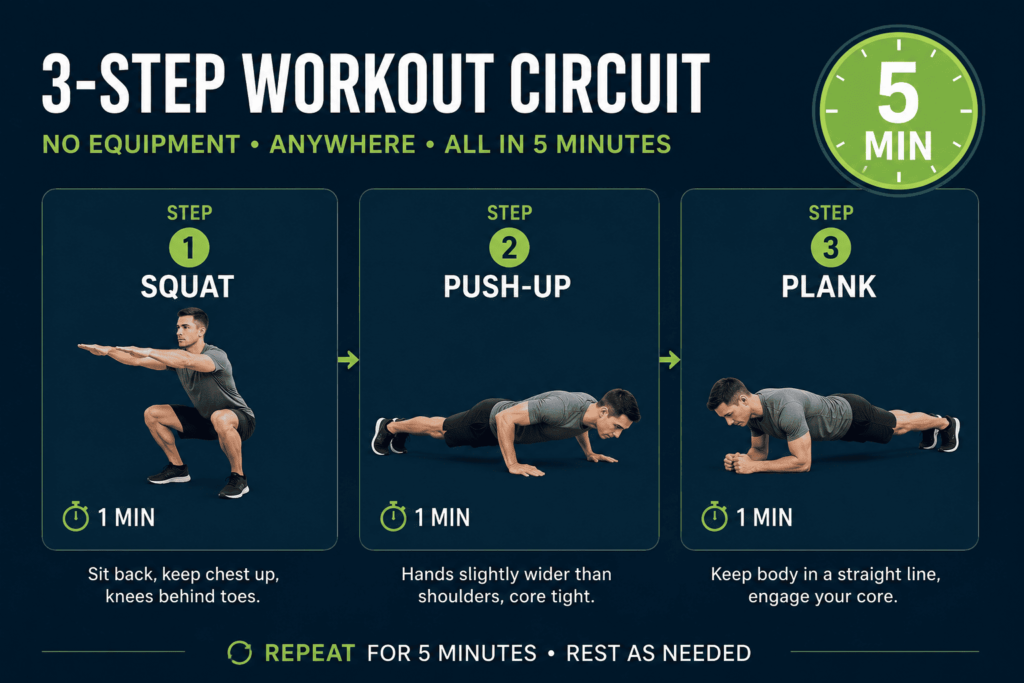
1. Perform 10 Bodyweight Squats
Strengthen the lower body, improve balance, and enhance hip mobility with a controlled range of motion.
2. Complete 10 Push-Ups or Wall Push-Ups
Build upper-body strength, support bone health, and develop functional pushing ability. Choose wall push-ups if standard push-ups are too challenging.
3. Hold a 30-Second Plank
Stabilize the core, improve spinal alignment, and strengthen the muscles that support posture and everyday movement.
4. Focus on Proper Plank Form
Keep your elbows directly under your shoulders and maintain a straight line from head to heels. Engage your core and glutes while avoiding sagging or excessively raised hips for maximum effectiveness.
5. Finish the Routine in About Five Minutes
The entire workout requires no equipment and can be performed almost anywhere, making it easy to fit into a daily schedule.
6. Progress Gradually as It Becomes Easier
Increase the challenge over time by:
- Performing more repetitions
- Slowing the lowering phase of each movement to 3 to 4 seconds
- Reducing rest periods between exercises
- Adding light resistance with bands or dumbbells
- For those ready to go further, strength after 60 follows the same low-barrier, progressive approach and provides a clear next step.
7. Prioritize Progressive Overload
Long-term results come from gradually increasing the difficulty over time. Progress does not always require heavier weights. Consistently challenging the body is what drives adaptation and improvement.
Recovery, Nutrition, and Making It All Stick
1. Prioritize Recovery Between Strength Sessions
Recovery capacity naturally declines with age, making rest increasingly important. Allow 48 to 72 hours between workouts that target the same muscle groups.
2. Stay Active on Rest Days
Gentle activities such as walking, yoga, or mobility exercises promote recovery and maintain movement without placing additional stress on the body.
3. Make Quality Sleep a Non-Negotiable
Aim for 7 to 9 hours of sleep each night. Adequate sleep supports muscle repair, bone health, immune function, cognitive performance, and overall recovery.
4. Eat Enough Protein Every Day
Adults over 50 benefit from consuming approximately 1.6 to 2.2 grams of protein per kilogram of bodyweight daily to support muscle maintenance and growth.
5. Focus on Whole Food Protein Sources
Foods such as eggs, chicken, fish, Greek yogurt, lentils, and beans provide the amino acids needed for recovery and healthy aging without requiring supplements.
6. Build a Routine You Actually Enjoy
Choose activities that fit your interests and lifestyle. The most effective exercise program is the one you can follow consistently over months and years.
7. Prioritize Consistency Over Perfection
Even the best-designed training plan delivers results only when practiced regularly. Long-term adherence is the key to healthy aging and sustained physical improvement.
Conclusion
The science of staying strong after 50 is not complicated. Four exercise categories. A handful of foundational movements. 150 minutes of moderate cardio per week. Enough protein and sleep to support the adaptation that consistent training produces. What makes it profound is what it protects. The ability to move freely, live independently, play with grandchildren, hike mountains, and show up fully for the moments that matter most in the decades ahead.
Longevity fitness is not about performing at the highest level. It is about functioning at a meaningful level for as long as possible. And the research is unambiguous that consistent, varied, progressive exercise is the most powerful tool available for achieving exactly that.
At 50, the body still responds to training with remarkable adaptability. At 60, it responds. At 70, it responds. The biological capacity for improvement does not disappear with age. What diminishes is the time available to develop it, which means the most important decision is the one made today.
Ready to build the routine that protects the next 30 years? If you found this guide helpful, share it with friends, family members, or anyone over 50 who wants to stay stronger, healthier, and more independent as they age. For more science-informed training guides built around what the body actually needs at every stage of life, explore the full Fitness Geekz resource library and subscribe to stay updated with the latest evidence-based fitness content.
Frequently Asked Questions
The four key exercise categories are strength training, cardiovascular exercise, balance training, and mobility work. Exercises such as squats, push-ups or wall push-ups, and glute bridges target the most important muscle groups for daily function. A simple routine of 10 squats, 10 push-ups, and a 30-second plank is an effective and accessible starting point.
Aim for strength training two to three times per week with at least 48 hours of recovery before working the same muscle groups again. Pair this with 150 minutes of moderate-intensity cardio each week. Balance and mobility exercises can be practiced daily in short sessions.
Yes. The ability to gain muscle and strength remains throughout life. What changes with age is the need for adequate protein, sufficient recovery, and progressive overload. Consistent resistance training can still produce meaningful improvements in muscle mass, strength, and overall health.
Zone 2 training involves exercising at roughly 60 to 70 percent of your maximum heart rate, such as brisk walking or easy cycling where conversation is still possible. It improves aerobic fitness, supports heart health, helps regulate blood sugar, and has been linked to better long-term brain health and reduced dementia risk.
Balance training is essential because falls are a leading cause of injury in older adults. A simple way to begin is by standing on one leg for 30 seconds during everyday activities. Progressing to single-leg calf raises, chair squats, tai chi, or yoga further improves coordination and stability while reducing fall risk.