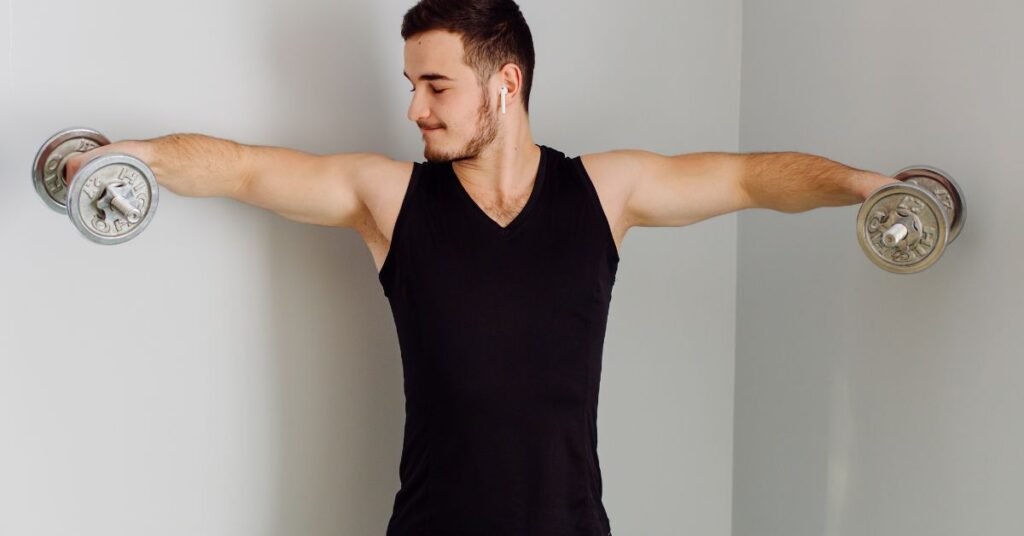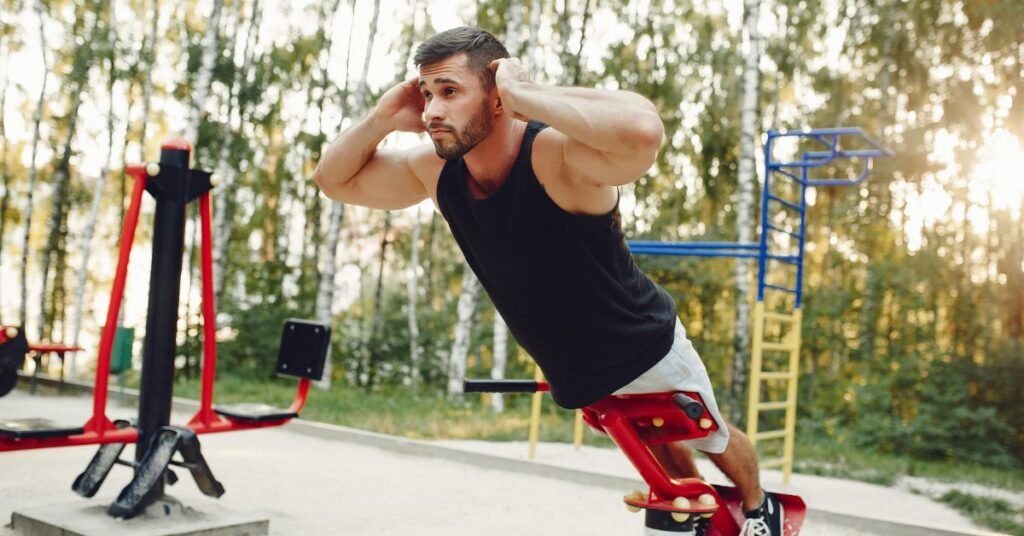


You are still showing up. Still training. Still trying. But something has quietly shifted. Stairs that never used to register now demand attention. Strength takes longer to come back after a hard session. Stiffness that was not there at 40 has settled in like an uninvited guest.
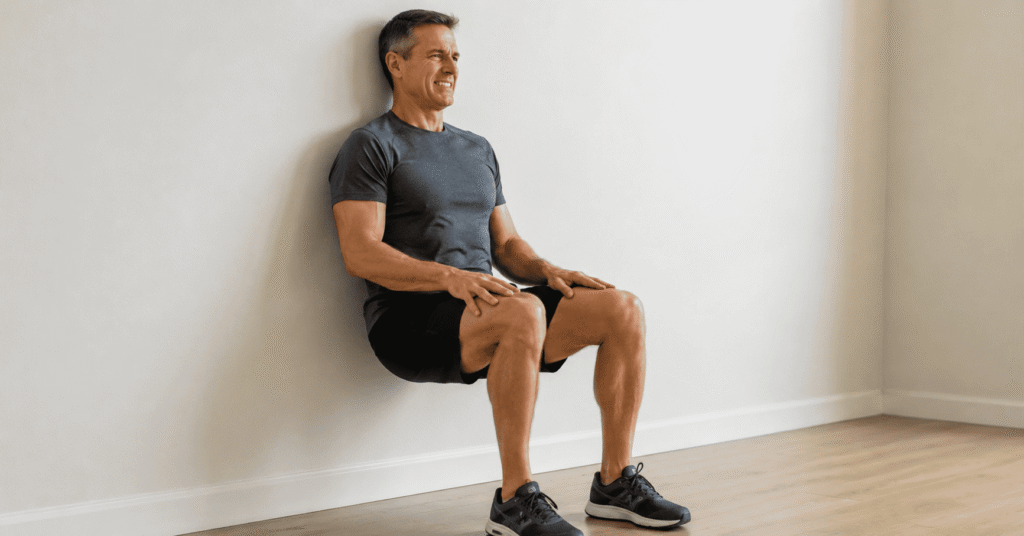
Research shows adults gradually lose muscle mass with age, typically around 0.5% to 1% per year from midlife onward, with the decline accelerating later in life. But the bigger issue is not just muscle loss itself. Aging muscle also becomes less responsive to resistance training and dietary protein, a phenomenon known as anabolic resistance. That means the strategies that worked at 35 often stop producing the same results decades later. The solution is not simply training harder, but adapting training, recovery, and nutrition to match how the body changes with age.
Your best workout starts with your best form. Watch the full exercise demo here:
The Real Reason Exercise Feels Harder After 50
This is not a fitness problem. It is a biology problem. And until you understand the specific shifts happening beneath the surface, no amount of effort will fully close the gap.
1. Sarcopenia: the muscle loss most people never see coming
Sarcopenia begins quietly in midlife and accelerates with age. Adults lose muscle fibres gradually, and the body also develops what researchers call anabolic resistance, meaning the muscles become less efficient at using the protein you eat to repair and rebuild tissue. You can be training consistently, eating well, and still losing ground, not because of a lack of discipline but because the programme was not designed to account for this shift.
2. Slower recovery: why your body needs more time than it used to
After 50, protein synthesis slows and the microscopic muscle tears caused by exercise take longer to heal. A training load that felt manageable at 35 can produce prolonged soreness at 55, requiring more recovery days between sessions. This is not a weakness. It is physiology. Ignoring it and maintaining the same training frequency creates a chronic recovery deficit that gradually looks and feels exactly like declining fitness.
3. Hormonal decline: the invisible headwind
Testosterone and insulin-like growth factor 1 both drop with age, directly reducing the body’s capacity to build and retain muscle. This is a documented biological mechanism, confirmed by Cleveland Clinic research. It means the same training stimulus that produced results at 30 produces a smaller response at 55. The gap has to be addressed through smarter programme design, not more volume.
4. Connective tissue changes: why joints feel riskier than they used to
Tendons and ligaments lose collagen and stiffen with age, reducing agility, mobility, and reaction speed. High-impact routines that caused no issues at 40 can begin producing joint strain at 55 simply because the connective tissue supporting those movements has changed. This is not a reason to stop training. It is a reason to train differently.
5. The nervous system piece almost nobody talks about
Beyond muscle and hormones, there is a quieter shift happening that most training programmes never address. The deep stabiliser muscles surrounding the spine, hips, and shoulders progressively stop activating properly with age and inactivity. The communication between the brain and the muscles that coordinate balance, joint protection, and movement quality begins to degrade. No amount of repetitions fixes a neural activation problem. It requires a specific kind of training that most people have never done.
Why Training Harder Makes It Worse
The natural instinct when you feel weaker is to push harder, add more sessions, or go back to the training that worked in your thirties. After 50, that instinct reliably produces aching knees, stiff shoulders, persistent back discomfort, and a discouragement that eventually convinces many people to stop exercising altogether.
Most training environments were not built for this life stage. High-intensity group classes, generic progressive programmes, and social-media-driven workouts do not adjust for slower recovery, anabolic resistance, connective tissue vulnerability, or the neural activation gap that sedentary habits create over decades. The result is a cycle of soreness, plateau, and diminishing returns that has nothing to do with how hard you are trying.
The CDC recommends at least 150 minutes of moderate activity per week plus strength training two or more days per week for older adults. The emphasis is on appropriate intensity, the right exercise types, and consistency. Not maximum effort. Matched effort, correctly directed.
What Actually Rebuilds Functional Strength After 50
Reactivating the deep muscles that stopped firing
The stabilisers that sedentary habits and generic training leave dormant are the exact muscles that control movement quality, protect joints, and prevent falls. Reactivating them requires sustained, deliberate training that most conventional programmes simply do not include.
Isometric holds, static positions maintained under sustained tension, are one of the most effective tools available for this specific purpose. Extended holds of 30 seconds to 2 minutes stimulate organised collagen fibre deposits in tendons, recalibrate the nervous system, and rebuild the deep muscle control that movement-based training almost entirely misses. They also produce zero joint impact, which matters enormously when connective tissue has changed.
Five holds that target the actual problem
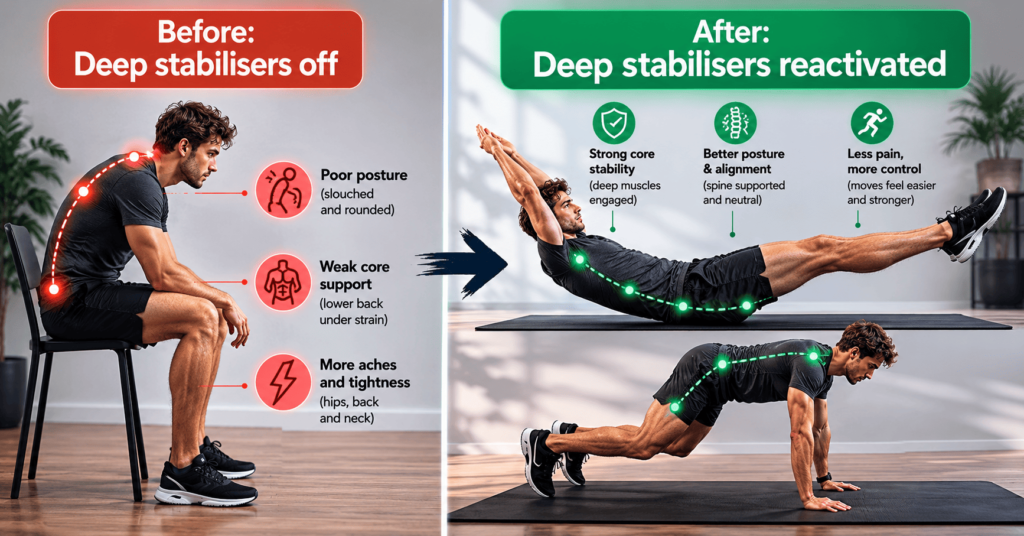
1. Hollow Body Hold directly addresses spinal stabiliser deactivation, the root cause of most lower back discomfort and poor posture. Lie on your back, press the lower back firmly into the floor, tighten the glutes, and lift the legs slightly. If the lower back lifts off the floor at any point, reset immediately. Begin with knees bent for 15-second holds in week one, extend one leg in week two, and build toward a full 30-second hold by week three.
2. Wall Sit rebuilds the lower body strength that stairs and daily movement demand, while simultaneously lowering blood pressure through sustained isometric tension. Stand against a wall, walk your feet forward, and slide down to a comfortable depth. Begin with a higher position and 20-second holds in week one, slightly deeper at 30 seconds in week two, and work toward a full 60-second hold by week three.
3. Horse Stance targets the hip instability that the body disguises as tightness. When the hips feel supported, the protective tension that creates stiffness releases. Stand wide, turn toes slightly outward, lower the hips while keeping the chest tall, and push the knees outward in line with the toes. Begin higher for 20 seconds and build toward 60 seconds over three weeks.
4. Bottom Push-Up Hold addresses shoulder instability, the real reason pushing movements start to hurt. Lower slowly to the bottom of a push-up, keep the elbows close to the body, brace the core, and hold. Begin from the knees or with elevated hands for 15-second holds, building toward 30 seconds in full position over three weeks.
5. Bear Crawl Hold restores the full-body neural coordination that sedentary life most completely dismantles. Start on hands and knees, tuck the toes, brace the core, and lift the knees one inch off the floor. Keep the back flat and the neck relaxed. Begin with 15-second holds and build toward 60 seconds over three weeks.
How to Structure the Week
Practice the isometric circuit 5 to 6 days per week. Because isometric training produces minimal muscle damage, the recovery demand is low enough to sustain daily practice without the soreness that disrupts consistency in conventional programmes. Conventional strength training sits alongside this on two or more days, as the CDC recommends, not in place of it.
On the nutrition side, target 25 to 30 grams of quality protein per meal to overcome anabolic resistance. Spreading protein thinly across the day produces a smaller muscle repair response in older adults than concentrated per-meal doses. Pair protein intake around training with vitamin C, which directly supports the collagen synthesis tendons need to strengthen and adapt.

And take sleep seriously. After 50, the nervous system becomes more sensitive to stress and poor sleep. Overtraining does not produce progress at this life stage. It produces fatigue, hormonal disruption, and increased injury risk. Sleep and stress management are not lifestyle preferences. They are recovery inputs that determine whether training produces adaptation or breakdown.
Conclusion
The body after 50 is not failing. It is operating under a different set of biological conditions, and most training programmes were never built to address them. Sarcopenia, slower recovery, hormonal shifts, connective tissue changes, and deep stabiliser deactivation are all real and well-documented. None of them are inevitable. But none of them respond to effort alone.
The adults who maintain genuine functional strength into their 70s and 80s are not training harder than everyone else. They are training in a way that matches the physiology they actually have. Start with the right exercises, recover properly, eat enough protein per meal, and the trajectory changes. Your body is not broken. It is waiting for the right signal.
Build strength that still works at 70, start training smarter with Fitness Geekz.
Frequently Asked Questions
Because the biological changes that occur after 50, including sarcopenia, hormonal decline, slower protein synthesis, and deep stabiliser deactivation, are not solved by effort alone. They require specific adaptations in training type, recovery time, and nutrition. Continuing the same programme that worked at 35 without adjusting for these shifts produces diminishing returns regardless of how consistent you are.
Deep muscle activation refers to the firing of stabiliser muscles surrounding the spine, hips, and shoulders that control movement quality, balance, and joint protection. These muscles progressively deactivate with age and inactivity. When they stop working properly, joints absorb stress they were never designed to handle, which is a primary driver of chronic pain and movement difficulty in adults over 50.
Research confirms that adults over 50 can build muscle, strength, and bone density with appropriate training and nutrition. The decline is not inevitable. It is accelerated by the wrong approach. Adults who switch to personalised, recovery-aware training that targets deep muscle activation consistently improve strength and movement quality well into their 70s and 80s.
Because of anabolic resistance, the aging body responds less efficiently to protein than it did at younger ages. Rather than spreading intake thinly across the day, target 25 to 30 grams of quality protein per meal to stimulate meaningful muscle repair. Total daily intake around 0.7 to 1 gram per pound of bodyweight remains a reasonable baseline, but the per-meal distribution matters significantly more after 50.
Start by addressing programme design rather than effort. Most adults over 50 who feel stuck are not failing because of a lack of commitment. They are using a programme built for different physiology. Switching to lower-impact, higher-control training that prioritises deep muscle activation, adequate recovery between sessions, and sufficient protein per meal typically produces visible improvements in stability, strength, and daily movement confidence within four to six weeks.