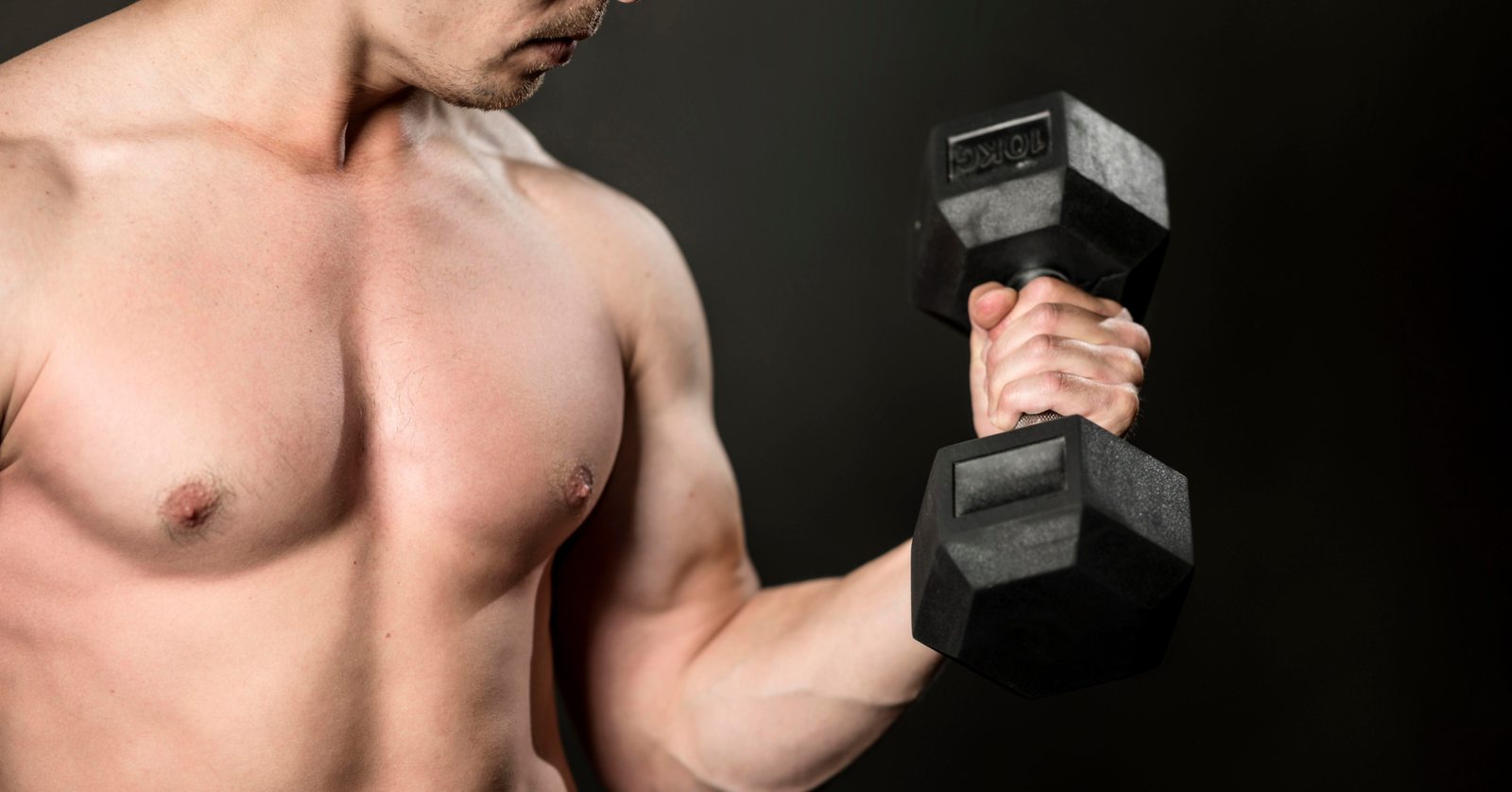

A fully equipped gym is not a requirement for building serious muscle. Just six dumbbell movements, done with intention and progressive overload, are enough to transform how your body looks and performs. Each exercise in this workout targets a major muscle group, forces both sides to work equally, and delivers a range of motion most machines cannot match. From powerful legs and a thick back to wide shoulders and fuller arms, this full body routine covers everything. Show up three to four times a week, increase the load consistently, and the results will follow.
A pair of dumbbells. Six movements. That is genuinely everything needed to build serious muscle at home.
Most people believe real muscle growth requires a fully equipped gym, a rack of barbells, and a dozen different machines. That belief is wrong, and the research backs it up. Studies consistently show that dumbbell-based resistance training produces comparable muscle hypertrophy to barbell and machine training when progressive overload is applied consistently. The difference is not the equipment. It is the effort and the approach.
Dumbbells force each limb to work independently, recruit more stabilising muscles, and allow a fuller range of motion than most fixed machines ever will. That means more muscle fibres working, more stimulus created, and more growth triggered with every single rep.
No excuses. Just the right six movements and the commitment to show up.
Get the full picture, watch the complete exercise tutorial right here 👇Watch Now
Why Do Dumbbells Build Serious Muscles?
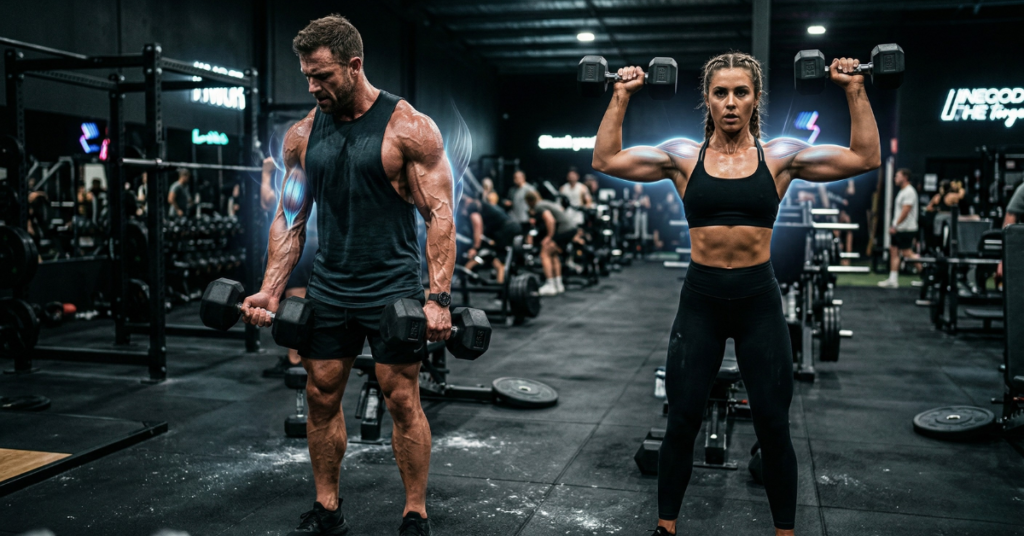
Before getting into the exercises, it helps to understand exactly why dumbbells are so effective for building mass, because this is not just about convenience.
When both hands hold separate dumbbells, neither side can compensate for the other. The stronger arm cannot quietly take over during a press or a row. Each side is accountable, which closes strength imbalances over time and builds more balanced, symmetrical muscle development.
The range of motion available with dumbbells is also greater than most barbell or machine alternatives. On a chest press, the dumbbells can travel deeper at the bottom, placing a longer stretch on the pectoral fibres. On a row, the arm can pull further back, fully contracting the lat. That extended range recruits more muscle fibres across the full length of the movement, which is one of the most reliable drivers of hypertrophy the research consistently identifies.
And progressive overload, the fundamental principle behind all muscle growth, works just as effectively at home as it does in any gym. Add reps, reduce rest periods, or increase the dumbbell weight every one to two weeks, and the muscles have no choice but to adapt and grow.
The 6 Best Dumbbell Exercises for Muscle Mass
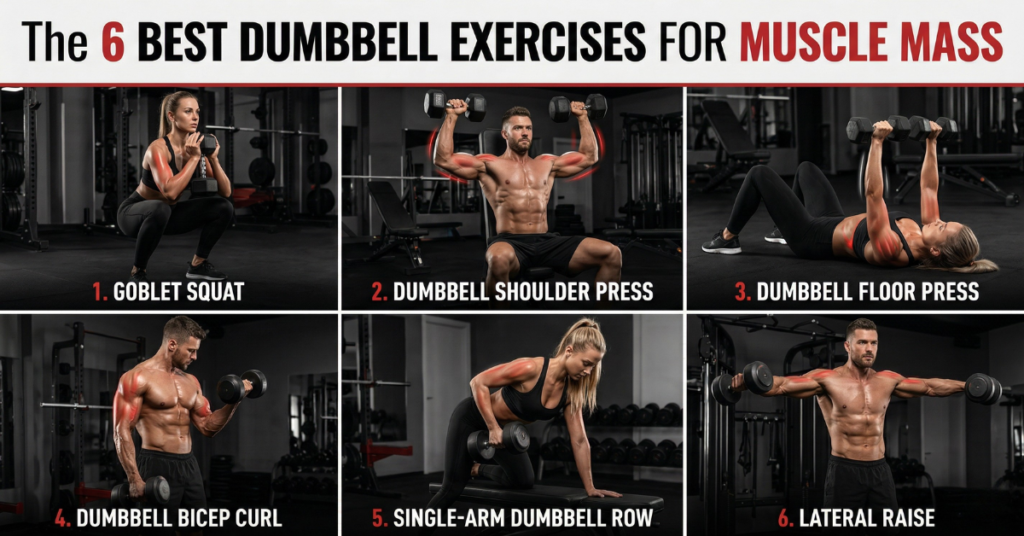
These six movements are not randomly chosen. Each one earns its place by targeting a major muscle group, allowing meaningful progressive loading, and delivering real results with nothing but a pair of dumbbells.
1. Goblet Squat
Hold one dumbbell vertically against the chest with both hands, feet shoulder-width apart. Squat deep, keeping the chest upright and knees tracking over the toes. Drive through the heels to return to standing.
Do not let the simplicity fool anyone. This is a leg-building powerhouse.
The front-loaded position forces the core, upper back, and arms to stabilise simultaneously while the lower body does the primary work. That deep range of motion is what separates the goblet squat from a half-hearted squat variation. Going deep recruits more quadriceps, glute, and hamstring fibres than a shallow squat ever will. More fibre recruitment means more growth stimulus.
This is not just a leg day exercise. It is a full-body strength builder that also develops the hip mobility that makes every other lower body movement more effective over time.
2. Dumbbell Shoulder Press
Hold dumbbells at shoulder height, palms facing forward. Press to full overhead extension, lower with control, and repeat. Can be done seated or standing.
Broad, rounded shoulders do not come from machines. They come from pressing dumbbells with intent.
The independent arm movement allows a natural pressing arc that a fixed barbell cannot replicate, reducing joint stress while increasing muscle activation across the deltoids, triceps, upper traps, and core. Each arm works its own path, which means no imbalances hiding behind a shared bar.
Train this heavy, train it smart, and the shoulder width will follow. The overhead press is arguably the single most effective upper body movement for building the kind of shoulder structure that changes how the entire physique looks.
3. Dumbbell Floor Press
Lie on the floor with dumbbells held at chest level, elbows at roughly 45 degrees. Press to full arm extension, lower with control until the elbows lightly touch the floor, and press again.
Forget the barbell bench press debate. The dumbbell floor press builds a fuller chest, better balance between sides, and a deeper stretch on the pectoral fibres than a barbell allows.
Because each arm moves independently, the dominant side cannot take over. Both sides are forced to contribute equally, which eliminates the quiet imbalances that develop when one hand grips a shared bar. The greater range of motion increases the stretch placed on the chest at the bottom of each rep, and a deeper stretch means a stronger hypertrophic signal.
Chest, anterior deltoids, and triceps all work together. It is a classic upper body mass builder and it consistently delivers.
4. Dumbbell Bicep Curl
Stand with dumbbells at the sides, palms facing forward. Curl the weights up with a slight wrist supination, squeeze at the top, and lower with full control back to the starting position.
Simple, yes. Ineffective, absolutely not.
The rotation during the curl attacks the biceps from multiple angles, targeting both the biceps brachii and the brachialis, the deeper muscle sitting underneath the bicep that pushes it upward and creates that three-dimensional arm appearance. Training both together is what builds the kind of arm mass that actually shows.
Strict form matters more here than anywhere else. No swinging, no momentum, no cutting the range short. Full extension at the bottom, deliberate contraction at the top. Curl with intent and the growth follows. Rush through it and the arms stay the same.
5. Single-Arm Dumbbell Row
Place one hand and the same-side knee on a bench or sturdy chair for support. Hold the dumbbell in the opposite hand, let it hang fully, then pull the elbow back toward the hip in a controlled arc. Lower with control and allow a full stretch at the bottom before the next rep.
This is back building at its most effective.
Each arm pulls independently through a deeper range than a barbell row allows, which means the lats, rhomboids, rear deltoids, and traps are all working harder and through more of their functional range. Pulling with the elbow rather than the hand keeps the lat engaged and reduces the tendency for the bicep to dominate the movement.
No machines needed. No cables, no pulleys. Just pure pulling strength that builds the kind of upper back thickness that creates real physical presence.
6. Lateral Raise
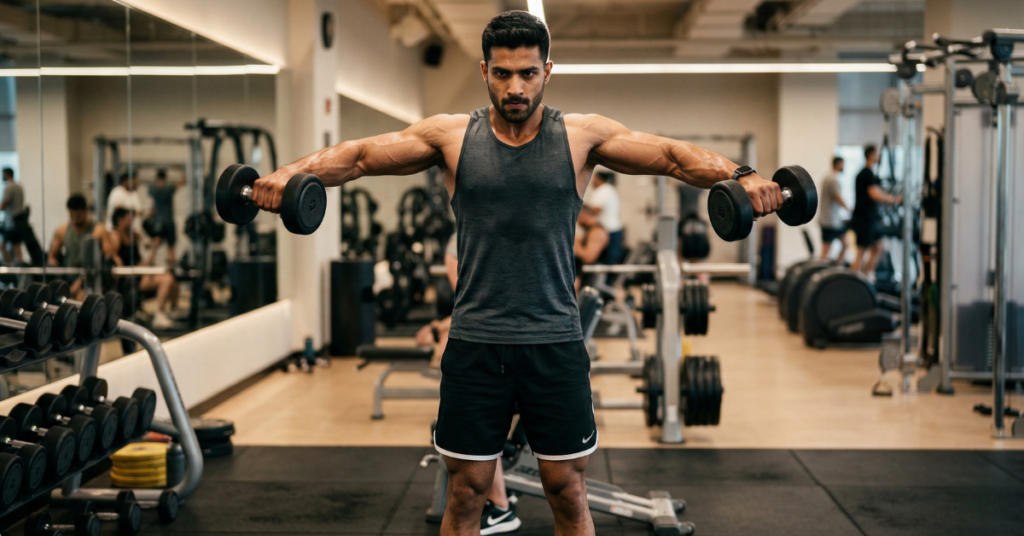
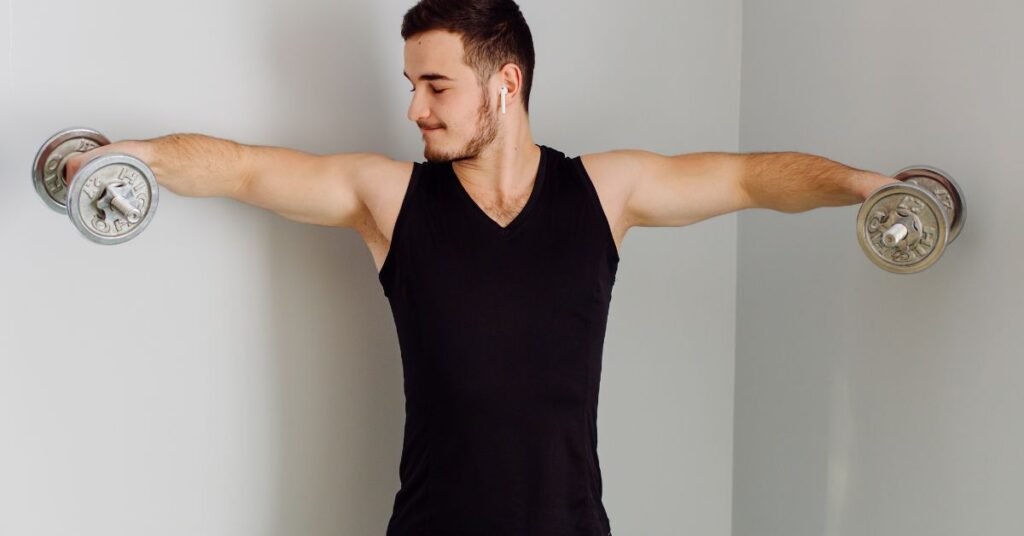
Stand with dumbbells at the sides, palms facing inward. Raise both arms out to shoulder height, leading with the elbows slightly higher than the hands. Lower slowly with control and maintain tension throughout.
This is the movement most people undervalue and the one that changes the silhouette of the entire upper body when done consistently.
The lateral raise isolates the medial deltoid, the side portion of the shoulder responsible for that wide, capped appearance that makes the shoulders look full from every angle. Light to moderate weight with strict form and constant tension throughout the range is significantly more effective than heavy, momentum-driven reps that shift the load off the target muscle.
No momentum. No shrugging at the top. No swinging the weights up. Pure deltoid isolation, consistent tension, and the shoulder width will come.
Full-Body Dumbbell Workout at a Glance
| Exercise | Primary Muscles | Sets x Reps | Rest Period |
| Goblet Squat | Quads, Glutes, Core | 3–4 x 8–12 | 60–90 sec |
| Dumbbell Shoulder Press | Deltoids, Triceps, Traps | 3–4 x 8–12 | 60–90 sec |
| Dumbbell Floor Press | Chest, Triceps, Anterior Delt | 3–4 x 8–12 | 60–90 sec |
| Dumbbell Bicep Curl | Biceps, Brachialis | 3 x 10–12 | 60 sec |
| Single-Arm Dumbbell Row | Lats, Rhomboids, Traps | 3–4 x 8–12 | 60–90 sec |
| Lateral Raise | Medial Deltoids | 3 x 12–15 | 60 sec |
Train this programme three to four times per week. Increase weight or reps every one to two weeks to keep progressive overload working in the right direction.
Training Smart and Staying Injury-Free
The exercises are only as effective as the habits built around them.
• Start with a proper warm-up. Spend 5 to 10 minutes on light marching, arm circles, bodyweight squats, and shoulder rotations to prepare joints and connective tissue. This is essential, especially after 30.
• Begin lighter than you think. Focus on mastering movement patterns before increasing weight. Jumping into heavy loads too soon increases injury risk.
• Control the eccentric phase. Lower the weight slowly and with control. This phase creates the muscle damage needed for growth. Rushing it reduces effectiveness.
• Prioritize rest and recovery. Muscles grow outside the workout. Training 3 to 4 times per week while respecting rest days supports long-term progress.
Smart training is not about doing more. It is about doing things correctly and consistently.
The Bottom Line
A pair of dumbbells and six movements done with consistency and intention are enough to build real, lasting muscle mass at home. The goblet squat builds powerful legs. The shoulder press and lateral raise create width and shoulder structure. The floor press develops chest thickness and balance. The row builds a back that shows. The curl adds the arm mass that completes the picture.
The equipment is simple. The commitment is what separates results from excuses.
Pick up a pair of dumbbells, run this programme for eight weeks, and measure what changes.
Ready to build real muscle at home? Explore more practical training plans and expert fitness guides at Fitness Geekz. 💪
FAQs
Yes. Dumbbell training can produce similar muscle growth as barbells and machines when progressive overload is applied. Their independent loading and greater range of motion can even improve results in certain muscles.
Three to four sessions per week works best for muscle growth. This allows frequent stimulation with enough recovery. Beginners can start with three days.
Most beginners start with 5 to 15 pounds depending on the exercise. Choose a weight that challenges you in the 8 to 12 rep range without breaking form. Increase weight once 3 sets of 12 feel comfortable.
Strength gains often appear within 2 to 3 weeks. Visible muscle growth usually follows in 4 to 8 weeks with consistent training, proper protein intake, and good sleep.
Yes. Full-body workouts are more effective early on, as they train each muscle multiple times per week. Split routines become useful after building a solid strength base.