


Quick answer
Body fat and testosterone are linked in men. Higher body fat, especially around the abdomen, is associated with lower testosterone, partly because fat tissue contains aromatase, an enzyme that converts testosterone to estrogen. Weight loss often raises testosterone in men with obesity, but results vary, and low levels should be confirmed by a doctor with blood tests.
Introduction
Tired, carrying more weight around the middle, and wondering if hormones are to blame? Body fat and testosterone do influence each other, and the research on weight loss is encouraging. Online advice on the topic is full of confident claims that fall apart when checked. This guide sticks to what published studies show.
Ready to try the full exercise? Click below and follow along!
How body fat affects testosterone
Fat tissue does more than store energy. It contains aromatase, which converts testosterone into estrogen, so more fat means more of that conversion. Aromatase is only one piece of the picture. A large meta analysis found that weight loss raised the pituitary hormones that signal the testes to work, while estradiol fell. That points to a wider hormonal effect, not a single enzyme.
The link also runs in both directions. Low testosterone makes it easier to gain fat and lose muscle, and extra fat pushes testosterone down further. The authors of a 2016 BMC Medicine trial describe this as a bidirectional relationship.
What weight loss does to testosterone
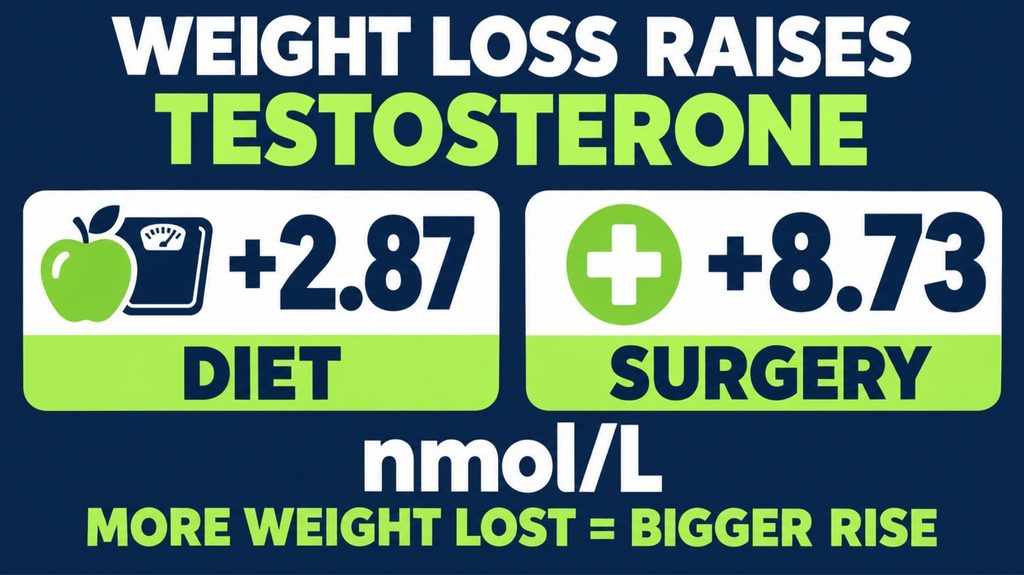
The strongest evidence is a 2013 systematic review and meta analysis of 24 studies in men with obesity. Both low calorie diets and bariatric surgery raised total testosterone. The average rise was 2.87 nmol/L with diet and 8.73 nmol/L with surgery. Surgery produces far greater weight loss, which is the likely reason for the bigger gap.
Three details from that review matter for realistic expectations:
- The more weight a man lost, the more his testosterone rose.
- The rise was larger in younger men without diabetes and with a higher degree of obesity.
- Estradiol dropped as weight came off.
These studies were in men with obesity. They do not tell us what happens to testosterone when a man at a healthy weight loses more fat.
The Endocrine Society states that when diagnosed low testosterone is linked to being overweight or obese (BMI above 27) with no other cause, weight loss is typically the first line therapy.
One more trial is worth knowing about. In the BMC Medicine study, 100 obese men with low testosterone dieted for 56 weeks. Those given testosterone treatment lost almost only fat, while the placebo group lost fat and muscle. This was supervised medical treatment in men with confirmed low levels, so it is not a template for self treatment. It does show that dieting men tend to lose muscle, which is a good reason to plan weight loss carefully.
Myth check: what the research says about popular advice
| Claim | What the research shows | Verdict |
| Soy lowers testosterone and raises estrogen | A 2021 meta analysis of clinical studies found no effect of soy or isoflavones on testosterone or estrogen in men (testosterone was measured in 1,753 men) | Not supported |
| Flax seeds raise estrogen in men | A 2023 meta analysis of 10 randomised trials found no significant effect on sex hormones overall, and data are described as limited and inconsistent | Not supported |
| BPA from plastic lowers testosterone | US survey data link bisphenols to altered hormone levels, including lower free testosterone, but the studies are observational and the authors note the literature is scanty and contradictory | Possible, unproven |
| Fiber and cruciferous vegetables clear estrogen and lift testosterone | Research looks at estrogen metabolism, much of it in animals or women. No trial found shows more broccoli raises testosterone in men | Unproven |
| Heavy sweating flushes out estrogen | No trial found shows sweating lowers estrogen or raises testosterone in men | No evidence |
| Sprints and jump rope are special testosterone boosters | The sources reviewed credit weight loss and exercise in general, not particular workouts | Not shown |
Sources: soy meta analysis, flaxseed meta analysis, bisphenols and male sex hormones.
Several of these habits are still reasonable for other reasons. Vegetables and fiber support a healthy diet. Swapping plastic containers for glass or steel is cheap. Neither should be sold as a testosterone fix.
What actually helps

A 2020 review in The World Journal of Men’s Health concluded that weight loss and physical exercise can improve obesity associated with functional hypogonadism and its sexual symptoms. In practice, that points to the unglamorous basics:
- Lose fat gradually. The meta analysis showed that the amount of weight lost was the best predictor of the testosterone rise.
- Exercise regularly. Pick something you can keep doing. Strength training is a sensible way to protect muscle while dieting. That is a coaching practice, not a proven testosterone effect.
- Skip the shortcuts. No supplement replaces a blood test.
When to get tested
Fatigue, low sex drive, erectile problems and muscle loss can have many causes, and symptoms alone cannot diagnose low testosterone. The Endocrine Society says a diagnosis should be made by a healthcare provider based on symptoms plus at least two early morning fasting blood tests, with a common clinical threshold near 300 ng/dL. See a doctor if symptoms persist or you are unsure. Never start, stop or change any medication without medical advice.
What this can and cannot do
Weight loss can raise testosterone in many men with obesity, but it is not guaranteed and the size of the change varies. It will not work as a cure, and it does not make hormone “optimisation” a safe DIY project. If levels are truly low, a doctor decides the next step.
Conclusion
Body fat and testosterone are closely linked. Losing excess weight, especially around the abdomen, can often help improve testosterone levels, but results vary and healthy fat loss should remain the goal.
If symptoms such as low energy or low sex drive continue, speak with a doctor and get properly tested rather than assuming low testosterone is the cause.
For practical guidance on training, nutrition and building a stronger body, Fitness Geekz can help you stay on track.
FAQ
Often, in men with obesity. A meta analysis of 24 studies found diet and surgery both raised total testosterone, with greater weight loss giving a greater rise.
No verified figure exists. The research shows a dose response pattern, meaning more loss tends to give more benefit. Percentages circulating online lack a primary source, so none is given here.
Not according to pooled clinical data. A 2021 meta analysis found no effect on testosterone or estrogen in men.
Not necessarily. Testing makes sense if symptoms are persistent or bothersome. A doctor can interpret results and rule out other causes.
