
Walk into almost any gym today and a row of kettlebells is likely sitting near the free weights. Their popularity is no accident. Industry reports show kettlebell training participation has grown from about 10.24 million to over 13.5 million users in recent years, reflecting a shift toward efficient, functional training tools.
And the appeal is easy to understand.
A single piece of iron with a handle. That cannonball shaped weight in the corner of the gym. Yet this simple tool can challenge strength, conditioning, coordination, and power in ways many machines cannot.
At the center of that effectiveness is the kettlebell swing.
The movement looks simple, but it behaves more like controlled power than a typical exercise. Each repetition combines explosive hip drive, athletic acceleration, and cardiovascular conditioning. The result is a movement that trains the posterior chain, elevates heart rate, and builds functional strength that carries into sports and everyday movement.
Here’s a quick video showing how to perform this exercise correctly:
Understanding the kettlebell swing benefits and the muscles worked reveals why this single exercise has become one of the most efficient tools in modern strength training.
What Is a Kettlebell Swing?
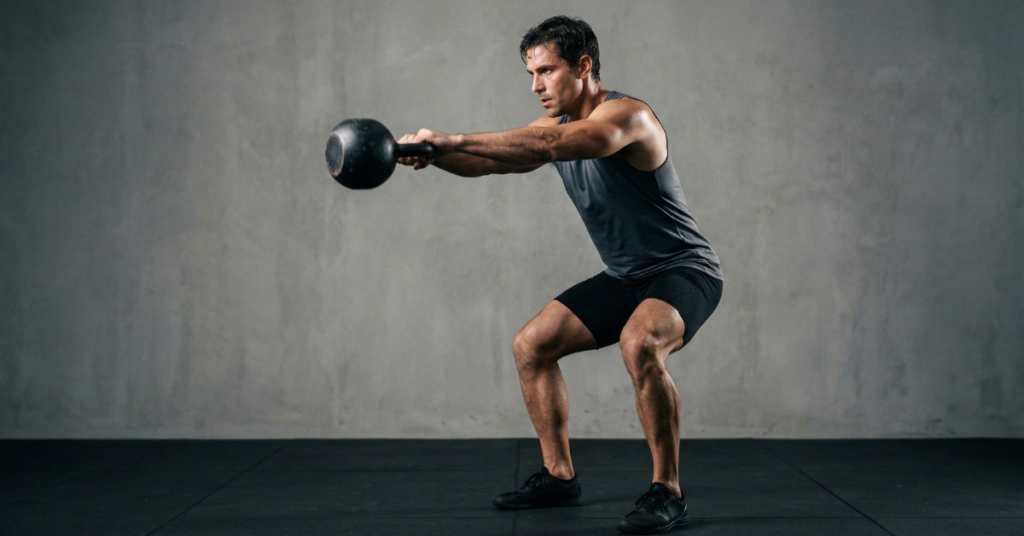
The Explosive Hip Hinge That Powers the Movement
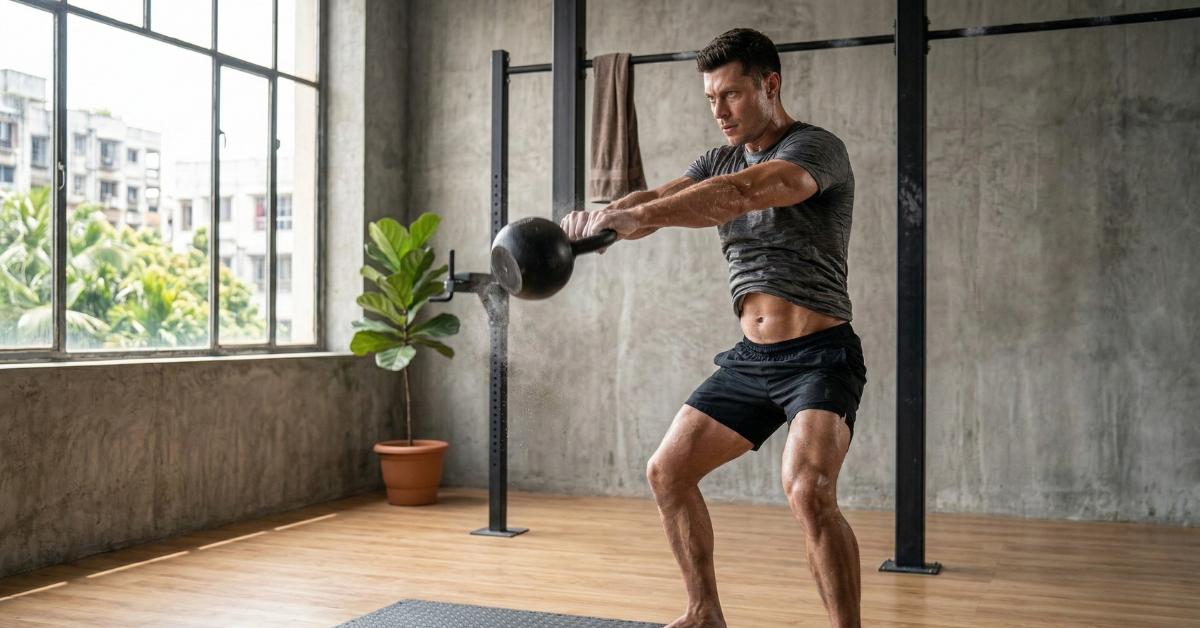
The kettlebell swing is a dynamic strength exercise where a kettlebell moves between the legs and is propelled forward using a powerful hip hinge.
A key detail many beginners miss is that the swing is not an arm exercise.
The arms simply guide the kettlebell. The real power comes from the hips and the posterior chain. In many ways, the movement feels similar to launching forward using the same muscles involved in sprinting or jumping.
Why the Swing Is Considered a Foundational Posterior Chain Workout
The kettlebell swing trains the hip hinge pattern, one of the most important movement patterns in strength training. This pattern teaches the body to generate force from the hips while keeping the spine stable and protected.
For people who spend long hours sitting, strengthening the posterior chain can significantly improve posture, strength, and overall movement resilience.
Kettlebell Swing Muscles Worked
The kettlebell swing is a compound movement that activates multiple muscle groups at the same time, making it one of the most efficient exercises for full body strength and conditioning.
| Muscle Category | Muscles Involved | Role in the Kettlebell Swing |
| Primary Muscles | Glutes, Hamstrings, Erector Spinae | Generate explosive hip power and drive the kettlebell forward |
| Secondary Muscles | Quadriceps, Deltoids, Trapezius, Rhomboids, Core Stabilizers | Assist with control, posture, and force transfer |
| Stabilizers & Grip | Forearm Flexors, Wrist Stabilizers, Rotator Cuff | Maintain grip strength, shoulder stability, and control of the kettlebell |
Because the kettlebell moves through momentum, stabilizing muscles remain constantly active to control the bell and maintain balance. This continuous engagement is one reason kettlebell swings often feel more demanding than they appear.
Key Kettlebell Swing Benefits for Strength, Power, and Conditioning
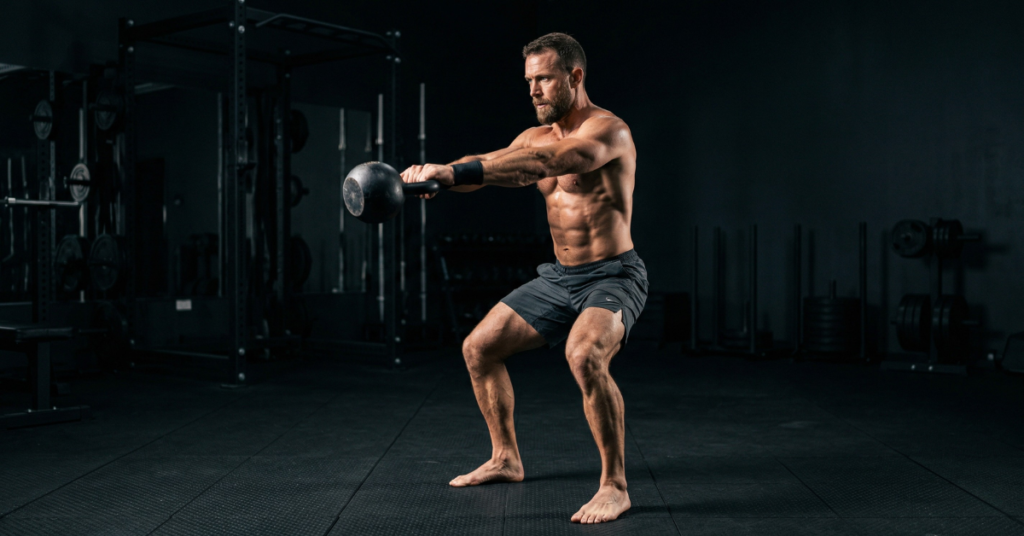
1. Explosive Posterior Chain Strength
The kettlebell swing trains the hips to extend explosively, similar to the mechanics used in sprinting and jumping. Strengthening the glutes and hamstrings improves athletic speed, jump power, lifting performance, and overall movement efficiency.
A stronger posterior chain also reduces excessive reliance on the lower back during heavy lifting.
2. Strength Training and Cardio in One Exercise
Few exercises combine strength training and cardiovascular conditioning as effectively as kettlebell swings. Continuous swing sessions can elevate heart rate into vigorous training zones above 85 percent of maximum heart rate.
This allows the body to build strength while simultaneously improving cardiovascular fitness. For busy schedules, this means fewer exercises and more efficient training results.
3. High Calorie Burn and Fat Loss Efficiency
Explosive compound movements recruit large muscle groups and increase metabolic demand. This creates two major benefits during training.
First, the workout burns a significant number of calories. Second, the body continues burning additional calories after exercise due to excess post exercise oxygen consumption.
Because of this effect, short kettlebell swing sessions can deliver conditioning benefits similar to interval training.
4. Improved Posture and Spinal Stability
Modern lifestyles often promote forward rounded posture from prolonged sitting and screen use. Kettlebell swings help counteract this pattern by strengthening the glutes, upper back, spinal stabilizers, and core bracing muscles.
Over time, this can improve posture and reduce discomfort linked to poor spinal alignment.
5. Real World Functional Strength
One of the biggest advantages of kettlebell swings is the development of functional strength. A strong posterior chain supports many everyday movements.
This includes lifting objects safely, climbing stairs, standing up from seated positions, and carrying groceries or luggage.
Functional strength improves overall movement capacity and helps the body perform daily tasks with greater ease and resilience.
How to Perform a Kettlebell Swing with Proper Technique
Step 1: Setup Position
Stand with your feet about shoulder width apart and place the kettlebell slightly in front of you. Hinge at the hips while keeping a neutral spine, then grip the handle firmly with both hands.
Step 2: Hike the Bell Back
Pull the kettlebell back between your legs, similar to hiking a football. This movement loads the hamstrings and prepares the hips for the explosive drive.
Step 3: Drive the Hips Forward
Forcefully extend the hips while keeping the arms relaxed. The power should come from the glutes and hamstrings, allowing the kettlebell to swing forward to about chest height.
Step 4: Let the Bell Float
Allow the kettlebell to rise naturally from the momentum generated by the hips rather than lifting it with the arms.
Step 5: Hinge and Reload
As the kettlebell begins to fall, hinge again at the hips and guide it back between the legs to reload for the next repetition.
Common Mistakes That Reduce Kettlebell Swing Benefits
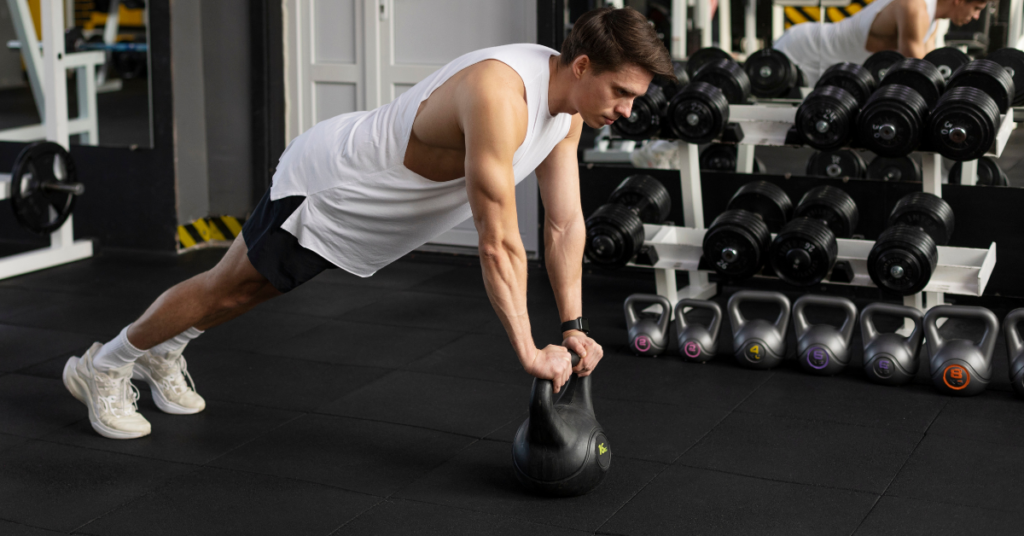
Although the kettlebell swing looks simple, small technique mistakes can reduce its effectiveness and increase the risk of injury.
- Lifting with the Arms
The swing should be powered by the hips, not the shoulders. The arms simply guide the kettlebell while the glutes and hamstrings generate the force. - Squatting Instead of Hinging
Excessive knee bend turns the movement into a squat rather than a hip hinge. The focus should remain on pushing the hips back and driving them forward explosively. - Overarching the Lower Back
At the top of the swing, the body should be tall with a neutral spine. Leaning backward or excessively arching the lower back places unnecessary stress on the spine. - Using Too Much Weight Too Soon
Starting with heavy kettlebells often leads to poor form. Mastering proper technique should always come before increasing the load.
Simple Weekly Kettlebell Training Plan
A minimal yet effective routine can deliver strong results without complicated programming.
| Workout | Exercise | Sets | Reps |
| Workout A | Kettlebell Swings | 4 | 15–20 |
| Workout B | Kettlebell Overhead Press | 4 | 8–10 |
| Workout B | Kettlebell Row | 4 | 10–12 |
Train three to four days per week, alternating between Workout A and Workout B.
This simple structure helps develop strength, conditioning, and muscular balance while keeping training efficient and easy to maintain.
Conclusion: Why the Kettlebell Swing Deserves a Place in Every Training Program
In a fitness world full of complex machines and trendy exercises, the kettlebell swing stands out for its simplicity and effectiveness.
This single movement trains the posterior chain, strengthens the core, improves conditioning, and develops explosive athletic power. Understanding the muscles worked and the benefits it provides explains why coaches, athletes, and everyday fitness enthusiasts continue to rely on it.
Sometimes, the simplest tools build the strongest bodies. The kettlebell swing proves that powerful training doesn’t require complicated machines, just one well-executed movement performed consistently.
Unlock full-body strength and explosive power with just one movement. Start swinging smarter today and explore more practical training tips at Fitness Geekz. 💪
Frequently Asked Questions
1. How many kettlebell swings should beginners do?
Beginners can start with 3 sets of 15–20 swings two or three times per week. As technique improves, volume and intensity can gradually increase.
2. Are kettlebell swings good for fat loss?
Yes. Because swings combine strength training with cardiovascular effort, they can burn significant calories while preserving muscle mass.
3. What weight kettlebell should beginners use?
Most beginners start with 8–12 kg for women and 12–16 kg for men, focusing first on perfect technique before increasing load.
4. Do kettlebell swings help improve posture?
Yes. Swings strengthen the glutes, core, and upper back muscles that support proper spinal alignment and reduce slouching.
5. Can kettlebell swings replace traditional cardio workouts?
They can significantly improve conditioning, but combining swings with other activities such as walking, cycling, or running creates a more balanced fitness routine.