
You probably clicked on this because you want superhuman grip strength, not just slightly stronger hands.
The kind of grip that lets you deadlift heavy without straps. The kind where your handshake actually feels powerful. The kind where your hands never become the weak link during rows, pull-ups, or carries.
Here’s the uncomfortable truth many lifters eventually discover.
Your grip is probably the weakest link in your training, and it quietly limits your progress.
A large part of strength training depends on your hands and forearms being able to hold the load. When grip fails early, bigger muscles never reach their full potential.
Research published in the International Journal of Epidemiology also links low grip strength with higher risk of cardiovascular disease and early mortality, while stronger grip is associated with better functional health.
The good news is that grip strength improves quickly with the right training.
This guide breaks down five exercises that actually work, based on practical strength training experience.
Why Grip Strength Matters More Than Most People Realize?
Before jumping into exercises, it helps to understand why grip training deserves attention in any strength program.
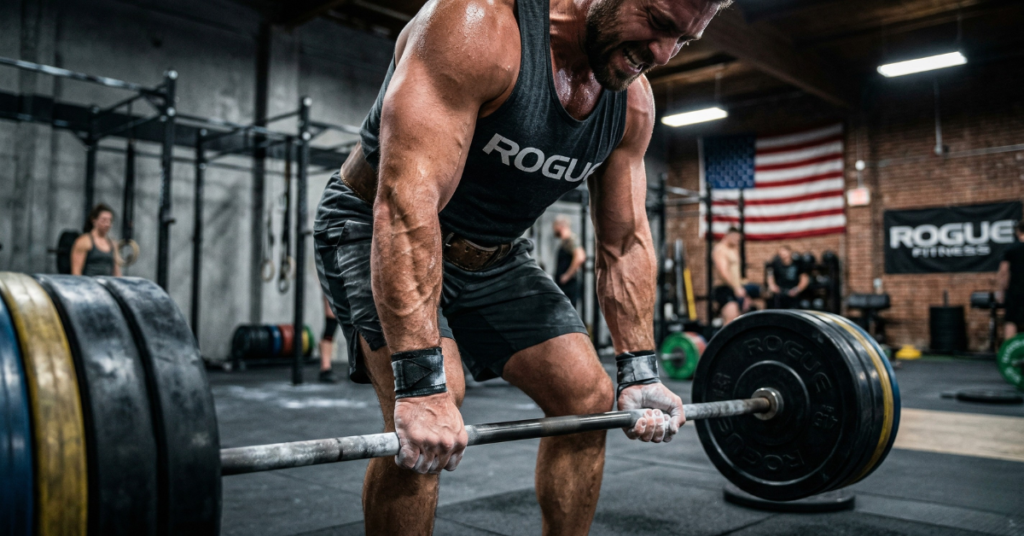
Grip strength involves several muscle groups working together. The fingers, wrists, and forearms generate force while the nervous system coordinates stability and endurance. Because these muscles are constantly used in daily life, they respond well to progressive training.
Strong grip strength provides several benefits.
- Improves performance in lifts such as deadlifts, rows, pull ups, and carries
- Supports wrist stability and forearm endurance
- Enhances functional tasks like carrying bags or lifting objects
- Contributes to overall strength after 50 and long term independence in aging
- Acts as a measurable indicator of health and longevity
Grip training also fits well within the broader concept of exercises for longevity, where strength, mobility, and functional ability are preserved over time.
To see the workout in action, watch this video:
Types of Grip Strength You Should Train
Different exercises target different forms of grip strength. Training all of them helps build stronger hands that perform well in real situations.
| Grip Type | What It Trains | Example Movement | Why It Matters |
| Crush Grip | Closing strength of the hand | Hand grippers, squeezing bars | Essential for squeezing and clamping force |
| Pinch Grip | Thumb against fingers | Plate pinch holds | Builds thumb strength and hand stability |
| Support Grip | Holding objects for time | Dead hangs, farmer carries | Improves endurance and lifting capacity |
| Wrist Strength | Forearm stability and control | Wrist curls, thick bar work | Protects joints and improves lifting performance |
Most people naturally train support grip through pulling exercises but neglect pinch and crush strength. Balanced grip training addresses all of these components.
Exercise 1: Plate Pinch Holds (Build True Thumb Strength)
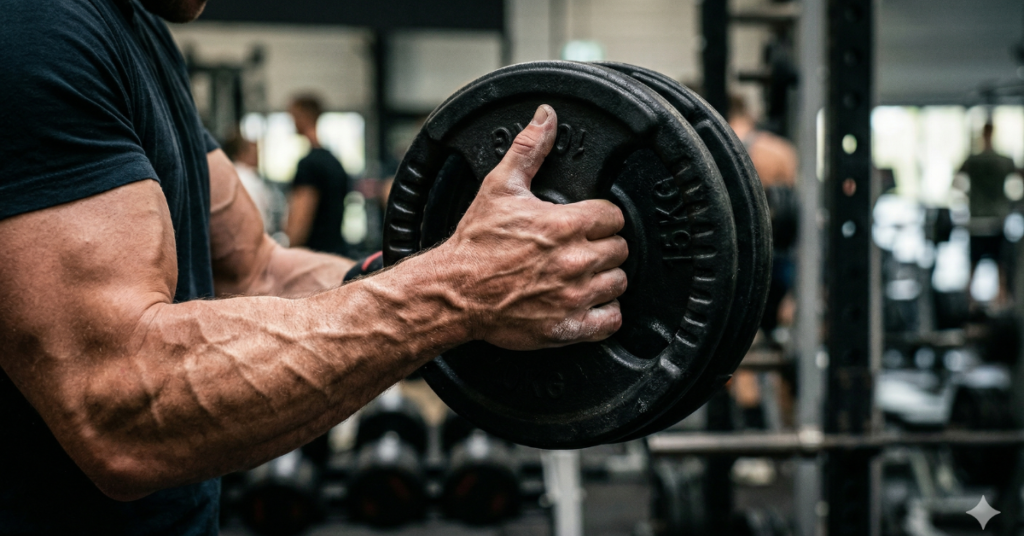
This exercise looks deceptively easy until the forearms start burning.
Plate pinching trains pinch grip strength, where the thumb works directly against the fingers.
This is a major weakness for most people because typical gym exercises rarely challenge the thumb directly.
Elite grip athletes can hold over 90 pounds in pinch grip, while beginners struggle with even 20 pounds.
How to Perform Plate Pinch Holds
- Grab two weight plates.
- Place the smooth sides facing outward.
- Press them together using your fingers and thumb.
- Lift and hold for 10–15 seconds.
Training recommendation
• 3–5 sets per hand
• Progress toward 30-second holds
• Increase plate weight gradually
Coaching Tip
Avoid plates with lip edges. Smooth surfaces force the hands to work harder and help build stronger hands faster.
Exercise 2: Dead Hangs (The Ultimate Grip Endurance Test)
One simple question reveals a lot about grip strength.
How long can you hold your body weight from a pull-up bar?
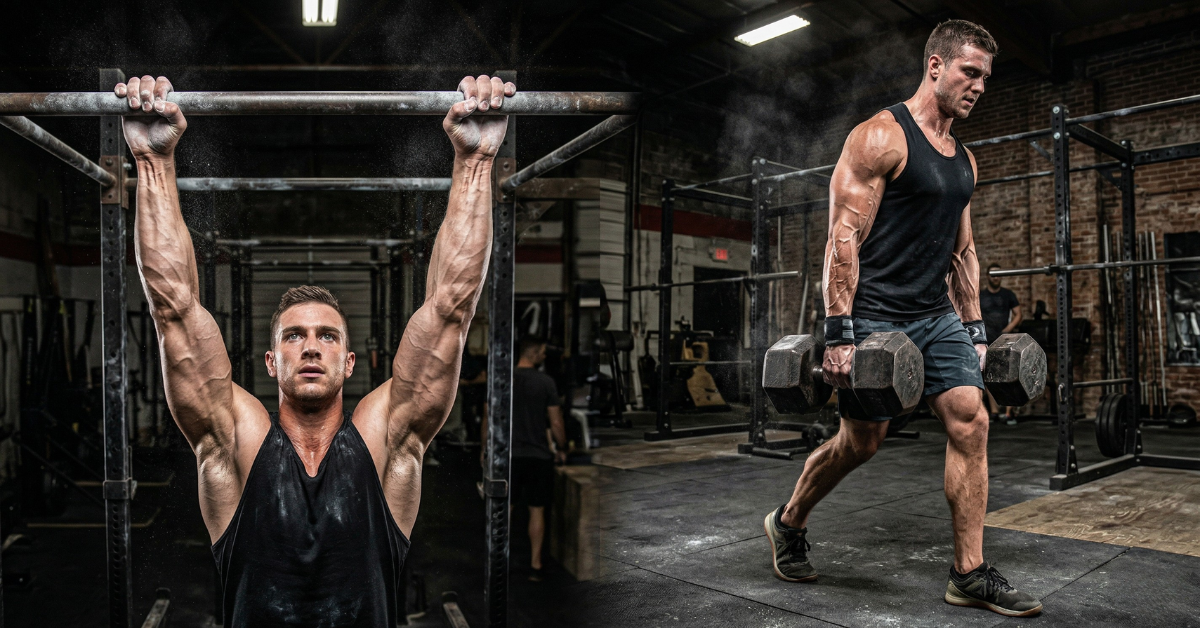
Dead hangs develop support grip strength, which is the ability to maintain grip under fatigue.
In military fitness testing and tactical training, hanging endurance is often used as a measure of grip resilience.
Most beginners drop within 20–30 seconds.
Well trained athletes often reach 2–4 minutes.
How to Perform Dead Hangs
- Grab a pull up bar with both hands
- Let your body hang naturally
- Keep shoulders engaged to protect joints
- Hold as long as possible
Training recommendation
• 3–5 sets
• Goal: 60 seconds minimum
• Rest 2 minutes between sets
Injury Prevention Tip
Avoid completely relaxed shoulders. Slight scapular engagement protects the shoulder capsule.
Exercise 3: Towel Pull Ups (Expose Weak Grip Instantly)
Towel training removes the advantage of closing the hand fully around a bar.
This forces the fingers and forearms to work significantly harder.
Many athletes who can easily perform 10 pull ups struggle to perform 3 towel pull ups.
How to Perform Towel Pull Ups
- Throw a towel over a pull up bar
- Grab both ends tightly
- Perform pull ups normally
Beginners can start with towel hangs instead.
Training recommendation
• 3–4 sets
• 5–8 reps (or timed holds)
Why This Works
The towel creates an unstable, thick grip which forces the forearms to generate more force.
This is one of the fastest ways to increase grip strength for pulling movements.
Exercise 4: Thick Bar Training (The Strongman Secret)
Grip strength adapts to the diameter of objects.
Normal barbells are relatively easy to grip. Thick bars completely change the challenge.
Strongman athletes use 2-inch axle bars, which immediately reduce lifting strength because the hands cannot fully close around the bar.
How to Train Thick Grip
You can use:
• Axle bars
• Fat grips
• Thick dumbbell handles
Training Guidelines
• Use about 70 percent of your normal weight
• Train thick grip twice per week
• Focus on controlled reps
After several weeks, returning to normal bars often feels dramatically easier.
Exercise 5: Rice Bucket Training (Bruce Lee’s Hand Conditioning Method)
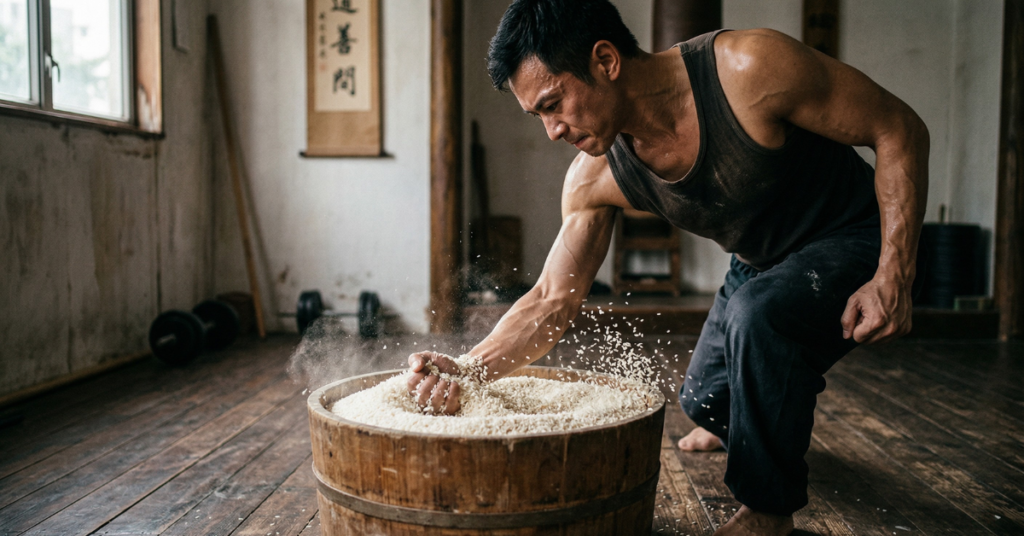
Bruce Lee famously used rice buckets to build finger and wrist endurance.
Unlike crushing exercises, rice training improves multi directional hand strength and joint resilience.
Hands are designed for complex movement patterns, not just squeezing.
How to Perform Rice Bucket Training
Fill a bucket with uncooked rice and perform the following movements:
• Open and close fingers
• Twist wrists
• Spread fingers
• Rotate hands
• Dig hands through the rice
Training recommendation
• 5–10 minutes per session
• 3–4 times per week
Why It Works
Rice provides resistance in every direction, strengthening smaller stabilizing muscles often ignored by traditional grip strength exercises.
Common Grip Training Mistakes That Slow Progress
Many people make the mistake of training grip every day or placing grip exercises before heavy lifts. Grip training works best when it supports your main workouts rather than interfering with them.
Follow these practical guidelines.
- Train grip at the end of workouts. This prevents fatigue from affecting major lifts.
- Limit training frequency to two or three sessions per week. The forearms need recovery time.
- Gradually increase load or hold duration. Grip strength improves steadily but slowly.
- Use a mix of grip types. Combining pinch, support, and crush strength creates balanced development.
For individuals focused on strength after 50 or independence in aging, grip work combined with compound movements like farmer carries and rows creates a powerful foundation for long term function.
How Long Does It Take to Increase Grip Strength?
Visible improvements usually appear within 4 to 6 weeks of consistent training. However, meaningful strength gains develop over several months through progressive overload and regular practice.
Consistency matters far more than intensity.
Conclusion: The Secret to Superhuman Grip Strength
Most lifters focus on building bigger muscles but overlook one of the most important foundations of real strength: grip.
Weak hands limit deadlifts, rows, pull ups, and carries, quietly holding back overall progress in the gym.
The solution is simple. Train the hands deliberately with targeted grip strength exercises that build pinch grip, support grip, and forearm endurance.
Movements like plate pinches, dead hangs, towel training, thick bar lifting, and rice bucket work create a complete system for developing stronger hands that can hold real weight.
Train consistently and your grip will stop being the weak link in your lifts. Ignore it, and it will continue to limit every heavy pull you attempt.
Build stronger hands, lift heavier, and remove the weakest link in your training. Explore more practical strength and performance guides at Fitness Geekz and start training your grip the right way. 💪
FAQs
1. How long does it take to increase grip strength?
Most people begin noticing improvements within three to four weeks of consistent grip strength exercises. Significant strength gains typically appear after two to three months of progressive training.
2. How often should grip strength be trained?
Grip training works best two to three times per week. Training every day can lead to overuse injuries because the forearm muscles need recovery time.
3. Do deadlifts improve grip strength?
Yes. Deadlifts are one of the best compound movements for developing support grip strength, especially when performed without lifting straps.
4. What is the best way to test grip strength?
A hand grip dynamometer is the most accurate tool. Another simple method is timing how long you can perform a dead hang from a pull up bar.
5. Can grip strength improve everyday activities?
Absolutely. Stronger hands make tasks such as carrying groceries, opening jars, lifting luggage, and holding tools significantly easier while also supporting long term joint health.